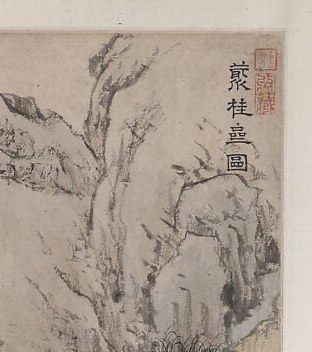
明 文徵明 叢桂齋圖 卷|The Cassia Grove Studio by Wen Zhengming
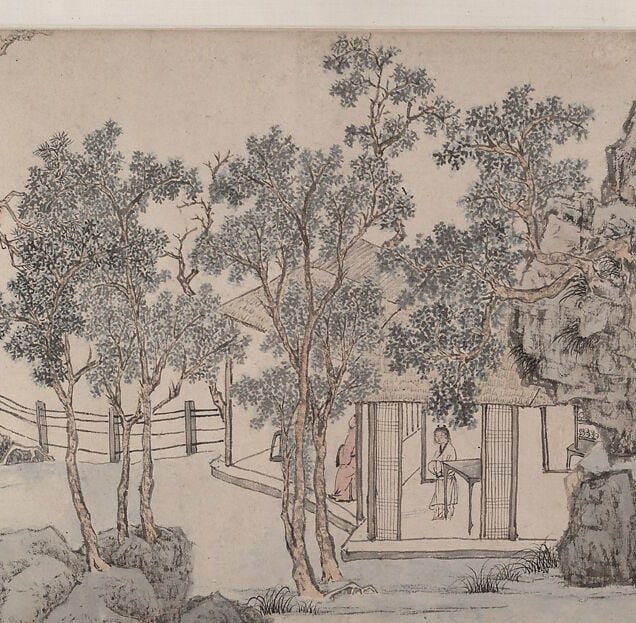
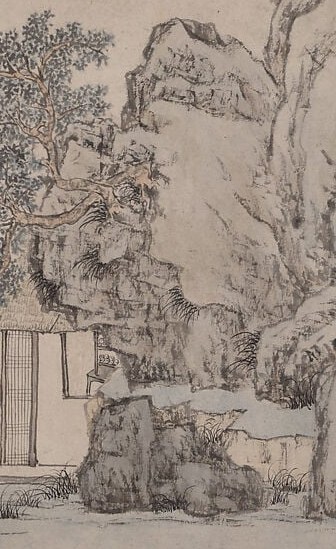
The Cassia Grove Studio, a handscroll painted by Wen Zhengming around 1532 in ink and pale color on paper. It shows a scholar's retreat buried inside a grove of cassia trees, empty of people. The building is barely visible. That is the point: in the literati tradition, the world you want is just out of reach, and you have to look for it.
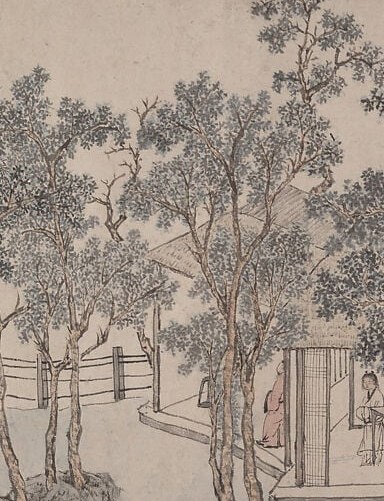
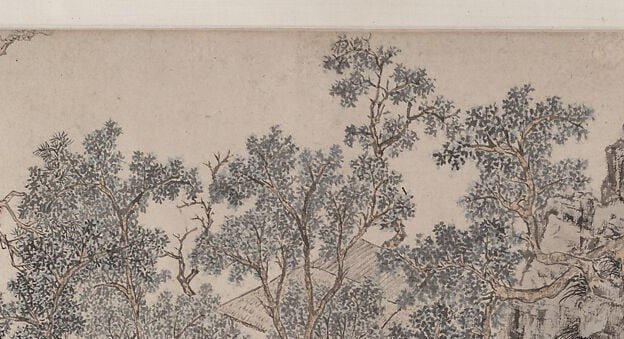
Watch the tree trunks. Wen Zhengming painted them the way he wrote letters: with a dry brush dragged across the paper so the bristles skip and split. You can see the pressure change exactly where his wrist turned. That single stroke is not botanical drawing; it is calligraphy, pulled right across the trunk's length. Now look at the foliage. No wash, no blur. Every leaf is a separate ink dot applied with the brush tip, repeated until the canopy masses into a soft, shimmering volume. At close range, the painting dissolves into thousands of individual decisions.
Wen was in his sixties when he made this scroll. He had failed the imperial civil-service exams three times and settled into a life of painting, poetry, and friendship in Suzhou. His art became his true career, not the backup plan. The studio in this scroll was likely a real place belonging to a friend, but on paper it became an ideal: a house in the woods where a scholar can be alone with his thoughts.
Next time you see a Chinese landscape, lean in. The thing that looks like a loose sketch from a foot away is often a tightly controlled act of writing, one stroke holding a lifetime of practice.
Details
Transcript
A grove of trees hides a scholar's studio. Wen Zhengming painted this at sixty-two, after failing the imperial exams three times. Now look at the trunk. See the drag, the skip, the pressure. That is not a sketch. It is a line of calligraphy, pulled dry across the paper. He used the same wrist for poems and for pine bark. And the leaves? Not a wash. A thousand individual ink dots. Every dot was a decision. The canopy shimmers because it is made of time.