Penitents in the Lower Basilica of Assisi by José Jiménez Aranda
José Jiménez Aranda's *Penitents in the Lower Basilica of Assisi*, painted in 1874, captures a solemn religious ritual in a historic Italian church. This oil on canvas, housed at the Museo del Prado, invites viewers into a moment of profound spiritual devotion.
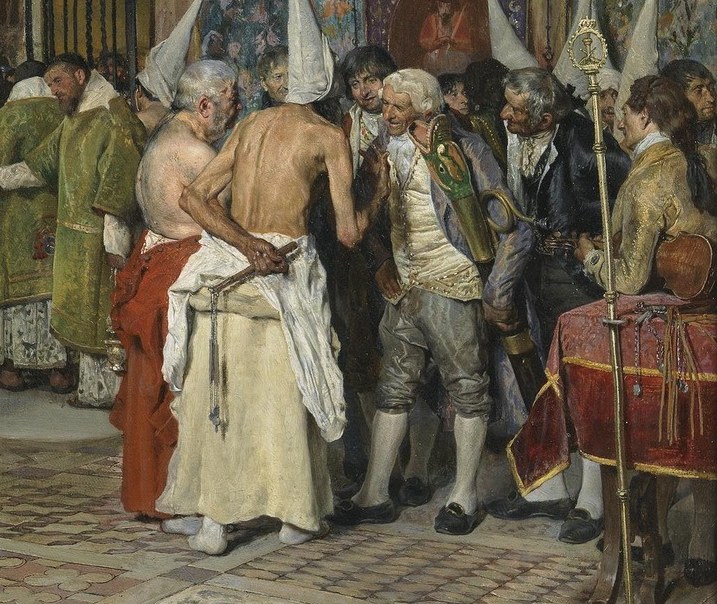
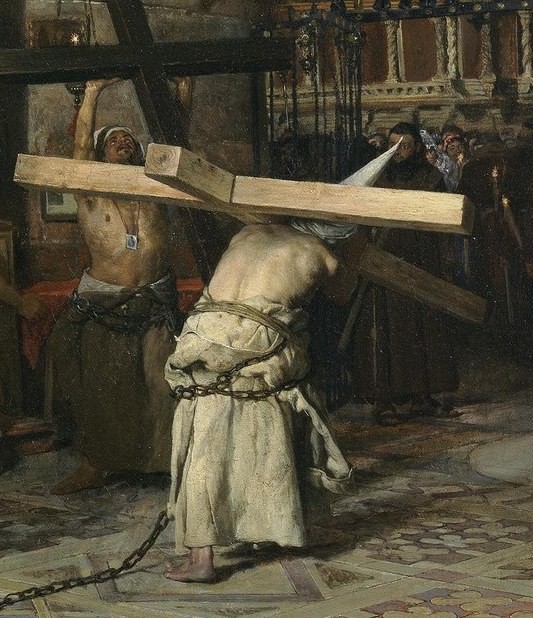
Notice the figures in white hoods, many of whom are barefoot or in chains, signifying their acts of penance. The central figure strains under the weight of a large wooden cross, emphasizing the physical and spiritual burden of their devotion.
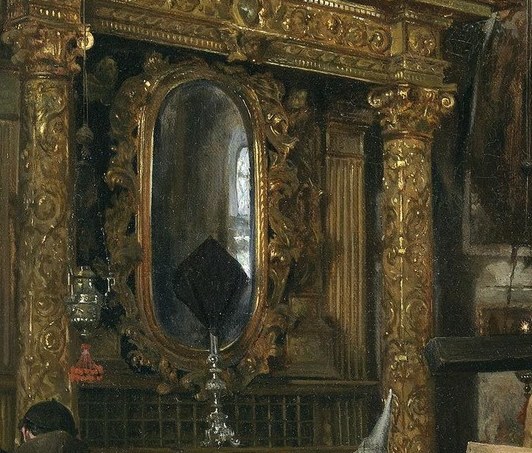
One of the most intriguing details is the ornate altar on the left. Within its gilded frame, a dark mirror reflects the entire scene, adding a layer of introspection and perhaps symbolizing self-reflection or divine judgment for the participants.
Aranda, a Spanish painter from a family of artists, blended realism with Post-Impressionist techniques, using chiaroscuro to create dramatic depth and convey the basilica's dimly lit atmosphere. What do you think the mirror represents to the penitents?
Details
Transcript
This painting shows a penitential ritual in an Italian basilica. Look closely at the figures in simple white hoods. Many are barefoot, performing acts of self-mortification. The artist, José Jiménez Aranda, painted this in 1874. Now, find the gilded altar on the left. Inside the altar, a dark mirror reflects the scene.