The Mountain Ford by Thomas Cole
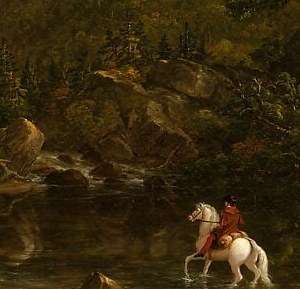
Thomas Cole's "The Mountain Ford" (1846) is easy to misread in a single scroll. A white horse stands in the shallows, a rider pauses beside it, and the eye takes it for a solitary moment of rest, the lone Romantic traveler, humbled by the vast American wilderness. But Cole was after something truer to the landscape he loved.
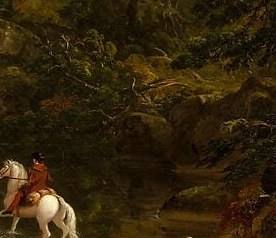
Look at the water just to the right of the white horse. A second horse stands there, darker and lower, half-blended into the reflections and shadow of the ford. What seemed like a poetic pause becomes a working crossing: two pack animals, a functional mountain route, people moving through the land rather than merely admiring it. Cole, who founded the Hudson River School, built his career on landscapes that frame America as an unspoiled Eden. But he never painted it as empty. His wilderness was always in dialogue with those passing through it.
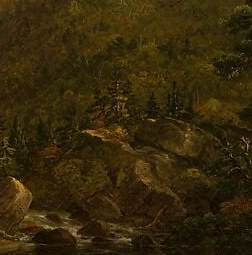
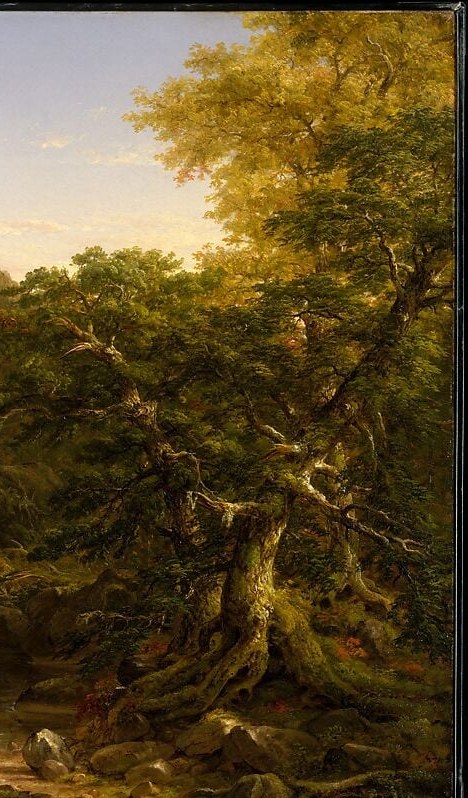
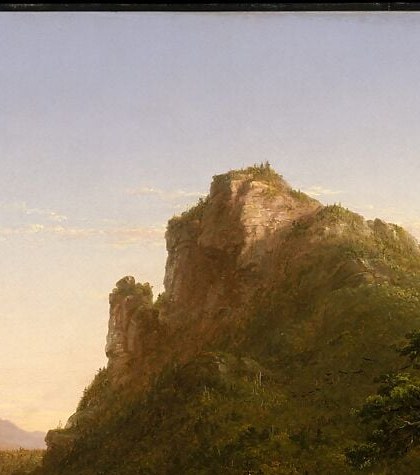
Cole completed this painting only two years before his death in 1848. He had spent decades producing romantic, allegorical landscapes that pushed back against the industrial smog of his English childhood. The luminous golden sky above the butte, the cool blue haze of the distant mountains, these are his signature atmospheric tools, creating depth that pulls you from the mossy foreground boulders all the way back to a ridge nearly invisible in the haze. And in the middle of it all, the hidden horse reminds you to look longer in a painting that has often asked this of its viewers since 1846. The work now resides in the American Wing of the Metropolitan Museum of Art.
Details
Transcript
It reads at first as a solitary traveler, dwarfed by the American wilderness. A white horse, a lone figure. Resting in a mountain ford. But Thomas Cole, founder of the Hudson River School, rarely painted true solitude. Look again at the water, just to the right of the white horse. A second horse. Darker, working, easy to miss. This is not a poetic pause. It is a working river crossing, a quiet collaboration.