Saint Jerome with Saint Paula and Saint Eustochium by Zurbarán, Francisco de
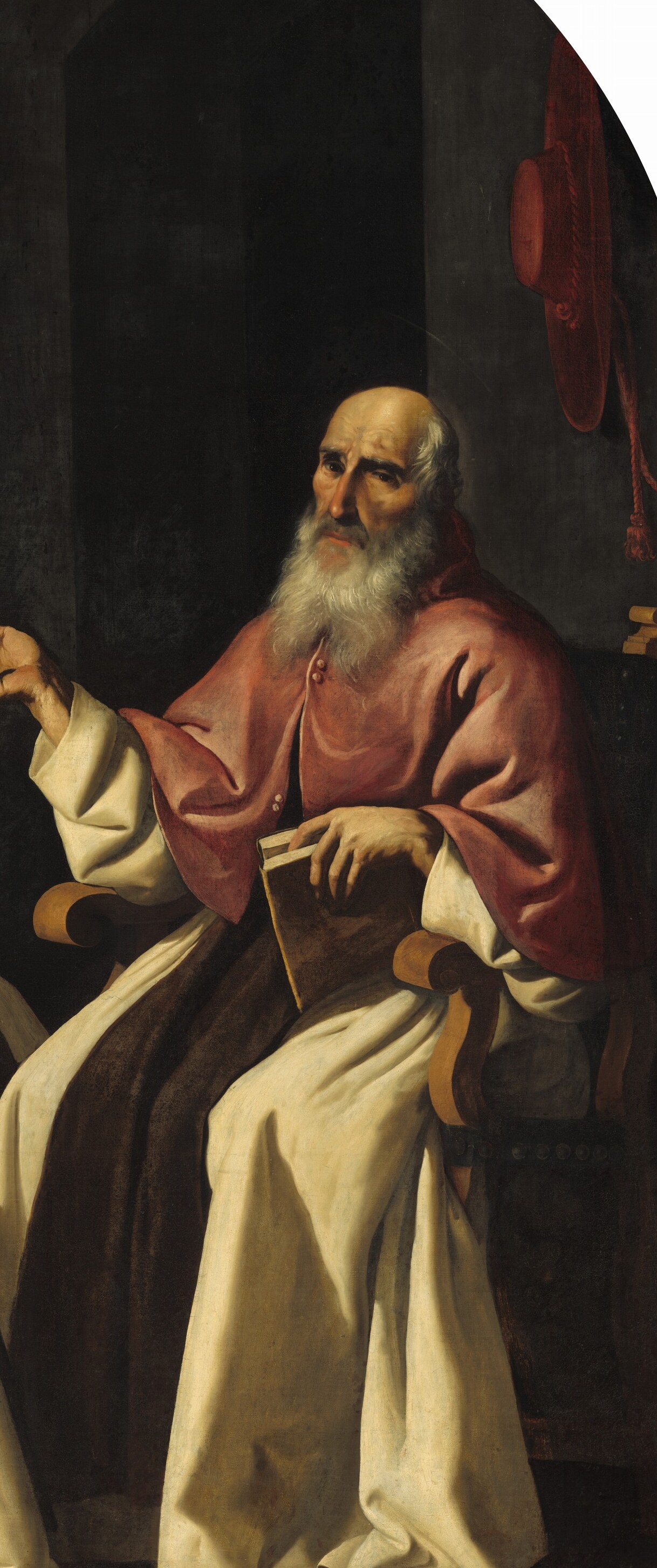
Francisco de Zurbarán's Saint Jerome with Saint Paula and Saint Eustochium, painted around 1645, is an oil on fabric work depicting three significant figures from early Christian history. The painting exemplifies Zurbarán's characteristic approach to devotional subjects, combining solemnity with focused realism.
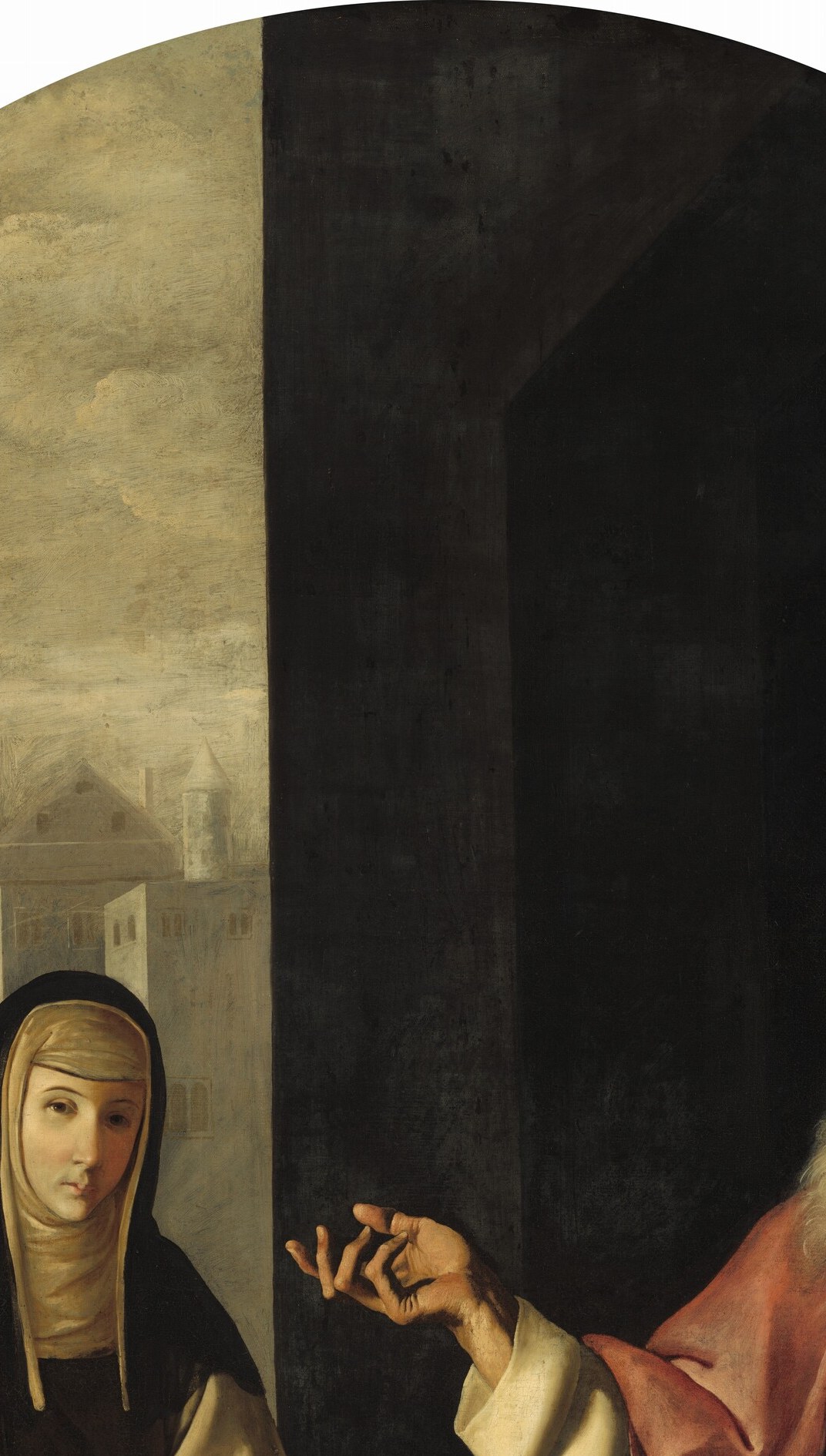
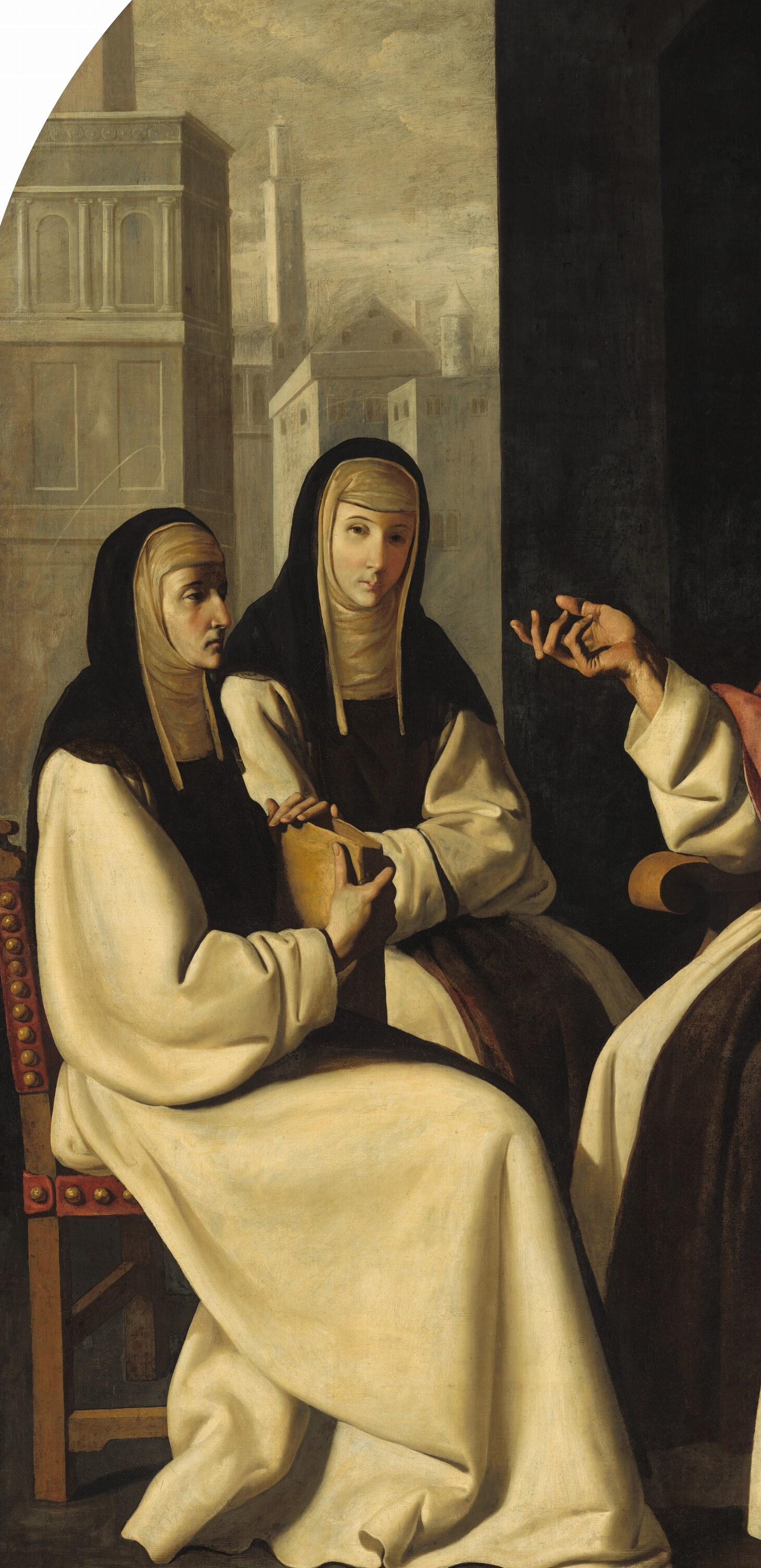
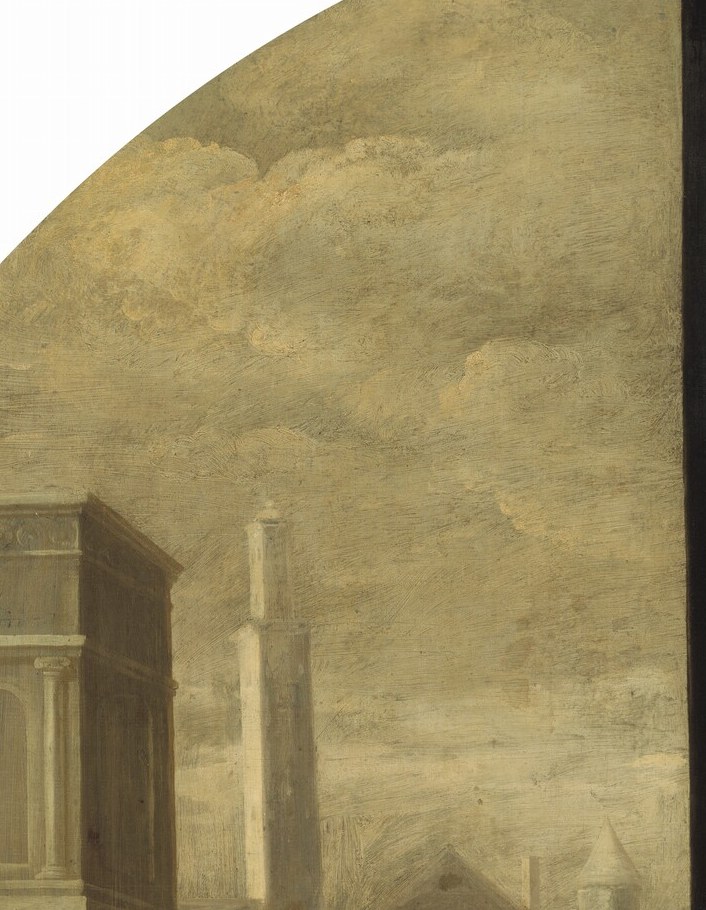
The composition centers on Saint Jerome, seated at a desk. Behind him stand Saint Paula and Saint Eustochium, clad in austere black robes. While the artist was known for stark backgrounds, a close look reveals a columned arch, suggesting a specific setting like Jerome's monastery in Bethlehem.
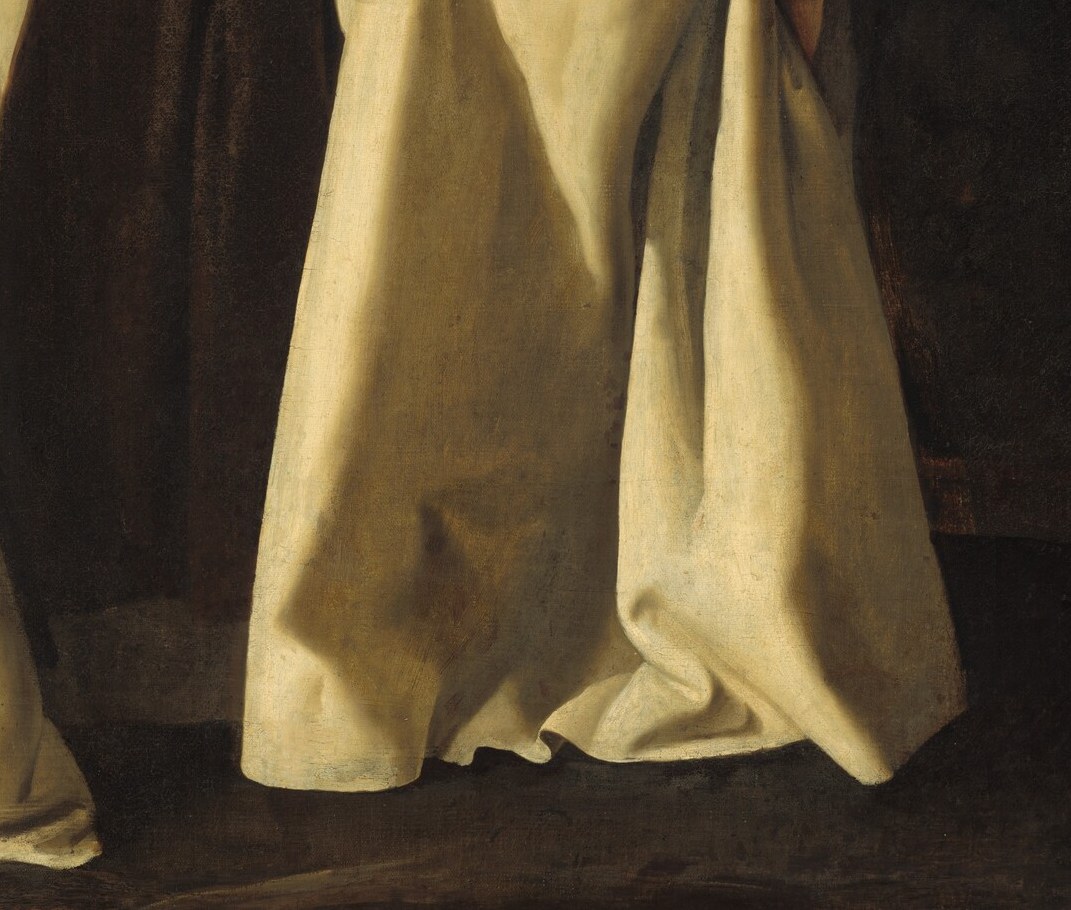
Paula and Eustochium, both scholars, were crucial to Jerome's work. Paula, a wealthy Roman widow, financed his monastery. Zurbarán often placed symbolic objects in the lower margins, and here, a skull acts as a traditional memento mori, a reminder of mortality.
This hidden detail grounds the scene in both time and spiritual depth. What other subtle elements do you notice?
Details
Transcript
This painter was known for dramatic figures against blank space. But look between the figures, far in the background. A columned arch suggests a specific place: Jerome's monastery. The women, Saint Paula and Saint Eustochium, were scholars. Their wealthy patron, Paula, financed Jerome's work in Bethlehem. And in the lower right, the painter always hides identifying objects. A skull, a memento mori, is a classic Jerome accessory.