The Sortie Made by the Garrison of Gibraltar by John Trumbull
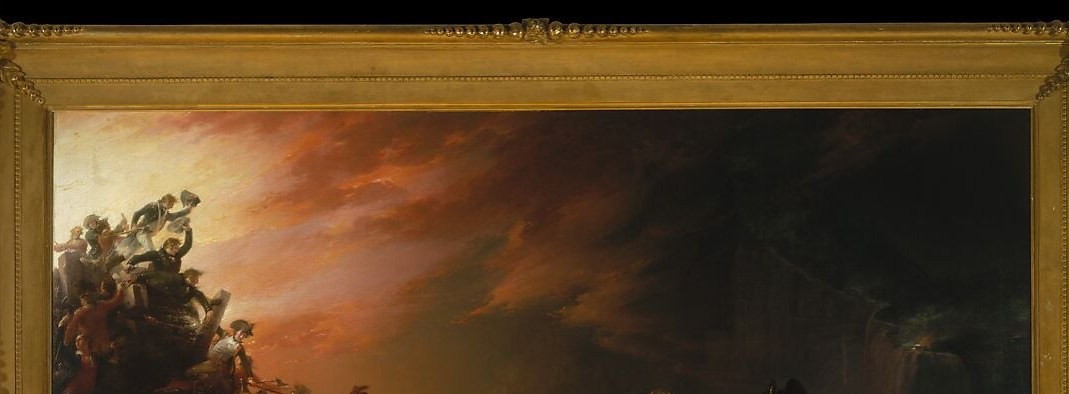
This is The Sortie Made by the Garrison of Gibraltar, painted in 1789 by American artist John Trumbull. It hangs at the Metropolitan Museum of Art. Trumbull was a veteran himself, and he witnessed the siege of Gibraltar firsthand. Yet he chose not to paint the chaos of combat, but a constructed moment of battlefield chivalry, lit like a stage.
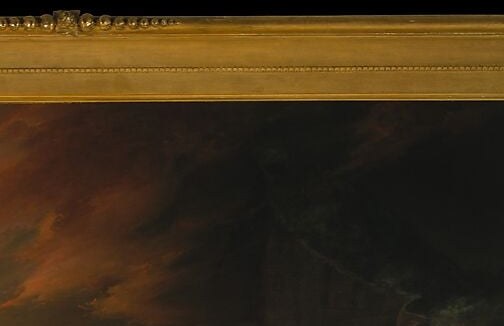
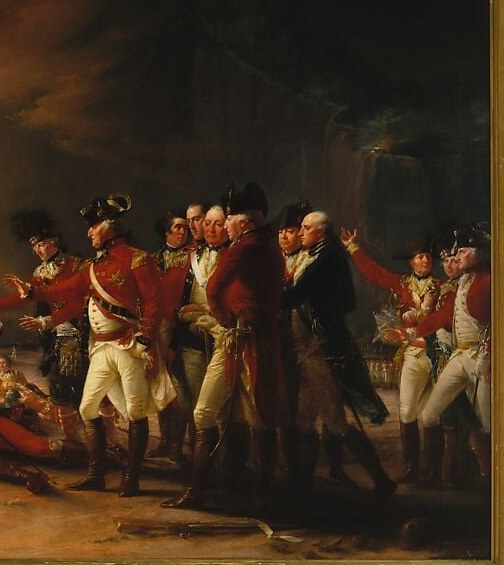
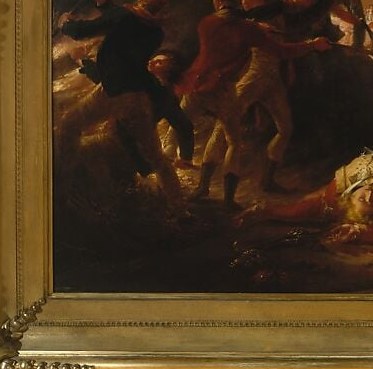
The first thing to notice is the orange-red fire glow in the upper-center sky. That glow is the brightest zone of the entire canvas. Trumbull places his British officers directly against it, so their red coats and faces are silhouetted. The technique is called contre-jour, against the day, and it was a device he borrowed directly from history painting's overlap with the theater. The smoke columns on the left aren't background noise; they frame the stillness at center.
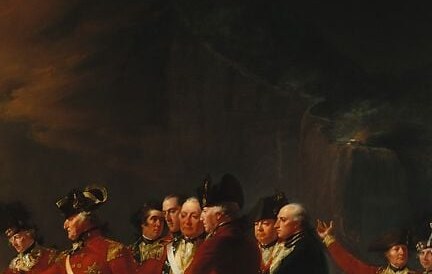
Look next at the faces of the witnessing officers on the right. Each one reads differently: solemn, uncomfortable, quietly admiring. Trumbull gives you a spectrum of response to the dying Spanish officer, Don Jose de Barboza, who charged the British lines alone after his own men fled. Even the dog in the lower-left corner stays with him. The painting's moral argument unfolds in those quiet reactions, not in the swordplay.
Trumbull painted this scene six years after the war ended, with the precision of someone who had worn the uniform. But the heroism here is not jingoistic. It's an argument about respect across enemy lines, made visible through a single, sustained lighting trick.
Details
Transcript
The sky isn't just smoke. It's stage lighting. Trumbull was a veteran. He knew battle doesn't look this heroic. So he borrowed a trick from the theater: contre-jour. The officers' red coats are painted against the hottest part of the fire. Their faces emerge from the shadow, one by one. The light says chivalry. The smoke says war. Both are paint.