Pes-Ke-Le-Cha-Co by Henry Inman
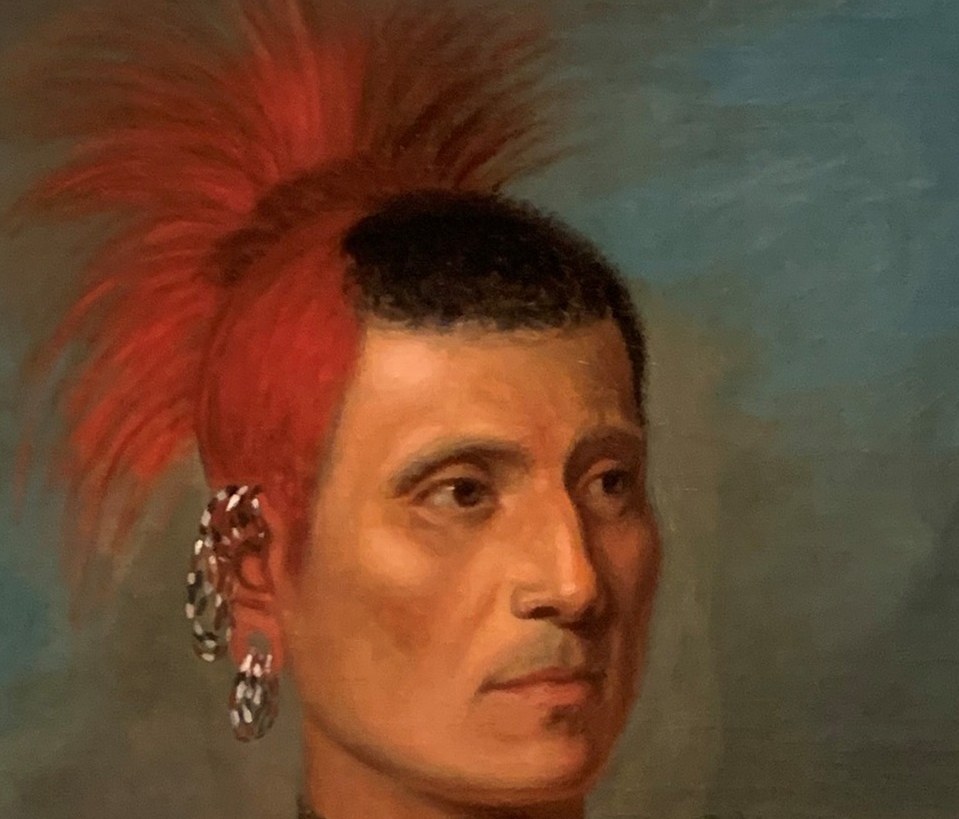
Henry Inman's 1832 portrait of Pawnee chief Pes-Ke-Le-Cha-Co is a copy of a now-destroyed original, and an extraordinary document of diplomatic encounter. Painted in oil, it hangs in the Metropolitan Museum of Art, preserving a likeness that would otherwise have vanished when Charles Bird King's originals were lost.
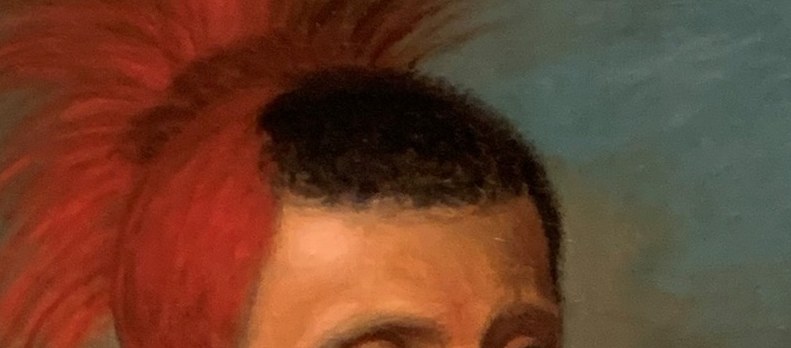
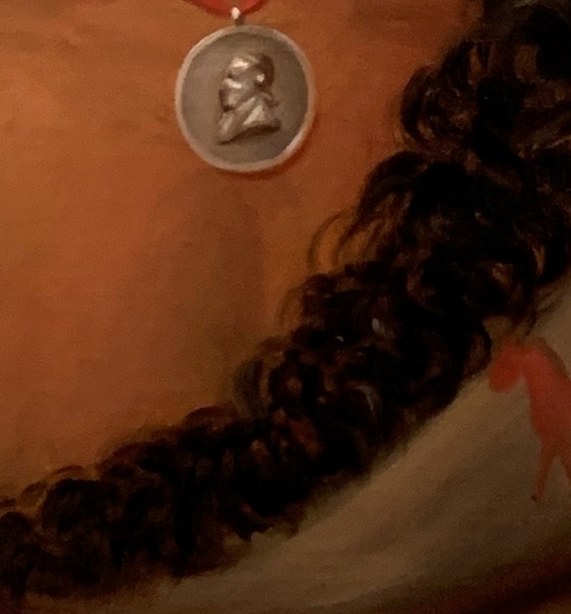
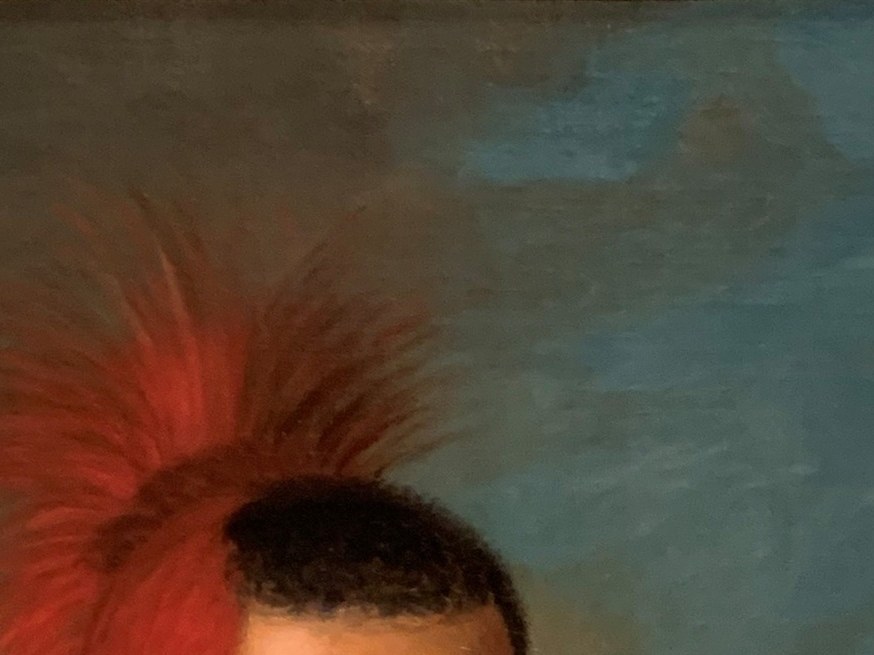
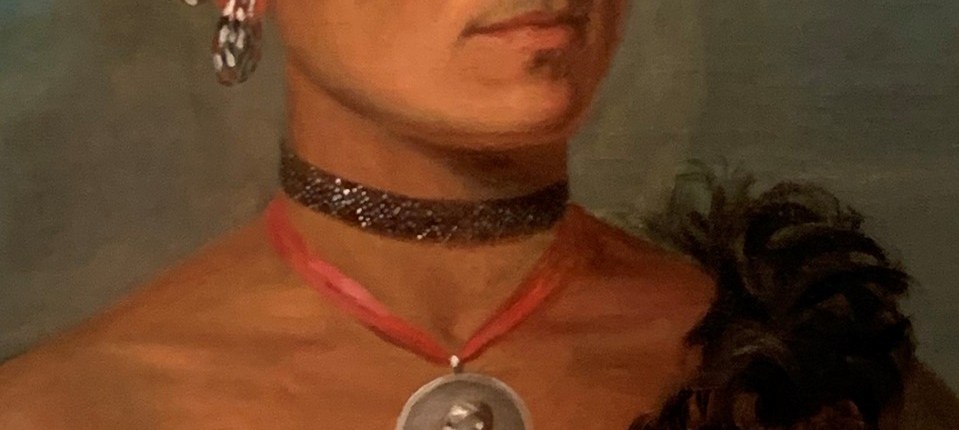
Run your eyes down the painting from top to bottom. The upright red feather headdress is a vivid status marker. The layered choker at the neck and the long dangling ear ornaments are specific to Pawnee craft traditions and signal cultural affiliation. The large circular peace medal on his chest is almost certainly a Presidential peace medal, a diplomatic object routinely given to Native leaders in treaty negotiations during this period.
Thomas L. McKenney commissioned Inman to copy more than one hundred of King's portraits for his publication History of the Indian Tribes of North America. When fire destroyed King's originals, Inman's copies became the definitive visual record. Pes-Ke-Le-Cha-Co traveled to Washington for this sitting, wearing the regalia of his station. The directness of his gaze, paired with the diplomatic medal, speaks to a moment when Native leaders engaged federal power face to face.
The worth of this portrait is not just in the face it saves, but in the code it preserves. The objects he chose to wear are a deliberate message in metal, bead, and feather. What other messages might the unreadable engraving on the medal hold?
Details
Transcript
1832. A Pawnee chief sits for his portrait in Washington. Look first at his eyes. Then look at the medal on his chest. A Presidential peace medal. A diplomatic object given during treaty talks. Now look at the red feathers rising above his head. A deliberate status marker in Pawnee culture. The most saturated color in the painting. Around his neck, shell and metal ear ornaments. Beside them, a layered bead choker. Every object on his body is a word in a language of rank and sovereignty.