A Hare and a Leg of Lamb by Jean-Baptiste Oudry
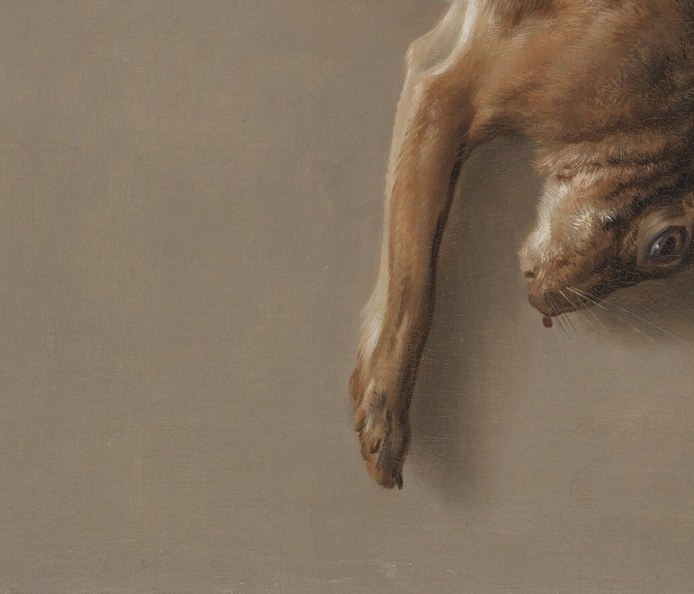
Jean-Baptiste Oudry painted A Hare and a Leg of Lamb in 1742, and it now hangs in the Cleveland Museum of Art. He was the most famous animal painter in France, official painter to Louis XV's hunts, designer for the Beauvais tapestry works, master of fur, feather, and flesh. And by the time he made this canvas, he was losing the sight in his right eye.
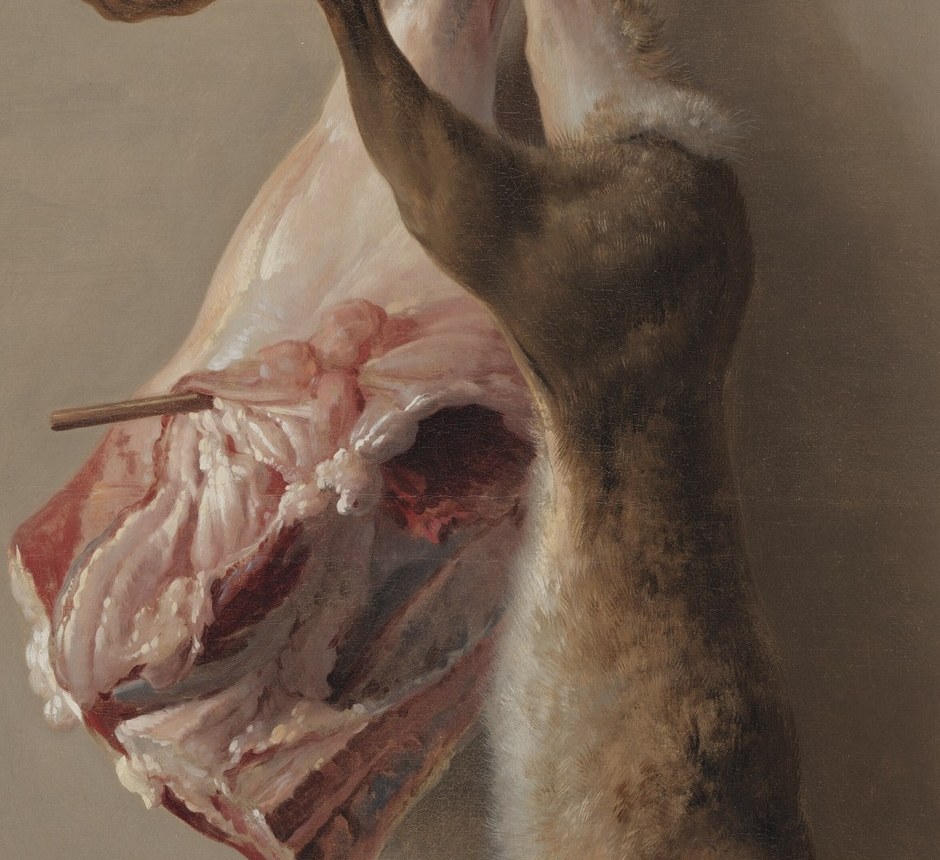
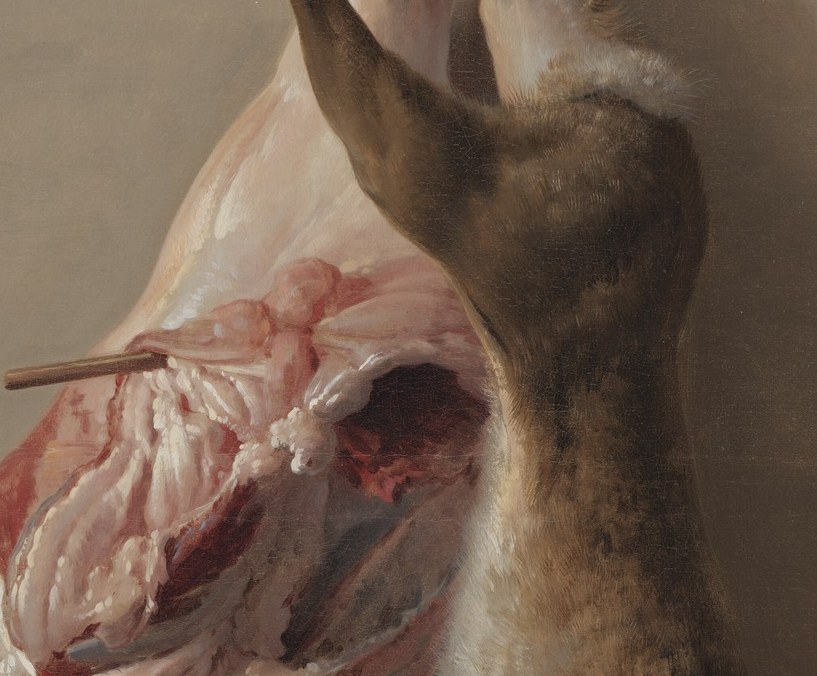
Look at the opened abdomen. The pink viscera are wet. A thin peritoneal membrane, translucent as wax paper, stretches across the dark cavity behind it. Oudry painted a thing that is almost invisible, using the part of painting most painters avoid: the glaze. That membrane is pure technical nerve.
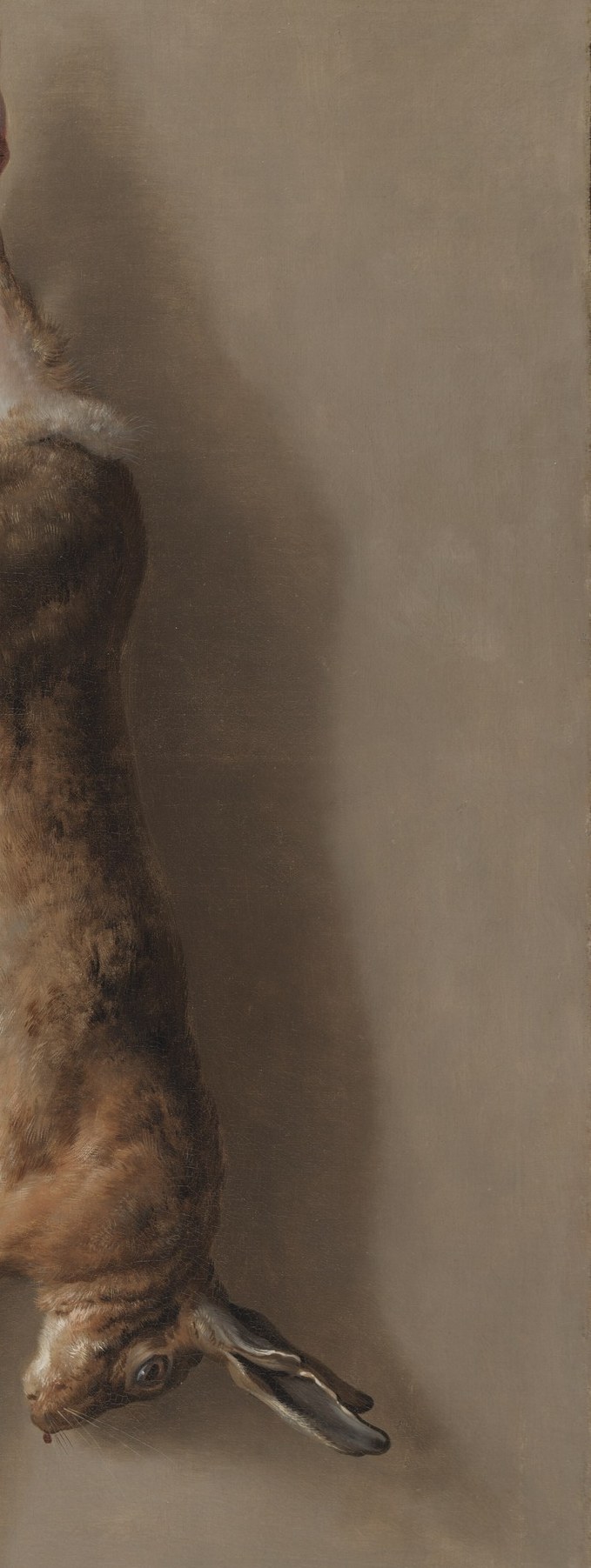
The hare's ear, flopped beside its head, has veins visible through the skin. The fur along the flank is painted hair by hair. The cast shadow on the warm grey ground is soft and true. Every inch of this painting insists: I can see.
Oudry's blindness progressed over years. He adapted his studio with lenses and special lighting. He kept painting game pieces, dead hares, hung pheasants, joints of lamb, paintings that required the most exacting eye in the trade. What was that like, to paint transparency while your own sight dimmed?
Details
Transcript
1742. France. A painter starts going blind in his right eye. Jean-Baptiste Oudry was losing sight, and he knew it. Look at that cast shadow. One eye still reads depth perfectly. Now the opened abdomen. That is not just meat. A translucent membrane stretches across the cavity. He painted the near-invisible, while his own eye clouded over. The hare's ear is veined like a leaf you could hold. Oudry was going blind. So he painted proof he could still see.