View of the Bay and City of New York from Weehawken by Robert Havell Jr.
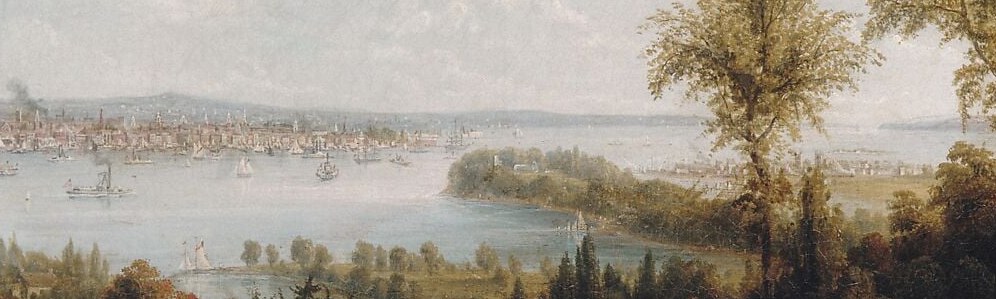
Robert Havell Jr.'s 1840 painting is a portrait of a vanished New York. Titled View of the Bay and City of New York from Weehawken, this oil on canvas captures Manhattan's skyline and harbor from across the Hudson River, decades before the age of skyscrapers. It now lives in the collection of the Metropolitan Museum of Art.
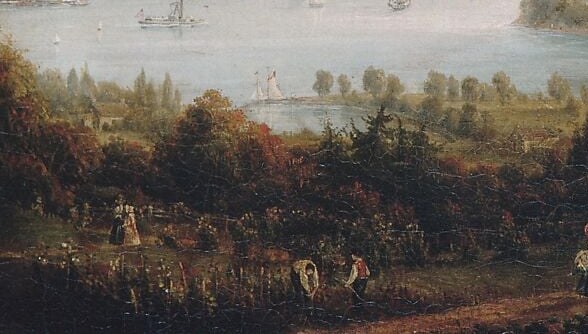
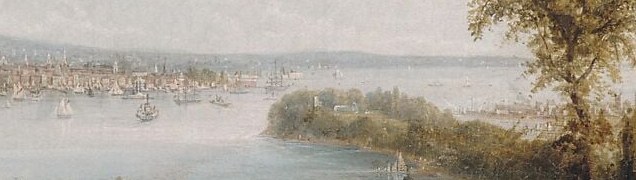
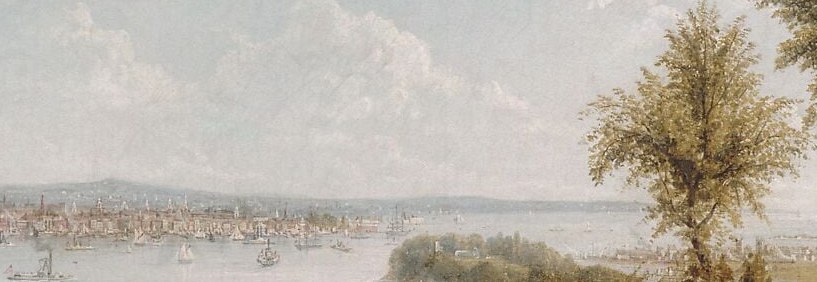
The first thing to notice is the forest of slender church spires. In 1840, these were the tallest structures in the city. The painting reads like urban archaeology: Trinity Church and its neighbors pierce the skyline where glass towers now stand. Then look at the harbor, dotted with white-sailed vessels. That is the city's true engine in this moment, a maritime trade hub before steam and steel took over.
Havell came from a prominent English family of engravers known for their aquatint work. He brought an engraver's precision to this canvas, and the result is a topographical document as much as a landscape. The viewpoint from Weehawken was already a famous sight-line, chosen deliberately for its commanding sweep. What he recorded so carefully disappeared within decades; by the 1890s, the skyline he painted was unrecognizable.
What strikes me is the quiet of it. A city of brick and spires and sails, low on the horizon, with every stone still visible. It is the city before the roar.
Details

Transcript
The year is 1840. You are standing in New Jersey. Across the water: New York City, before the skyscraper. Church spires were the tallest things on the island. The harbor made the city. White sails everywhere. The painter was an English engraver. He saw a city becoming. Every spire you see here vanished within fifty years.