Portrait of a Gentleman by George Catlin
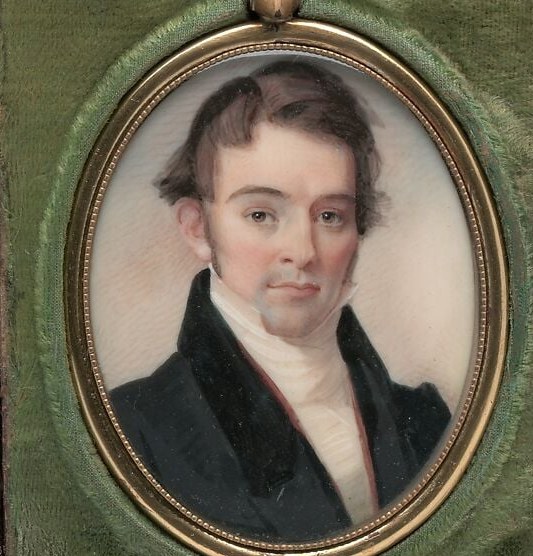
Before the invention of photography, miniature portraits like George Catlin's *Portrait of a Gentleman* (1827) served as cherished personal mementos, carried by individuals to keep images of loved ones close.
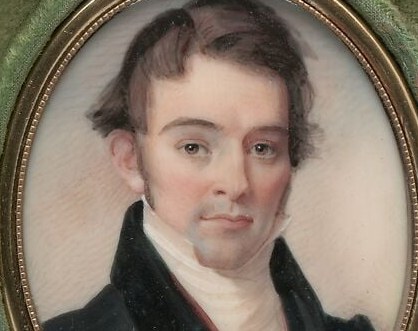
This particular watercolor on ivory is smaller than a playing card, meticulously painted by Catlin using delicate layers of glaze to achieve subtle tonal variations on the sitter's face. It's presented within an ornate gold locket ring and a plush green velvet case, underscoring its value as a keepsake.
Catlin, now best known for his later depictions of Native American life, created this piece during an earlier phase of his career focused on intimate portraiture. The heraldic shield on the back, with its motto 'CUI DEBEO FIDUS' ('I am faithful to whom I owe'), and the powerful symbol of a bird pierced by an arrow, speak to the deep sense of loyalty or devotion the portrait was intended to convey.
What kind of story do you imagine this loyal gentleman had?
Details
Transcript
Before photographs, people carried miniature portraits like this. This one is painted on ivory, smaller than a playing card. The painter built up color in delicate layers, a technique called glazing. This gold ring holds the miniature portrait inside. Its motto states: 'I am faithful to whom I owe'. The bird with an arrow is a potent symbol of loyalty. This was a cherished memento, meant to be kept close.