Entrance to the Grotto of Posillipo by Jean-Charles-Joseph Rémond
Jean-Charles-Joseph Rémond painted Entrance to the Grotto of Posillipo in 1822, a year after winning the Prix de Rome. It hangs today in The Metropolitan Museum of Art.
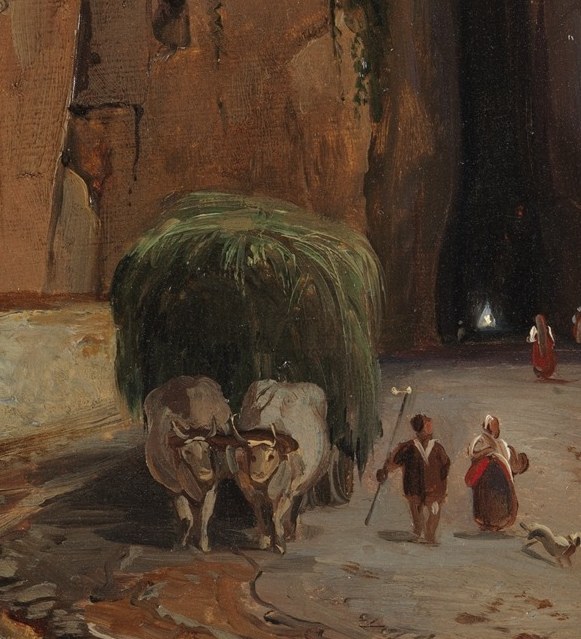
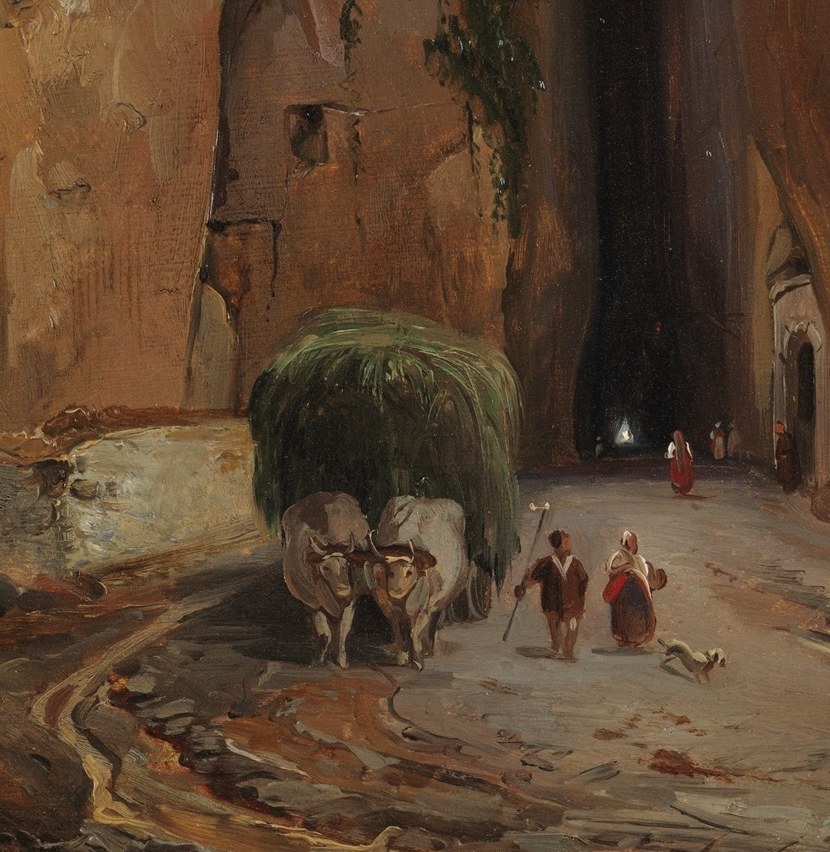
The painting shows a cavern entrance near Naples, a real road tunnel carved by the Romans. The black void at its center is total. No light escapes. The Romantic painters called this feeling the sublime: nature making you feel small and precarious, and a little thrilled by it.
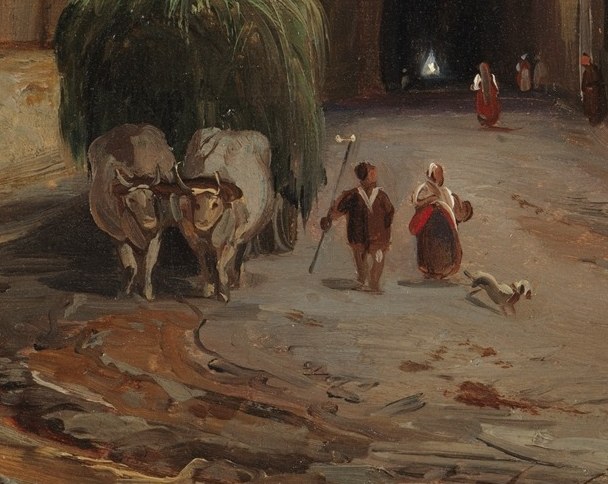
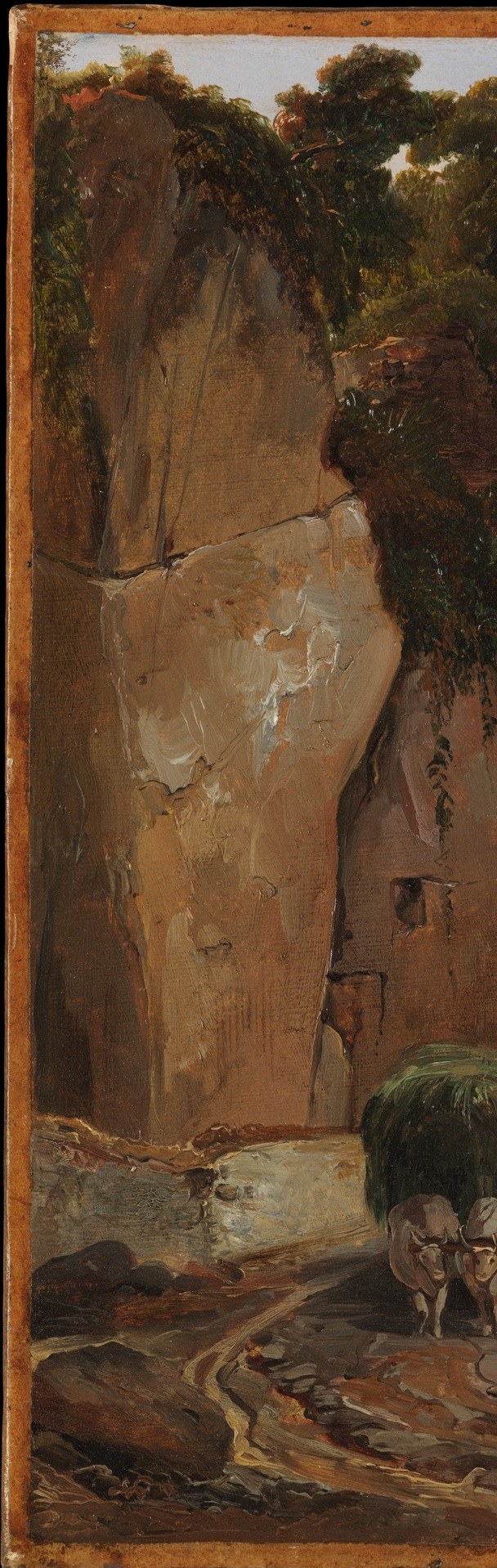
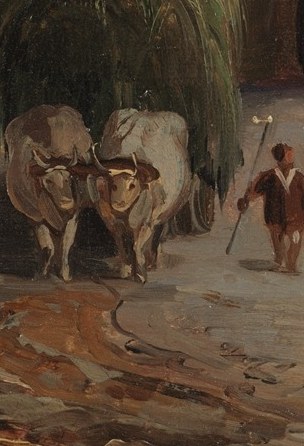
Look at the scale. The left cliff wall consumes nearly half the canvas, its rock face a record of volcanic time. Against it, the foreground figures are tiny. A cart and oxen, a dog, a few travelers. One of them, a woman in a red shawl, is the warmest thing in an otherwise ochre-and-grey world. She is not a symbol. She is a person, stopped at the threshold of the dark.
Rémond was a landscape history painter, trained in the French academic tradition. He exhibited regularly until 1848 and then stopped. What he left us here is a painting about the size of the world and the smallness of a human life. The road goes on. She pauses. And that pause is the whole story.
Details
Transcript
This is an ordinary day on the road to Naples. A cart, some cattle, a few travelers. But this road goes straight into the dark. The blackness inside is absolute. A Romantic void. The cliffs record geological time. The humans are an afterthought. Now look at the woman in the red shawl. A single point of warmth. A whole life, paused at the threshold. The painter won the Prix de Rome the year before. Then he painted this.