In a Roman Osteria by Carl Bloch
Carl Bloch painted 'In a Roman Osteria' in 1866, and it now hangs in the National Gallery of Denmark. It was a private commission for his close friend and patron, the merchant Moritz G. Melchior.
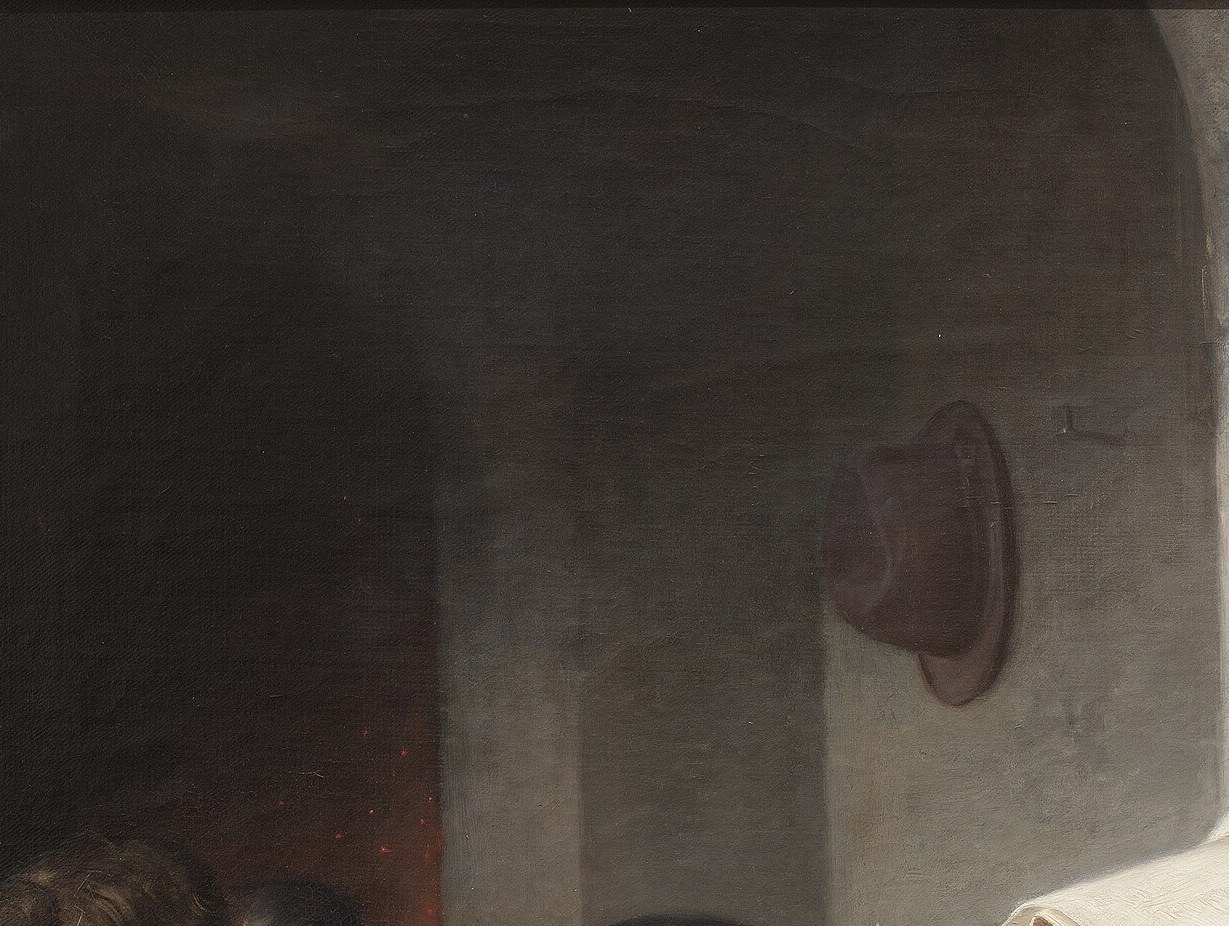
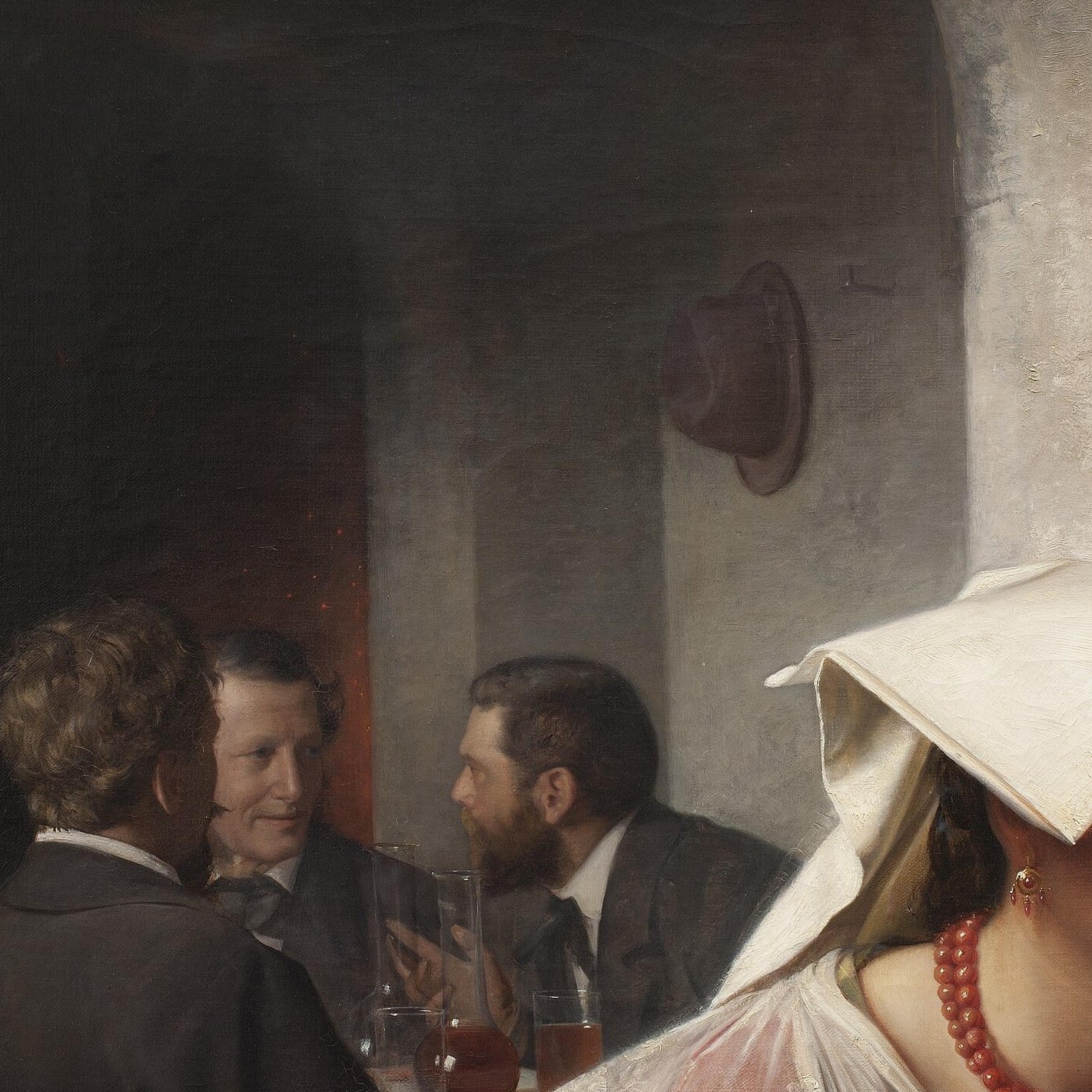
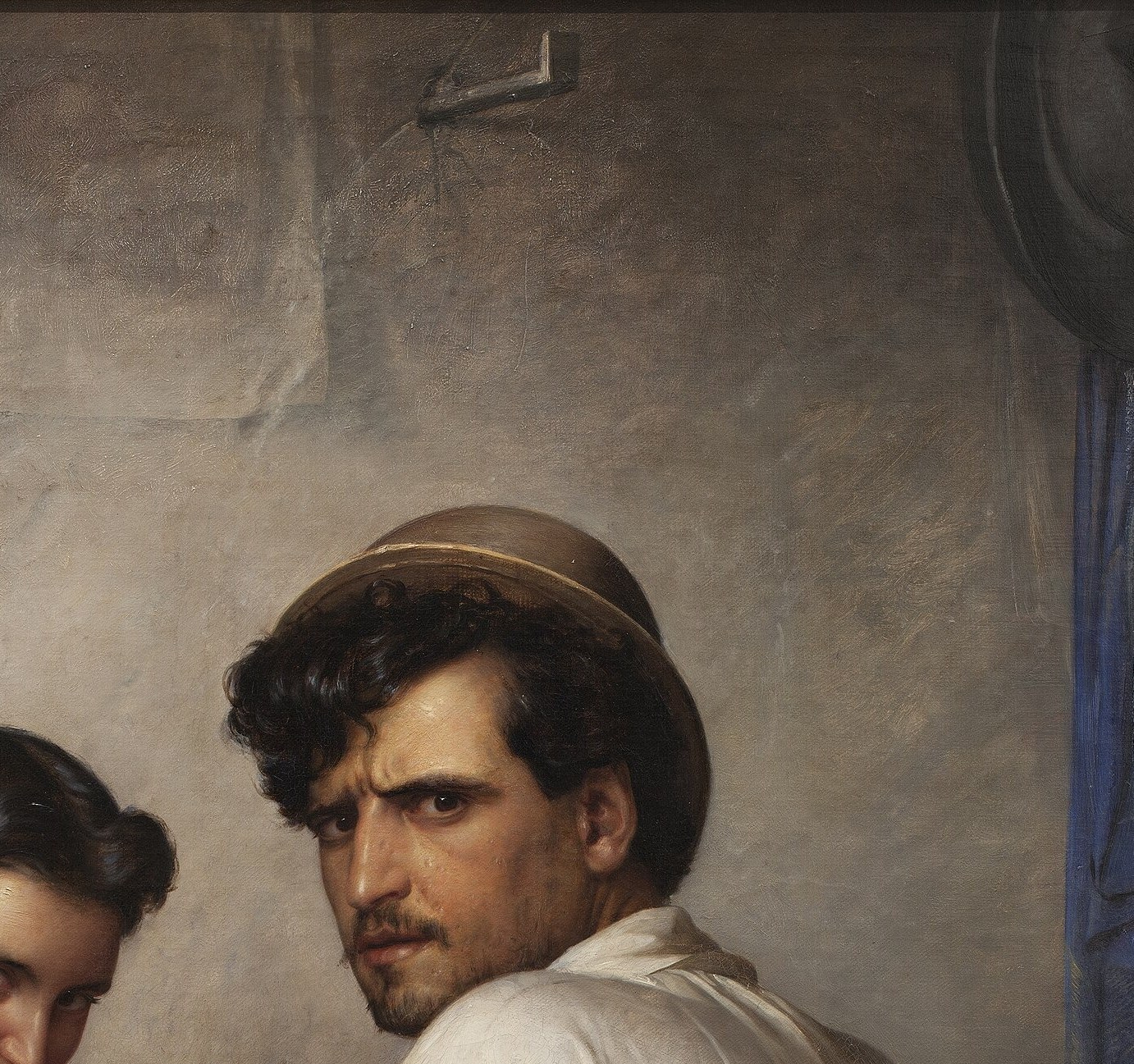
Look first at the background. One of the shadowy patrons on the right is Melchior himself. Bloch tucked him into the crowd as a quiet inside joke between friends.
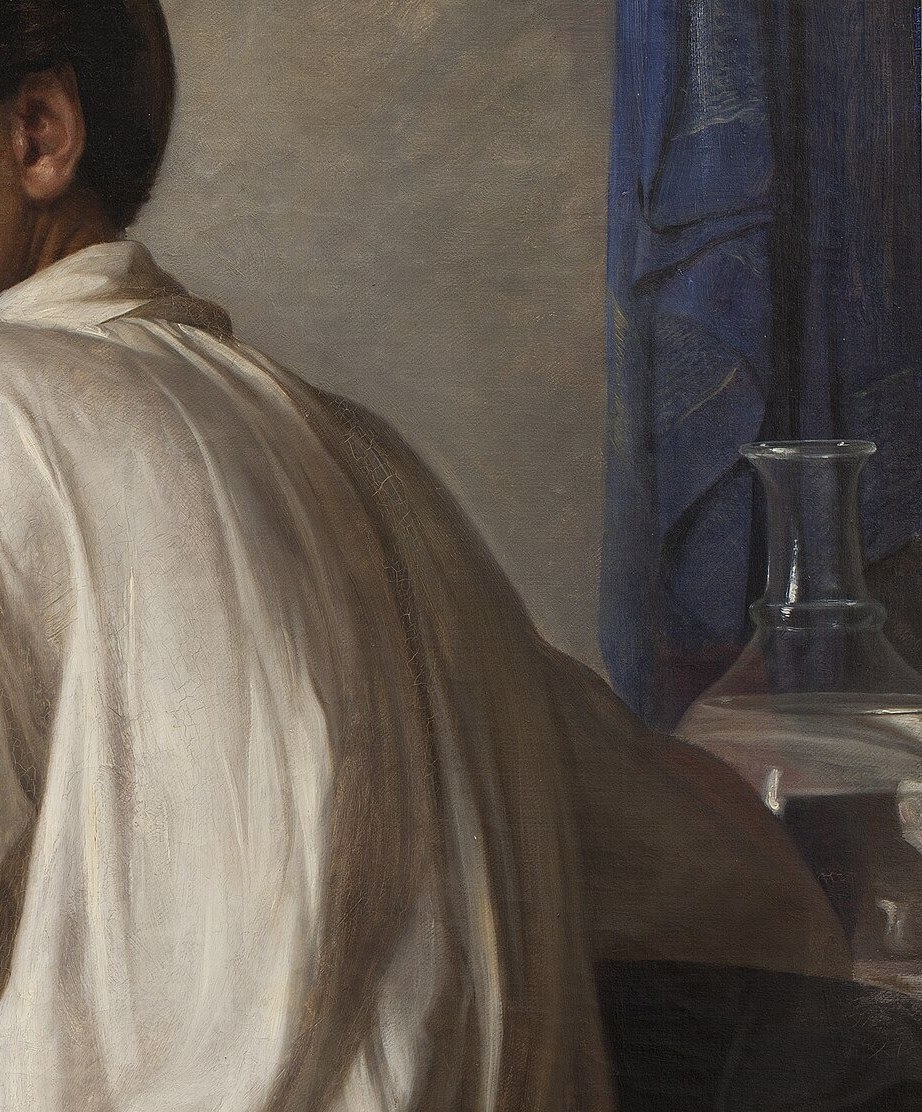
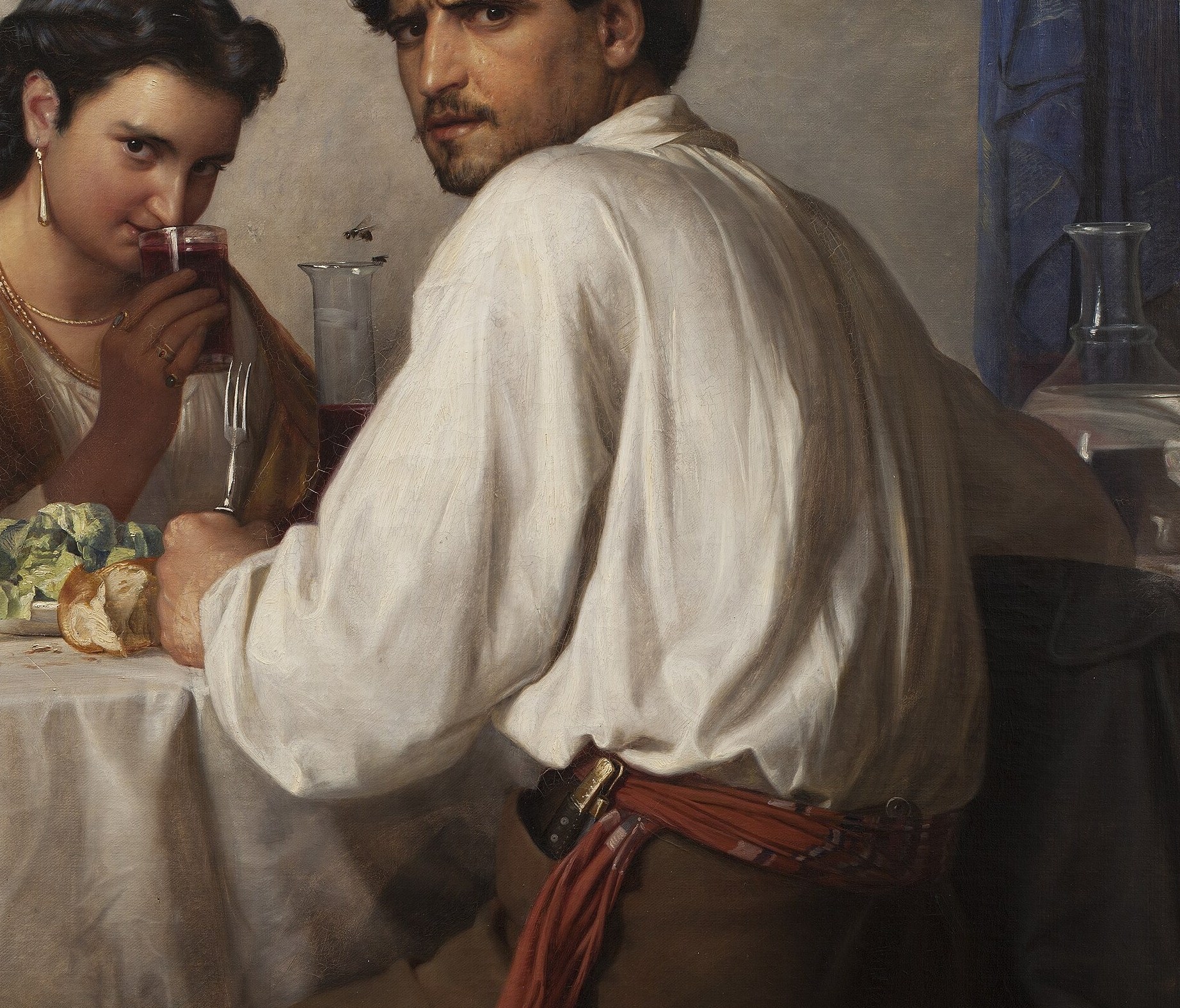
Then let your eye drop to the young man's white shirt. Bloch lit it with a single strong light source from the arched doorway. The result is a virtuoso study of crumpled linen. Every ridge and hollow is built from paint, and the highlights feel dry and crisp to the eye.
Bloch was a Danish artist who trained in Copenhagen and traveled through Italy absorbing the warm light and everyday street scenes. The loose brushwork and theatrical contrast here show what he brought back. The shirt is the painting's real flex: a moment where fabric becomes pure technique.
What passage in a painting has made you stop and wonder how it was physically done?
Details
Transcript
Three young people around a table. A Roman tavern, 1866. This scene was paid for by a merchant, Moritz G. Melchior. He is also IN the painting, right here in the background. But the real show-off is his white shirt. Look at the light raking across the crumpled linen. Carl Bloch painted every fold and wrinkle with a single light source. The texture looks stiff and crisp just from oil and a brush.