The Grotto of Posillipo by Hubert Robert
Hubert Robert, a French painter of the Romantic era, was renowned for his "capricci", imaginative landscapes that often combined real and fantastical ruins. His 1769 painting, *The Grotto of Posillipo*, now at The Cleveland Museum of Art, is a prime example of this fascination.
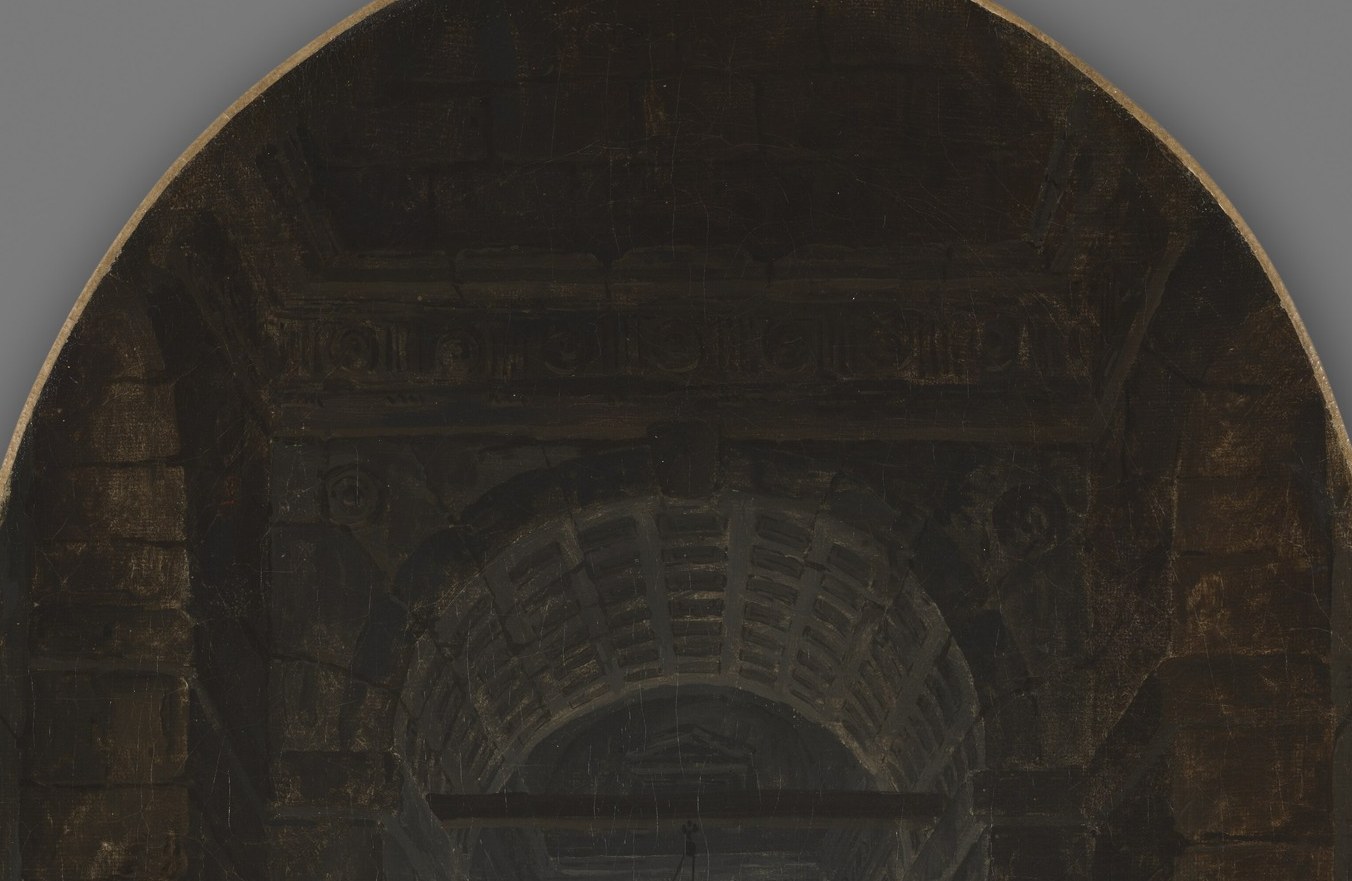
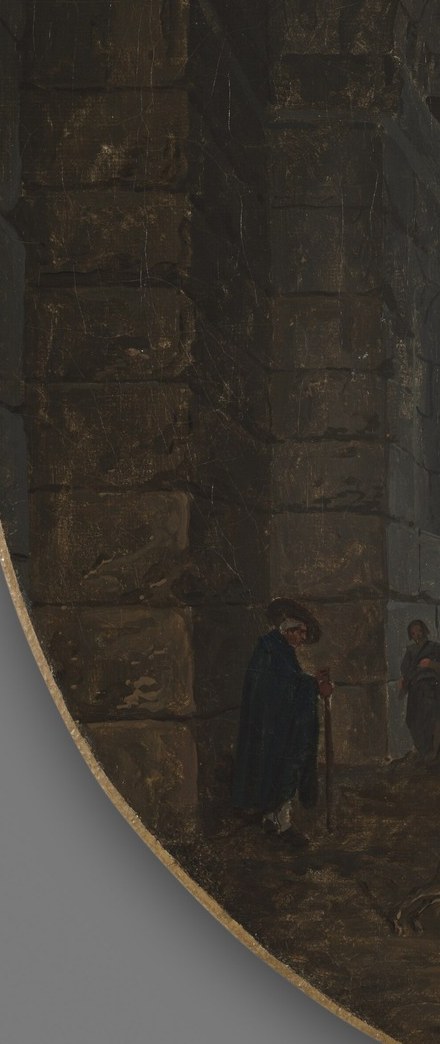
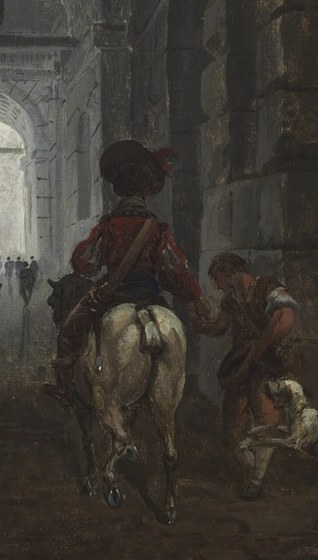
Notice how the massive stone columns and vaulted ceiling frame the scene, drawing your gaze into the cavernous space. The play of light and shadow, a technique called chiaroscuro, masterfully guides the eye towards the luminous aperture at the far end.
This isn't a direct depiction of a real grotto, but a blend of observation and Robert's vivid imagination, characteristic of his early career. He expertly creates a sense of depth and mystery, inviting viewers to journey into his picturesque world of ancient, weathered settings.
What details do you find most captivating in this blend of nature and architecture?
Details
Transcript
This painter was obsessed with ruins. He created imaginary scenes, blending nature with ancient structures. These monumental columns frame the entrance to a vast grotto. But the light at the end isn't just distant, it's a trick. He used a technique called chiaroscuro, for dramatic light and shadow. It pulls your eye to the exit, an imagined world of light.