An Elderly Man in Prayer by Rembrandt
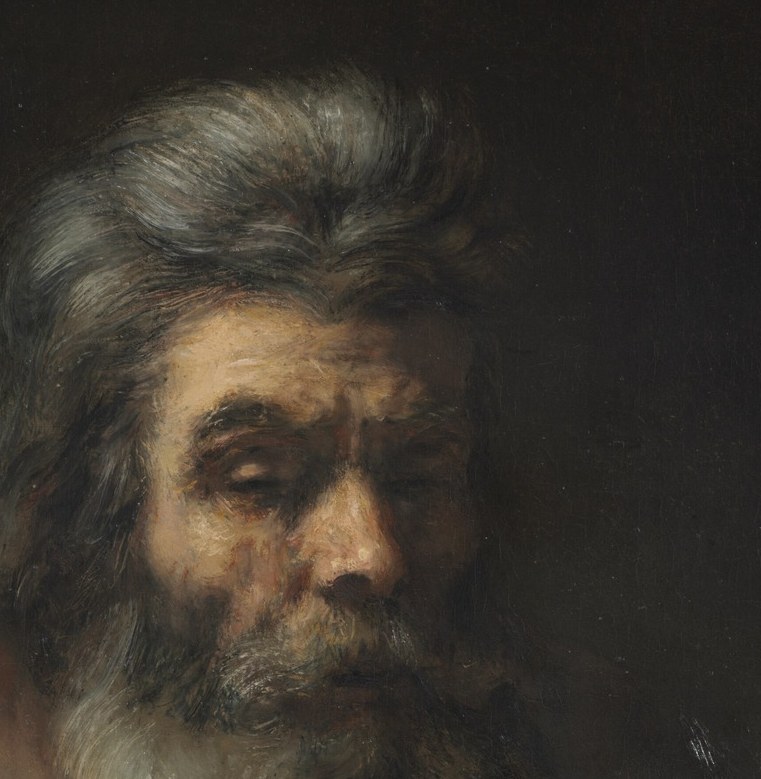
This is "An Elderly Man in Prayer," painted by Rembrandt in 1660. It hangs today in a private collection, but the man who created it had just lost everything.
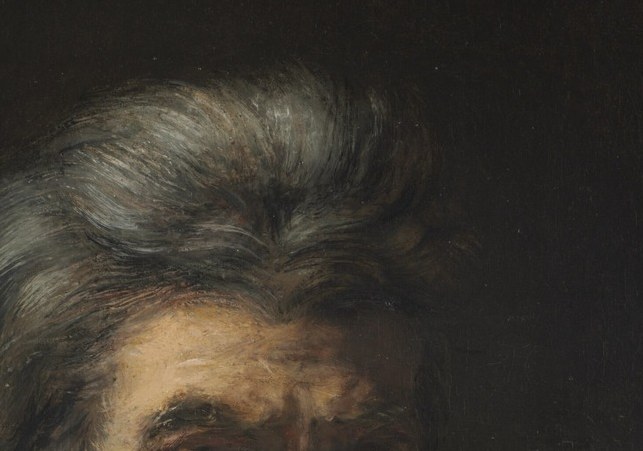
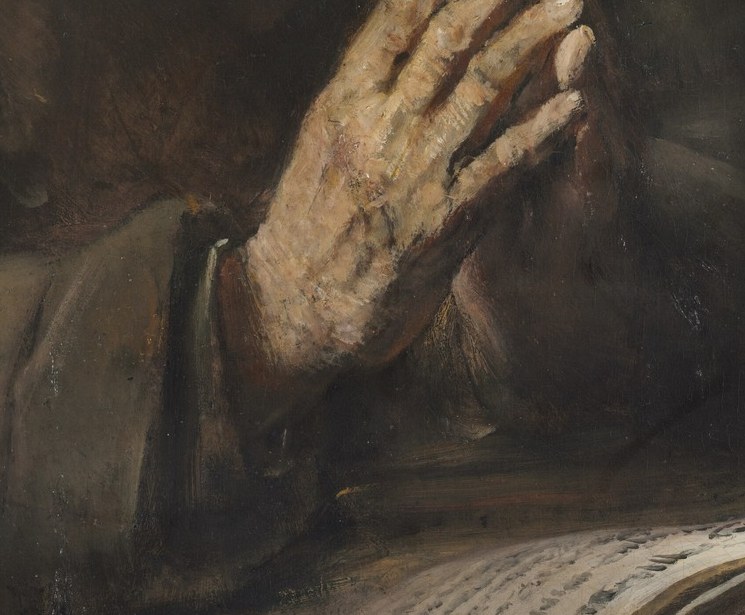
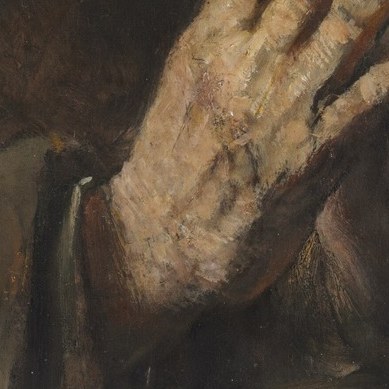
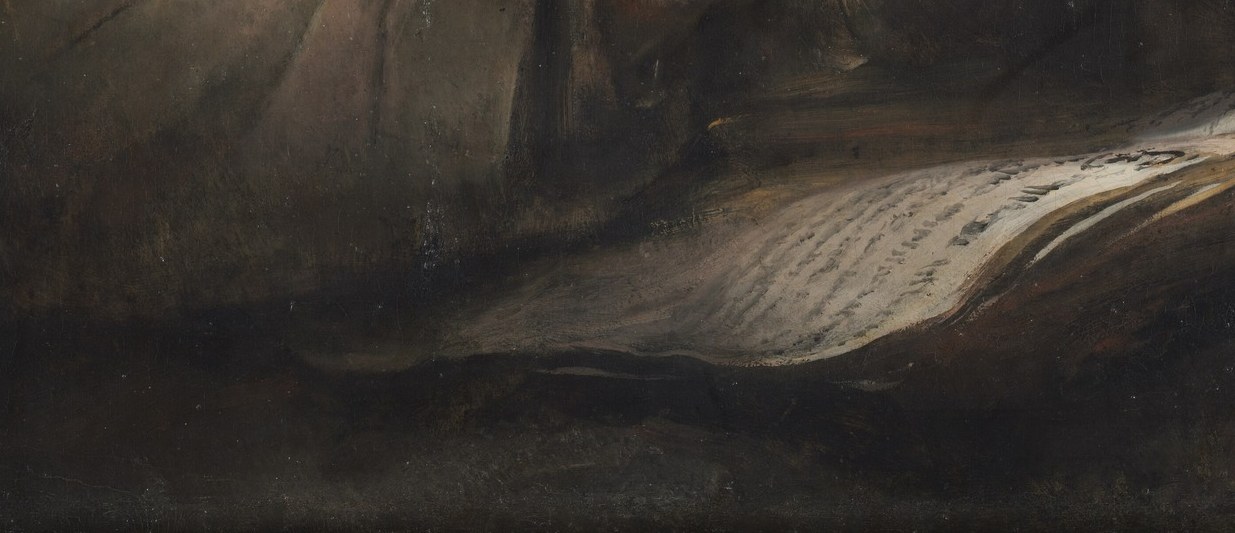
The painting strips away every possible distraction. An old man, eyes closed, hands clasped, an open book the only object before him. Rembrandt uses his famous chiaroscuro to catch the forehead and the hands, the seat of thought and the gesture of supplication. The dark background absorbs the world, leaving only the act of private devotion. Look at the thumb, the knuckle; the paint gives the hand real weight, anchoring something spiritual in something bodily.
1660 was a catastrophic year for Rembrandt. Four years earlier, the Amsterdam bankruptcy court had forced the sale of his grand house, his art collection, his printing press, even his own earlier paintings. By 1660 he was officially bankrupt, working as a salaried employee of a company run by his son and his mistress because he could no longer legally earn his own income. He was 54, publicly shamed, and still painting.
No one knows who this old man was, a neighbor, a fellow congregant, an invented face. But he has no fine lace collar, no merchant's black velvet, no sign of station. He has only his hands and his text. In the year Rembrandt learned what it meant to possess nothing, he painted a man who needs nothing but what cannot be auctioned.
Details
Transcript
Rembrandt painted this man in 1660. That year, he was declared bankrupt. His house, his collection, his paintings, all sold. Look at the hands. They hold nothing. The book is his only possession left. He painted what the creditors could not take.