Beach Scene at Trouville by Boudin, Eugène
Eugène Boudin’s "Beach Scene at Trouville," painted in 1863, captures a serene moment of leisure on the Normandy coast. This oil on wood painting, housed at a prominent museum, is a testament to Boudin's skill in rendering atmospheric conditions and the interplay of light on water.
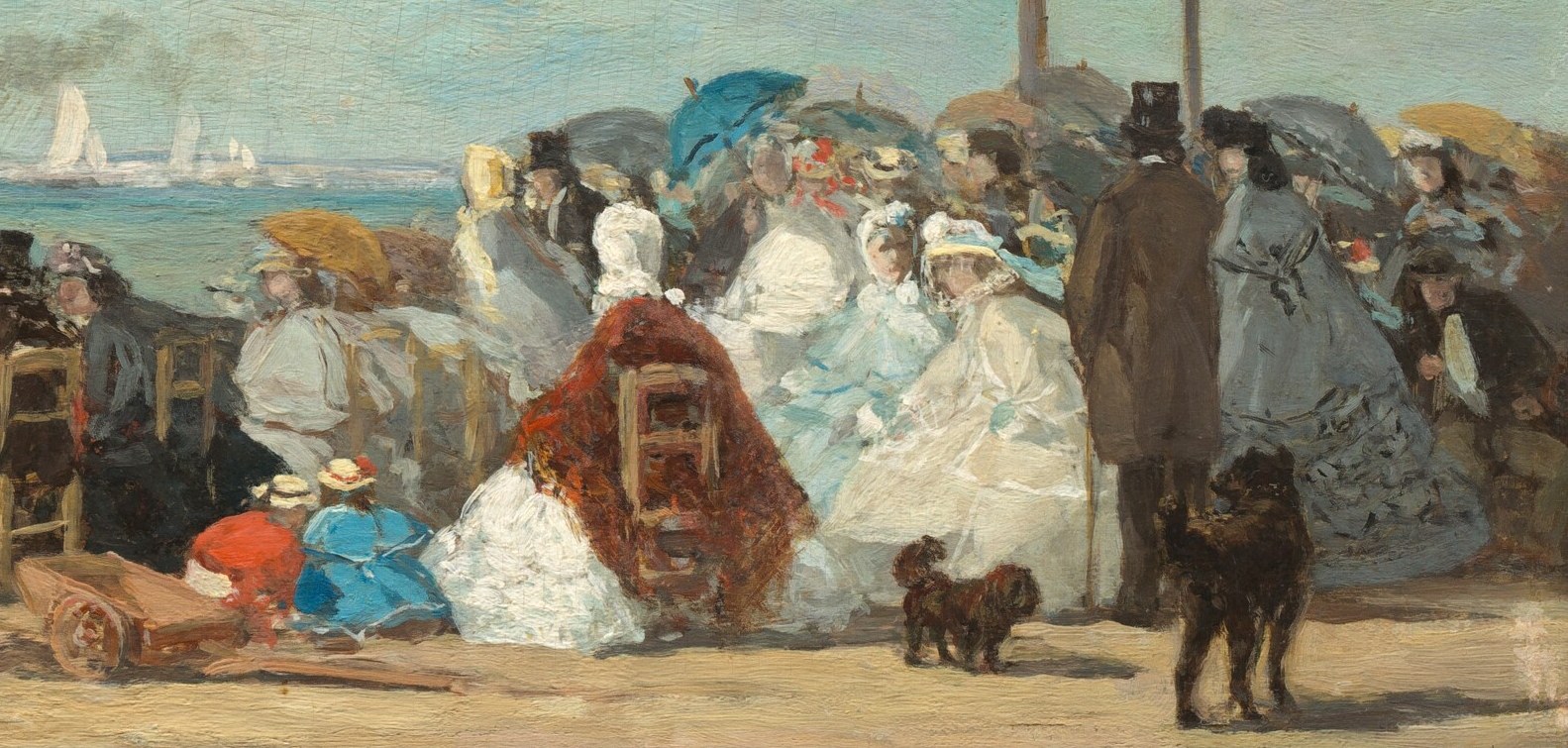
The painting invites us to observe the fashionable crowds, with women in their voluminous dresses and men in top hats, enjoying a day by the sea. The numerous sailboats on the horizon are characteristic of popular 19th-century seaside resorts.
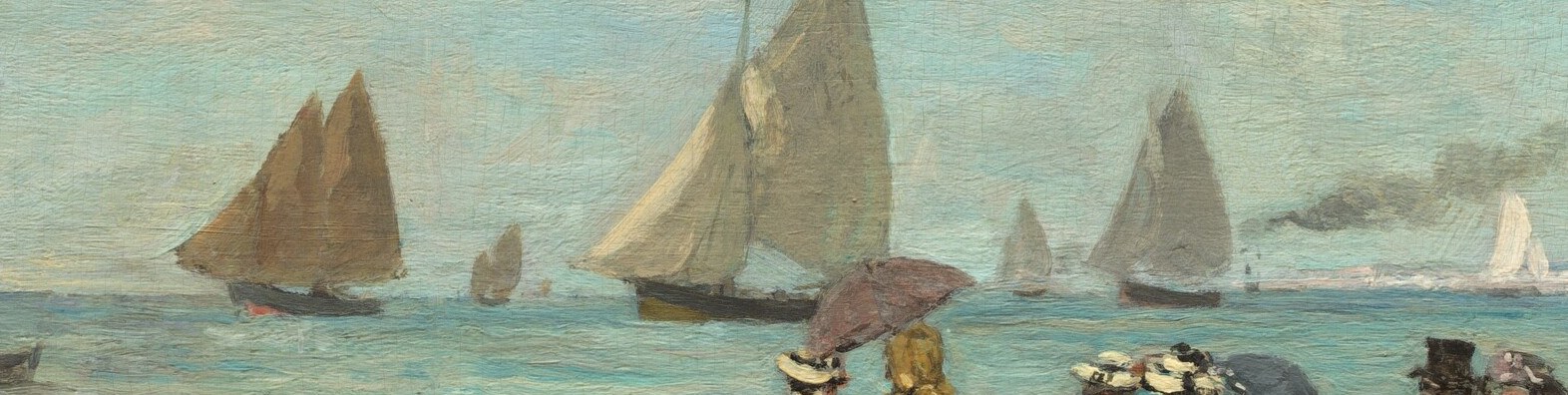
Yet, a tiny, often overlooked detail hints at the changing world. Look closely at the distant horizon, and you'll spot a faint wisp of smoke from a steamship. This detail subtly introduces the industrial progress and modern transportation that was beginning to transform leisure and travel.
Boudin was a master of outdoor marine painting, praised by critics like Baudelaire for his ability to capture the fleeting effects of weather. This painting beautifully bridges the tranquility of traditional recreation with the subtle arrival of modernity. What other small details do you notice?
Details
Transcript
This painter was known for capturing lively beach scenes. In 1863, he painted this fashionable crowd at Trouville. The women wear voluminous dresses, men in top hats. Sailboats dot the horizon, a typical seaside resort. But look closer, a new age is already arriving. That faint smoke is a distant steamship, modernizing travel.