The Harvest, Pontoise (La Récolte, Pontoise) by Camille Pissarro
Camille Pissarro painted The Harvest, Pontoise in 1881, depicting potato gatherers in a sunlit field thirty miles northwest of Paris. Now held at the Metropolitan Museum of Art, the canvas captures the moment Pissarro’s brushwork reached its fullest confidence, a textbook demonstration of how Impressionism physically works.
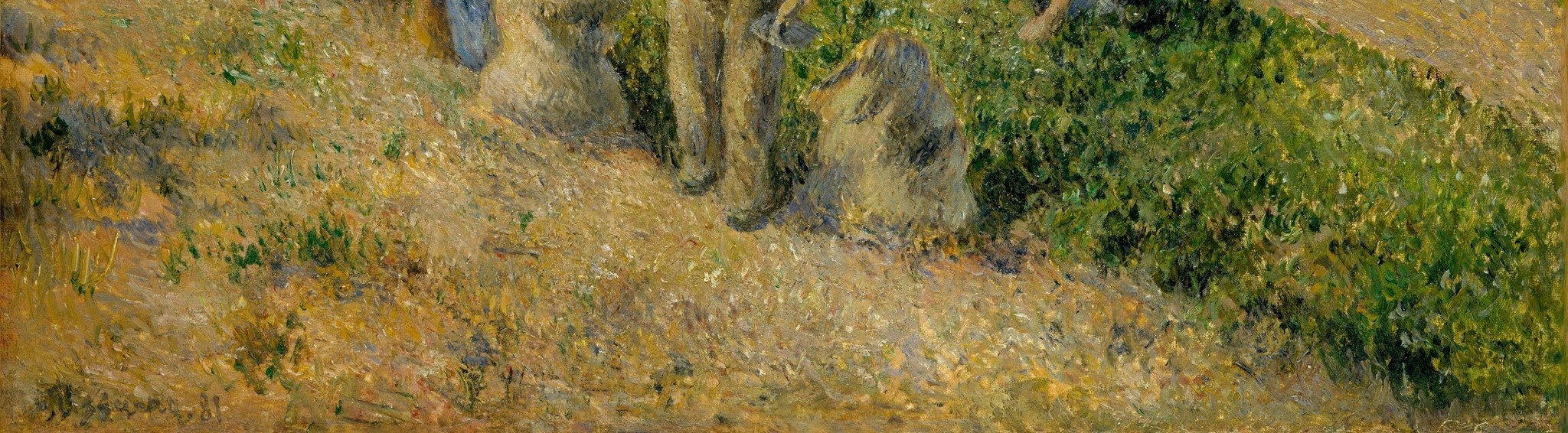
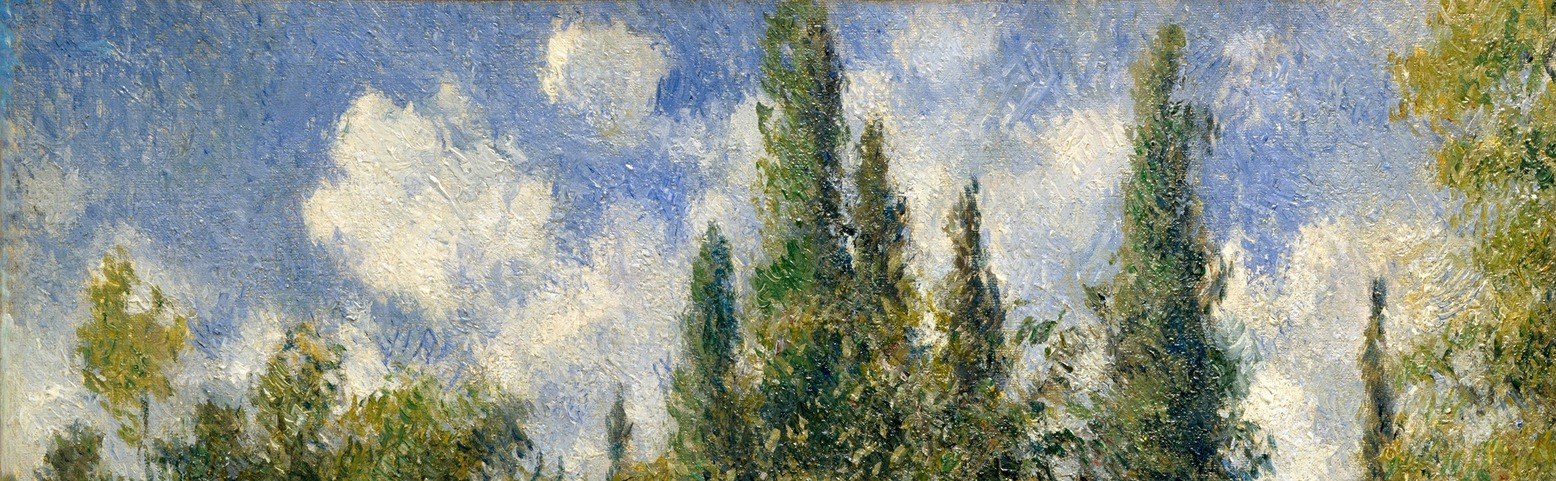
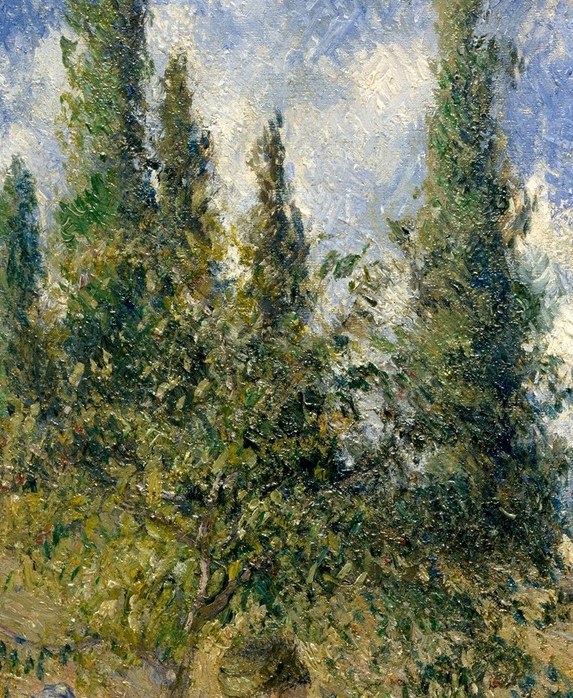
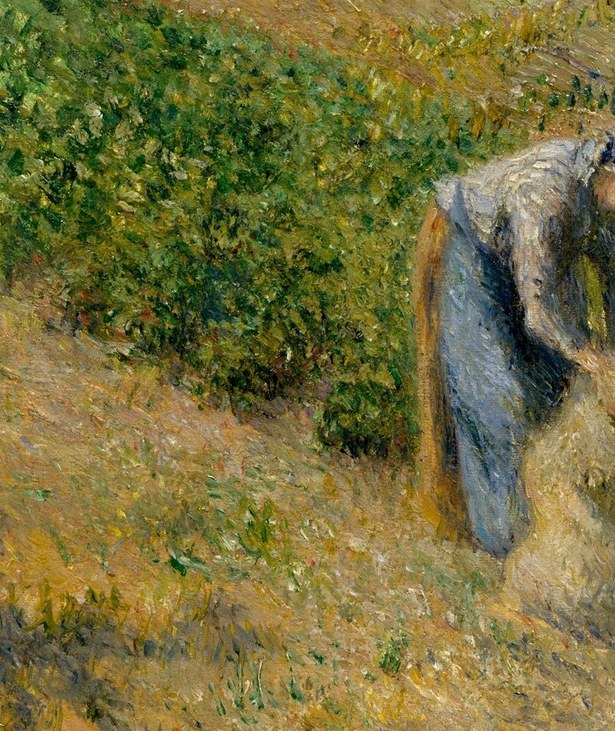
From a normal viewing distance, the scene reads as a coherent rural landscape. Step closer, and it dissolves into individual marks of unmixed color: golds beside ochres in the foreground earth, white against violet in the clouds. Your eye does the blending, which is why the surface feels alive. The blue of the bending woman’s headscarf is the cool note that pulls the eye into the lower half; the tall cypresses split the sky and anchor the composition.
Pissarro was the group’s elder statesman, a generation older than Monet, and Paul Cézanne called him a father figure. He insisted on painting the common person in a period when many colleagues chased bourgeois leisure scenes. The visible signature in the lower-left corner authenticates the work, a record of a painter who believed the hand should never disappear beneath the image.
Details
Transcript
From a few feet away: a harvest under a bright sky. But Pissarro never wanted you to stay a few feet away. Look at the earth in the foreground. Green, ochre, gold, each stroke laid beside the last, unmixed. This is optical mixture: the colors blend in your eye, not on the canvas. Now watch the same principle build the sky. Broken white, blue, and violet strokes create the weight of billowing clouds. This painter was 51, the oldest of the Impressionists, and still teaching the younger men how to see.