Six Apostles by http://www.wikidata.org/.well-known/genid/40265dc2166b23bd6e8cdfbe64f4a628
This is 'Six Apostles', a tempera painting on gold-ground panel by an unknown hand in the German school, dating from around 1500. It likely once formed part of a larger altarpiece polyptych in a church somewhere north of the Alps.
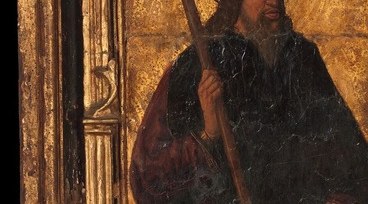
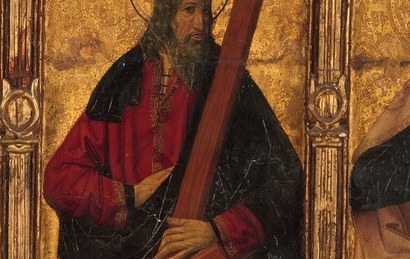
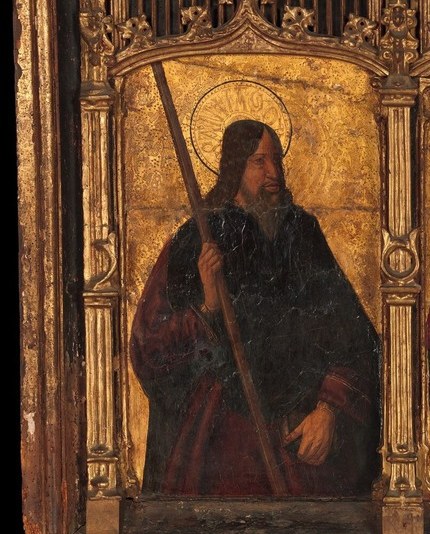
Look for the attributes. The man on the far left holds a bound codex, iconographic shorthand for the gospel writers, almost certainly Peter. The fifth figure from the left carries a sword: that is Paul, the only apostle tradition records as martyred by beheading. These objects are not props; in a largely illiterate world, they were the name tag. The gold ground behind them is not a sky. It is a sacred void, a deliberate denial of earthly space that places the figures in eternity, a convention inherited directly from Byzantine icons.
The painting was made around 1500, when tempera on panel was still the dominant northern European technique, but just before oil painting and the printing press would change everything. The Gothic trefoil arches and micro-architectural pinnacles framing each apostle show a workshop that cared about ornamental craft at a nearly architectural scale.
Every object in this painting was placed to be read. You just had to know the language.
Details


Transcript
Six men in gold. No names visible. But if you know the code, every one of them has signed his name. They are apostles. Each carries a calling card. This elder's book says he wrote. Peter, the rock. Now look at the fifth man. He carries a sword. A sword means Paul. The only apostle martyred by the blade. Behind them all, a gold void, no landscape, no sky. They're not in this world. Their attributes speak forever.