明 盛茂曄 唐詩意山水圖 冊|Landscapes after Tang Poems by Sheng Maoye
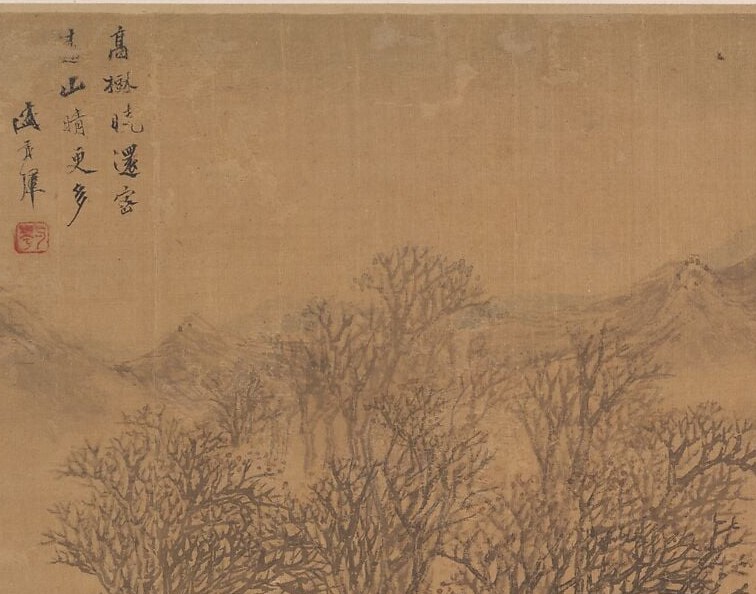
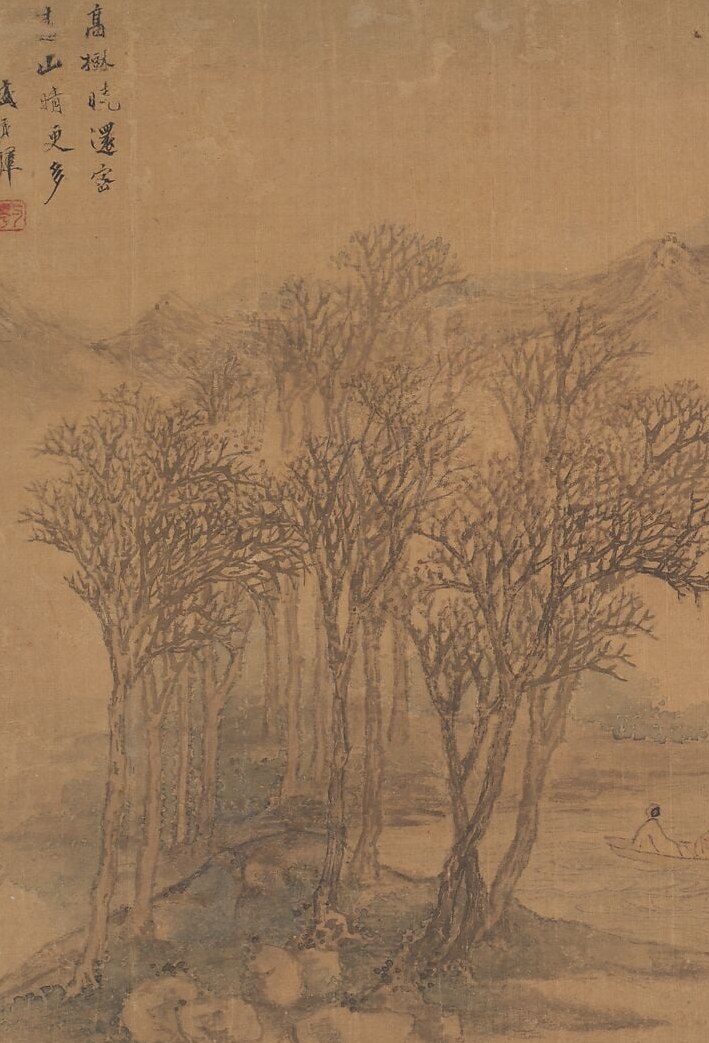
This is a single leaf from Sheng Maoye's *Landscapes after Tang Poems*, an album of six paintings on silk from around 1650. Because these are not literal illustrations. The painter never shows you the poet. He gives you the world the poem made him see, mist, bare branches, still water, and trusts you to feel the rest.
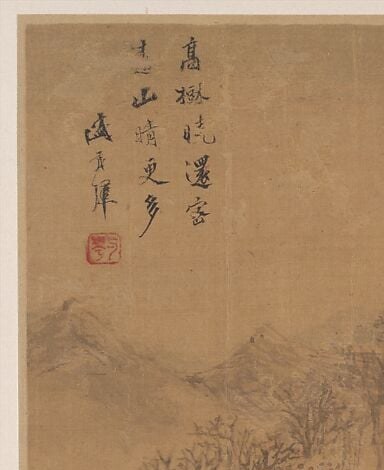
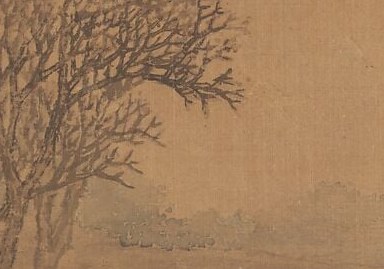
Scan the shoreline just right of center. Two figures are standing there, so small you could swipe past them. But they are the whole point. The calligraphic inscription on the left is a specific Tang poem, and this leaf is Sheng Maoye's reply to it in brush and wash. The figures anchor the scale: without them, the mountains and water read as scenery; with them, the painting becomes a space a person could actually stand inside.
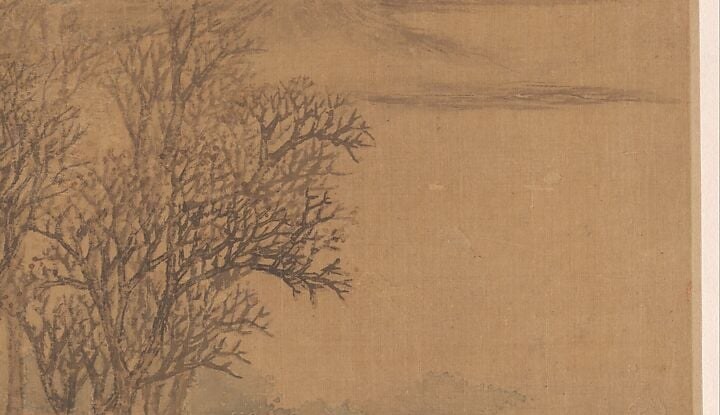
Sheng Maoye was active in the late Ming, around 1615 to 1640, and his brushwork here is deliberately delicate. The bare branches use a dry calligraphic stroke called crab-claw technique; the far mountains are nearly indistinguishable from the sky. The open water in the center-right is left as bare silk, no blue, no lines, because in this tradition, stillness is itself a substance.
A poem and a painting made three hundred years apart, sitting together on one small album leaf. The figures are still there, waiting at the shore.
Details
Transcript
At first, this reads as pure winter stillness. Bare branches, misty mountains, an open stretch of water. The calligraphy on the left is a Tang dynasty poem. This leaf is the painter's visual answer to those lines. Look at the water's edge, just right of center. Two tiny figures stand at the shoreline. They are the only humans in the entire painting. And they are why this landscape exists.