Lair of the Sea Serpent by Elihu Vedder
Elihu Vedder's "Lair of the Sea Serpent" (1900) is more than just a striking image of a mythical beast. This oil painting, now housed at The Metropolitan Museum of Art, embodies the Symbolist movement's fascination with hidden meanings and evocative imagery, inviting viewers into a world of mystery.
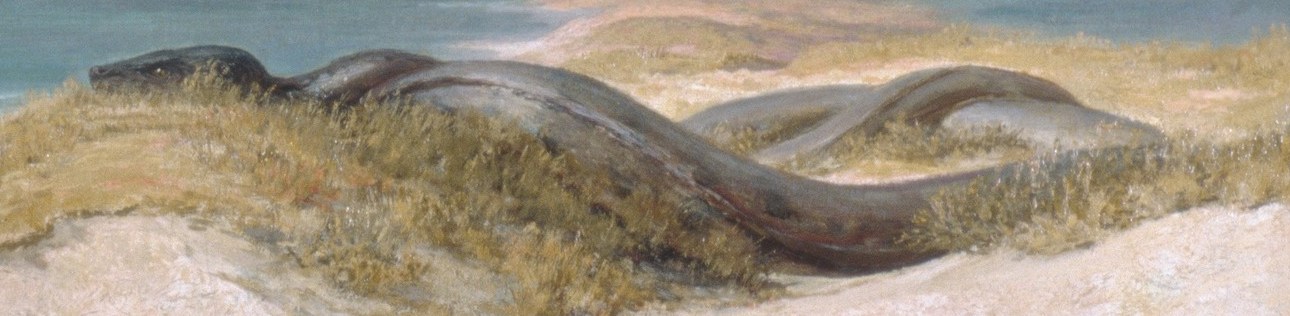
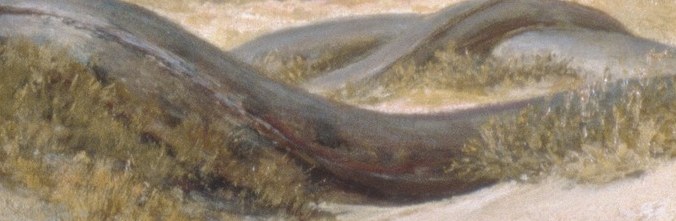
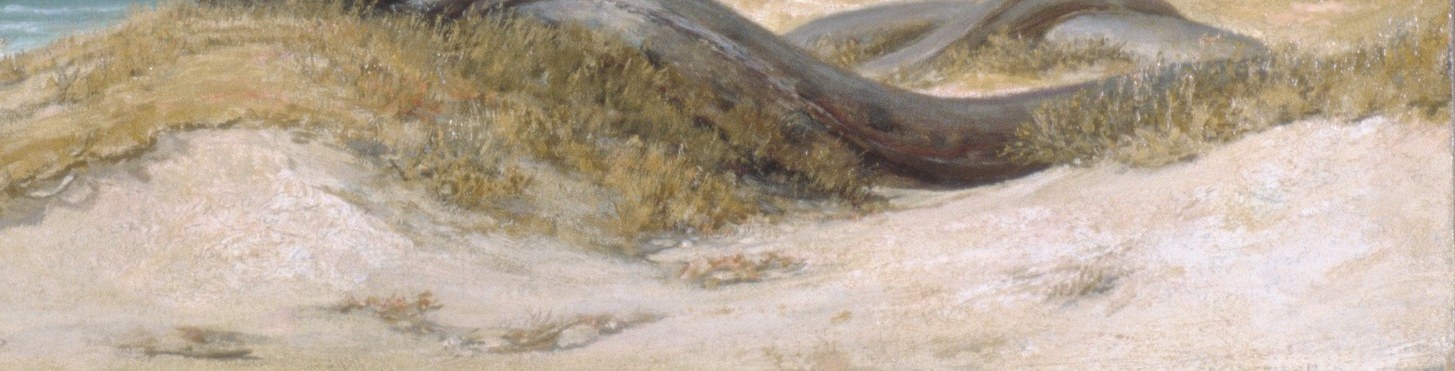
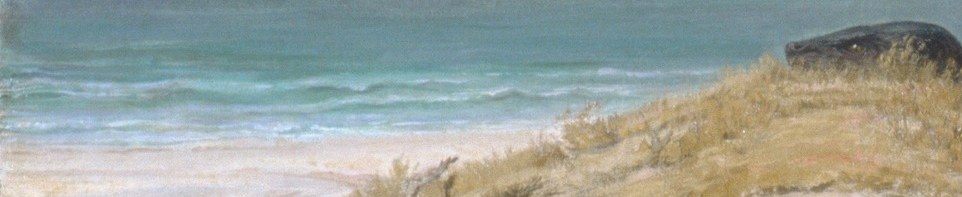
Observe the dominant, coiled serpent, its dark form a stark contrast against the pale beach sand. Notice the textured dune grasses and the dynamic turquoise ocean waves, all under a cloudy, atmospheric sky. The careful rendering of light and shadow, particularly the shadow cast directly on the serpent's coils, adds a tangible sense of its immense presence and the isolation of its lair.
Vedder, an American artist known for his illustrations for "The Rubaiyat of Omar Khayyam," infused his paintings with a similar sense of imaginative depth. He used oil paint with masterful technique, layering colors to create subtle transitions and an overall enigmatic mood. This work was intended for exhibition, bringing Vedder's unique symbolic language to a wider audience.
What secrets does this solitary serpent guard in its ancient lair? The painting's enduring power lies in its ability to evoke primal fears and hidden depths within the viewer's own subconscious.
Details

Transcript
Look at this coiled sea serpent. It feels ancient, primal, and dangerous. The artist layered oil paint carefully. He created subtle shifts of light and shadow. This mysterious scene invites contemplation. A shadow falls on the serpent's coils. This painting was made for a major exhibition. It is now in the Metropolitan Museum of Art.