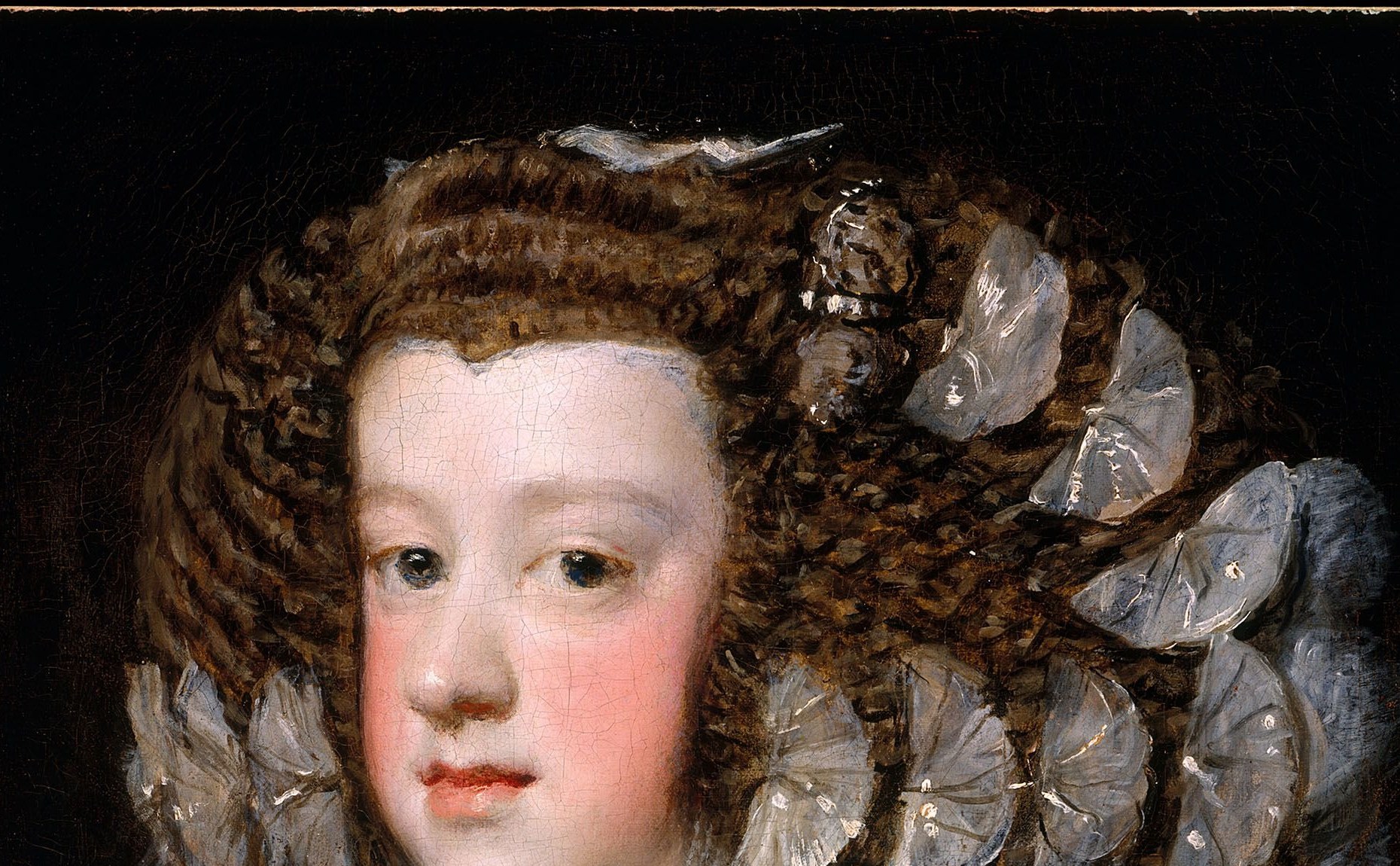
María Teresa (1638–1683), Infanta of Spain by Diego Velázquez
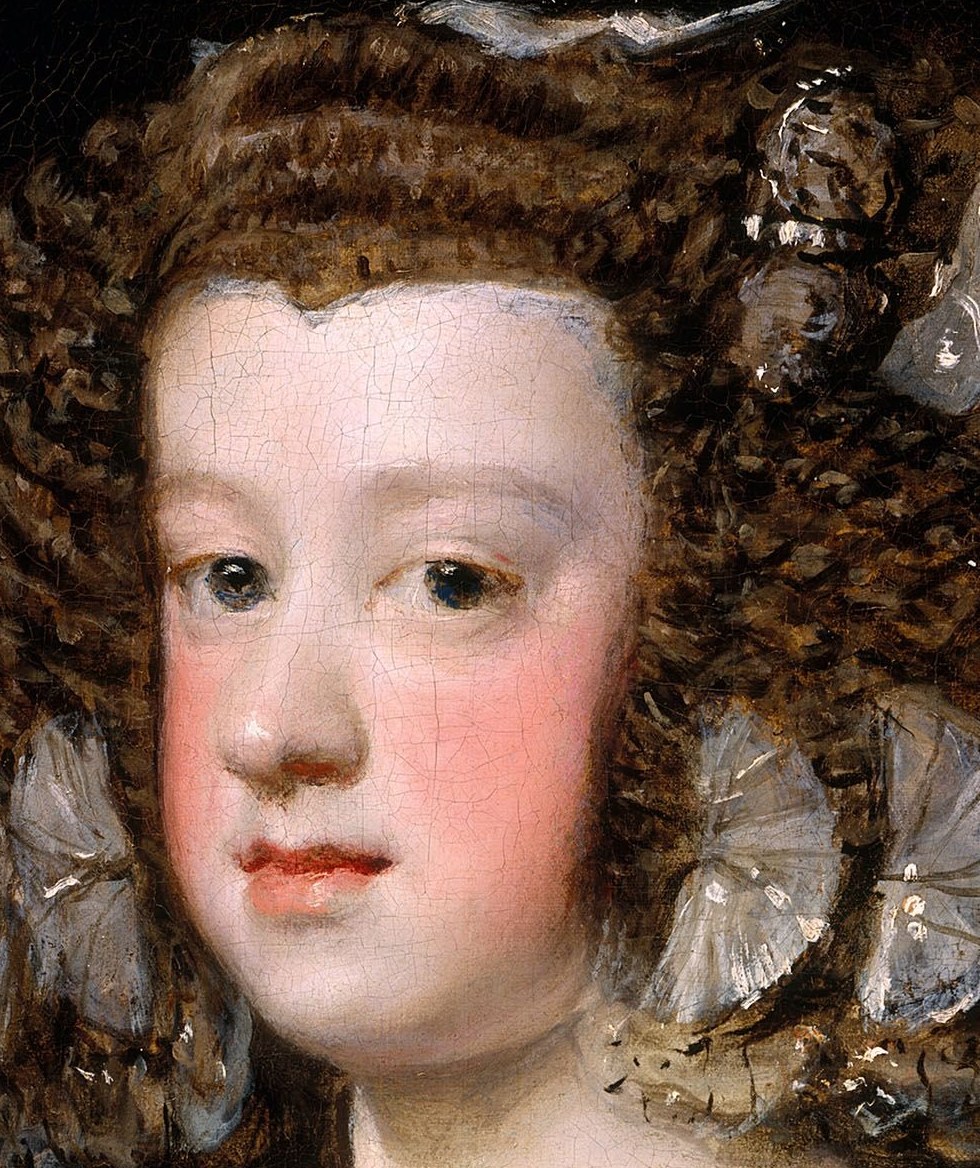
This is a portrait of María Teresa, Infanta of Spain, painted by Diego Velázquez around 1651. She was not yet twelve, and she was already a political instrument. The painting is held at The Metropolitan Museum of Art.
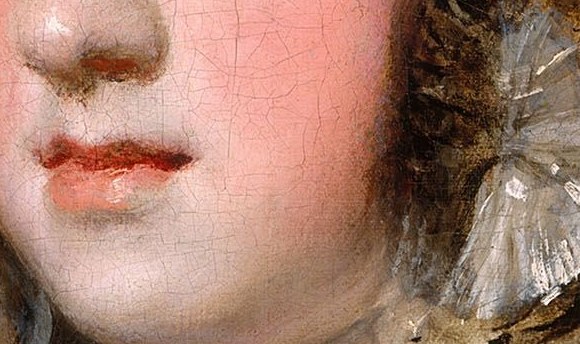
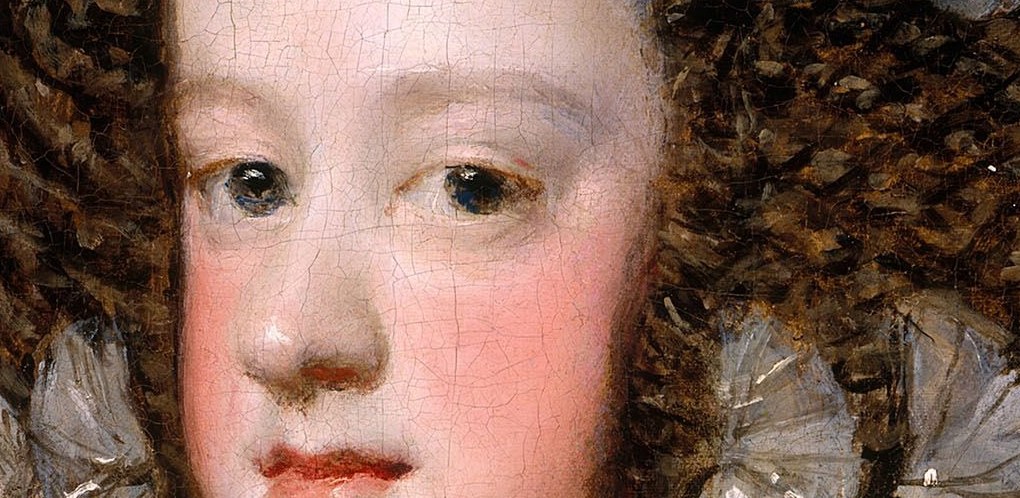
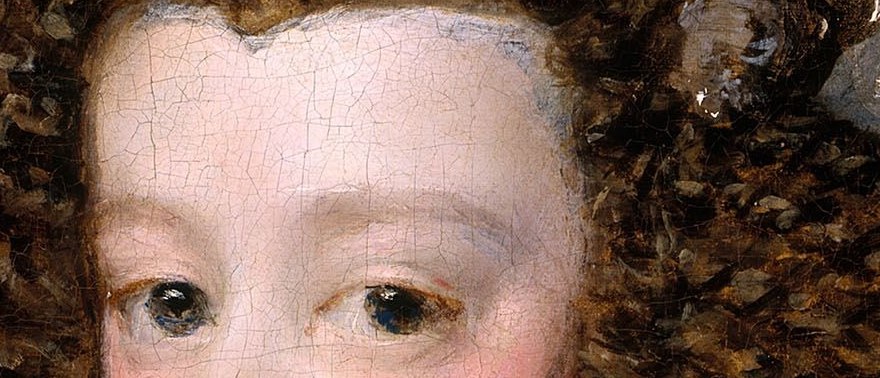
Look at the small, pursed mouth. That is the notorious Habsburg lip, a hereditary facial feature that passed through generations of the Spanish royal family. It is rendered here with the same dispassionate precision as the pearls in her hair. Then look at her eyes. Velázquez, who had known her since she was a child inside the Alcázar palace, does not flatter her with a hint of regal serenity. Her gaze is flat, unfocused, and utterly direct.
Velázquez was the court painter to her father, King Philip IV, and spent decades documenting the royal family. This painting was not meant for the child herself but as an official record of her availability for marriage. In 1660, she was indeed sent to France to marry King Louis XIV, a diplomatic union that helped end a long war between the two countries.
She never saw Spain again. Velázquez would die the year before her departure, leaving this likeness behind in the palace as a ghostly placeholder for the girl who left.
Details
Transcript
She is not yet twelve years old. Her face is the document of an empire. The shallow lip was a Habsburg inheritance, passed like a crown. Her cheeks are flushed with a rouge she did not choose. Velázquez gives her nothing but a blank, unblinking gaze. He watched her grow up inside the palace. He knew. In fourteen years, they will send her to France to be a queen.