Archduke Leopold Wilhelm in his Gallery in Brussels by David Teniers the Younger
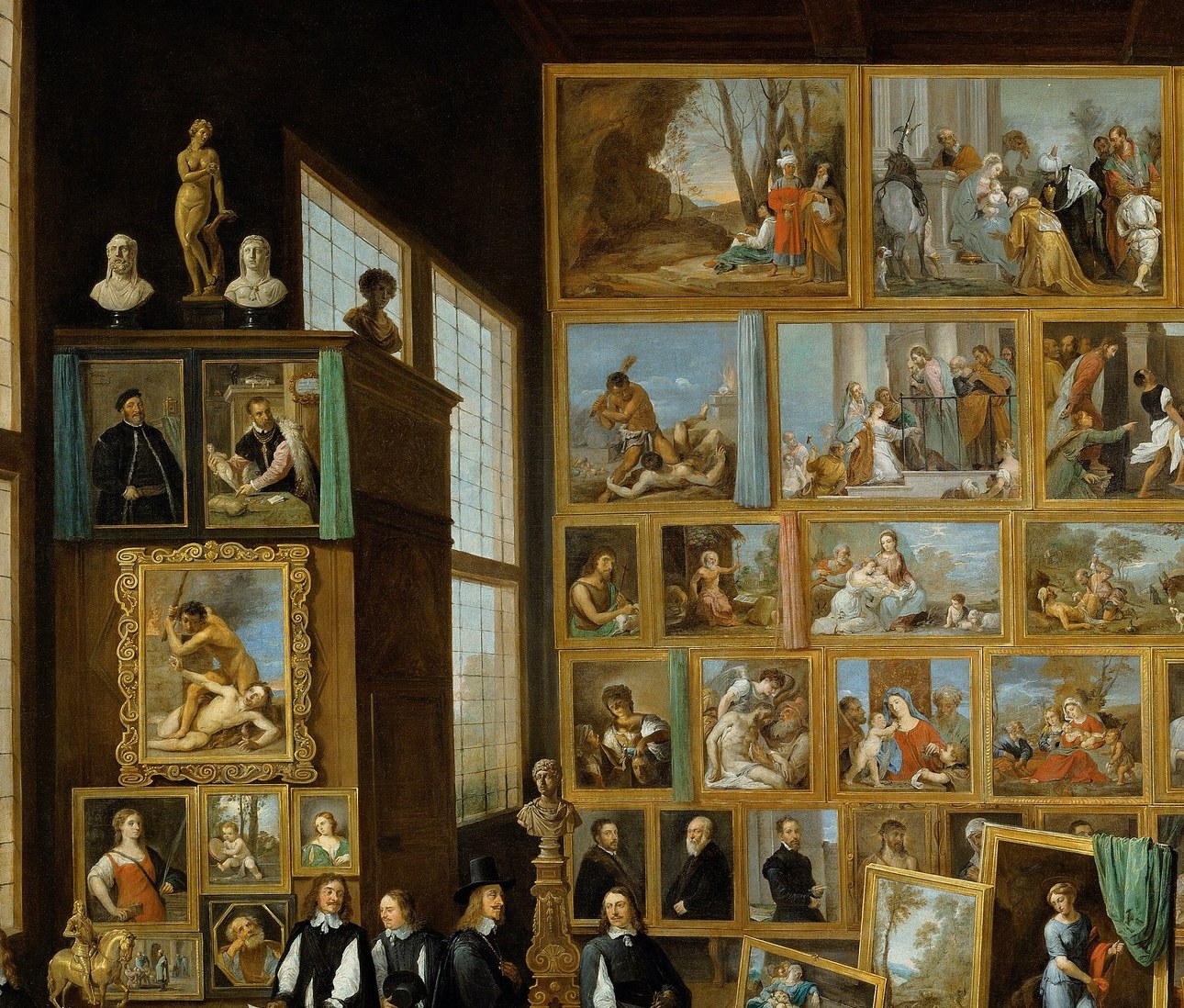
This is Archduke Leopold Wilhelm in his Gallery in Brussels, painted by David Teniers the Younger in 1651, and it is arguably the most ambitious inventory ever painted.
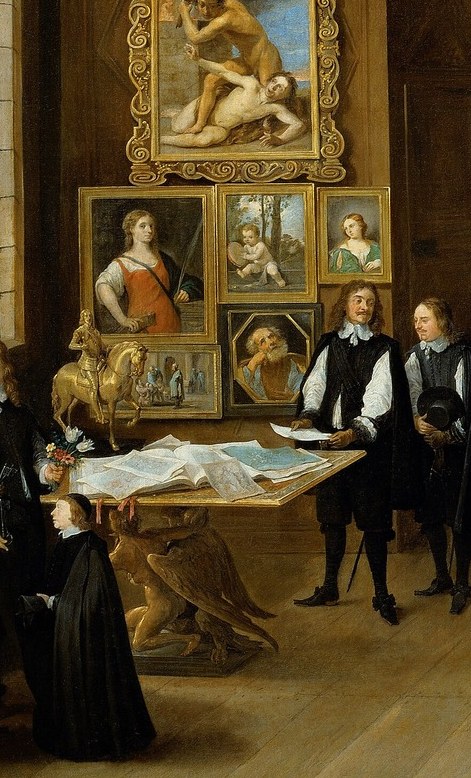
The Archduke, Governor of the Spanish Netherlands, assembled one of Europe's greatest collections of Italian art. This painting does not just show him with it. It catalogues it. Every tiny framed work on those back walls is a specific, identifiable masterpiece. Teniers was tasked with shrinking Titian, Raphael, and Giorgione into a single room and making each one recognizable. He managed fifty-one of them.
Teniers was more than the Archduke's court painter. He was the collection's curator. This painting served as a visual record and a statement of Habsburg power. A few years later, Teniers produced a printed catalogue of engravings based on the collection, the Theatrum Pictorium, which became the first illustrated printed catalogue of a major paintings collection. A Flemish genre painter had effectively invented the blockbuster museum catalogue.
The painting now hangs in the Kunsthistorisches Museum in Vienna, part of the same Habsburg collections it once depicted. When you stand before it, you are looking at a 17th-century spreadsheet of soft power, painted by a man who spent months staring at the walls he eventually had to recreate at brushpoint.
Details

Transcript
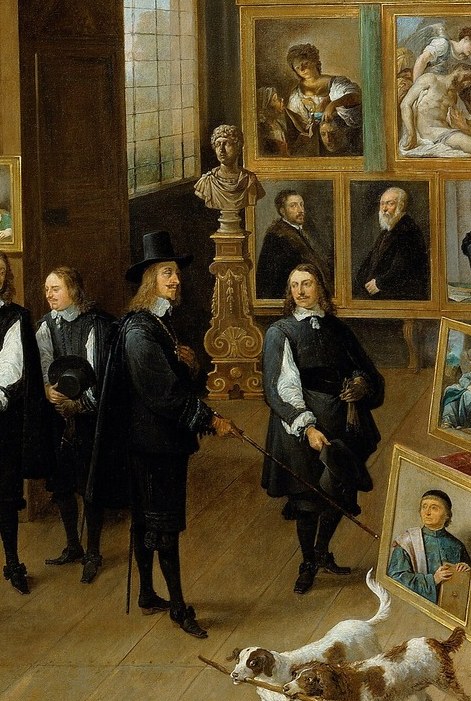
Brussels, 1651. One man owned this entire room. Archduke Leopold Wilhelm. Governor, collector, obsessive. Look at the paintings on the walls. Each one is specific. Not decoration. An inventory. Titian, Raphael, Giorgione, all miniaturized. The man in black beside the Archduke is the painter himself. David Teniers was the court painter, and the collection's curator. This painting was the catalogue. A printed book of engravings followed. One painting contained an empire's worth of art. Then a book sent it across Europe.