The Nativity by Jacopo da Sellaio
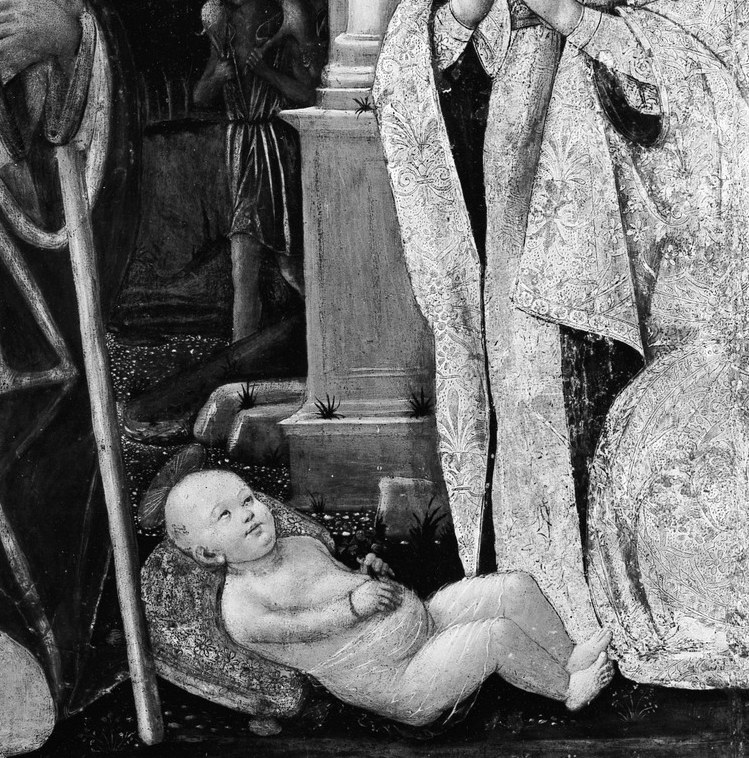
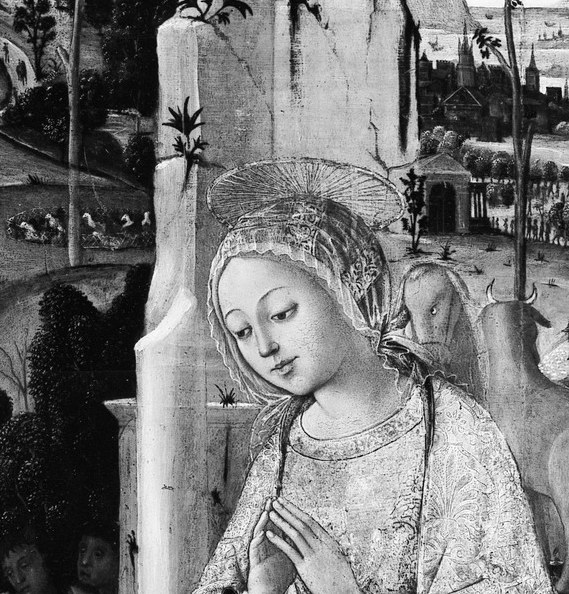
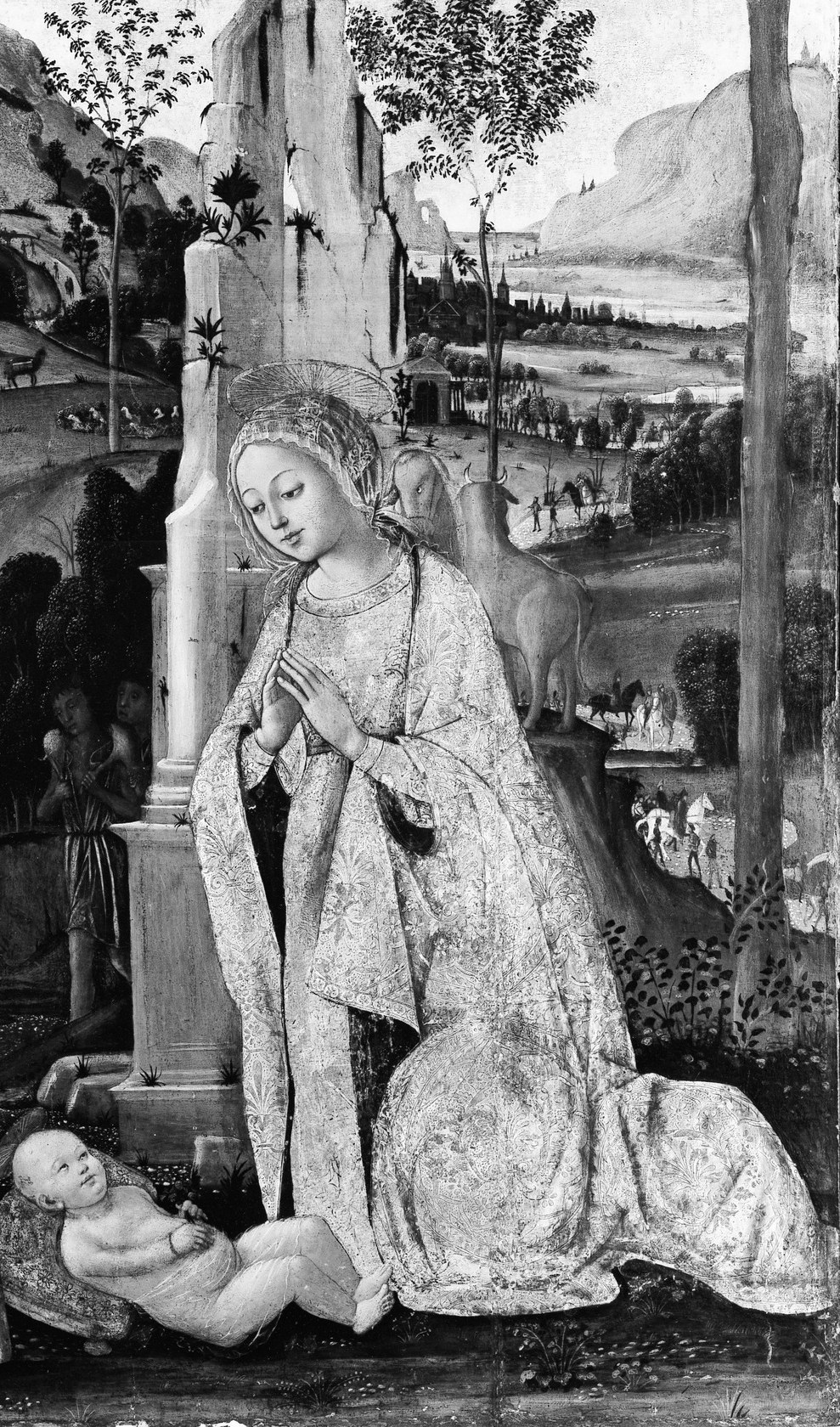
Jacopo da Sellaio painted this Nativity around 1480, and it belongs to the Philadelphia Museum of Art. The first thing to notice is the total absence of physical contact between the Virgin and her child. Her hands are raised in prayer, not support. The infant floats on a pale cloth, held by nothing, already isolated, already the icon he will become.
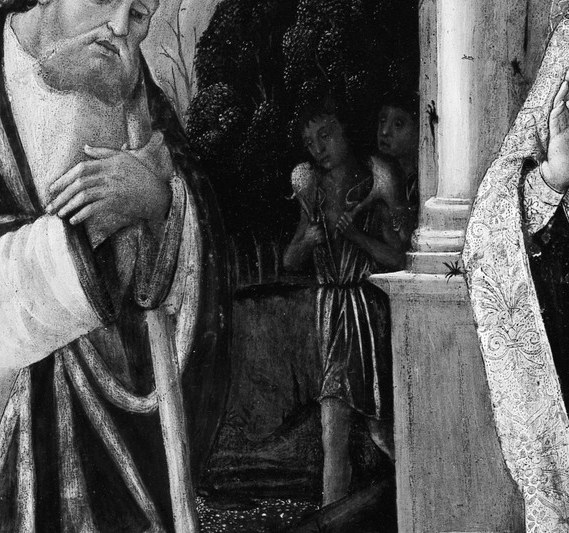
Sellaio trains your eye downward through Mary's downturned gaze and the dark funnel of her mantle, straight to the vulnerable nude body of Christ. The outstretched limbs deliberately echo a later Pietà. Young John the Baptist reaches in from the left, his hand the narrative hinge of the scene, but the gap between his fingers and the infant is never closed. Recognition happens across a distance.
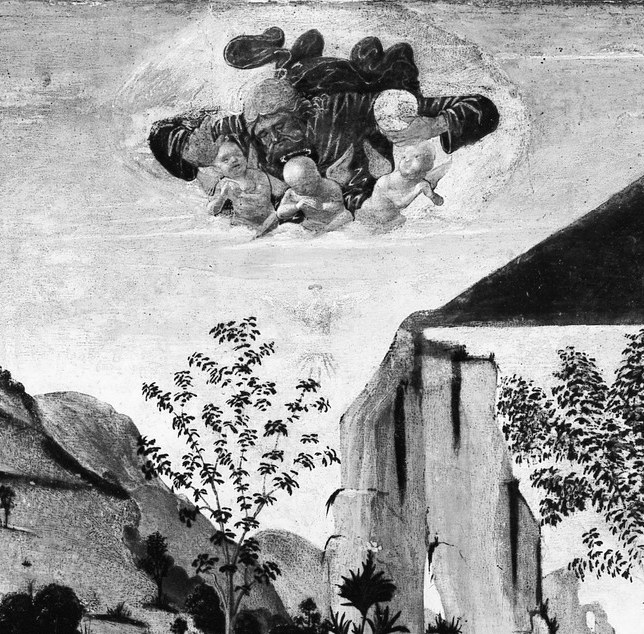
Sellaio shared a workshop with Biagio d'Antonio and ran a partnership with Filippo di Giuliano, but his lasting reputation rests on the cassone panels he painted for Florentine wedding chests. This Nativity shows the same workshop efficiency, the Tuscan hills and hill town behind the figures ground a sacred event in a landscape Florentine viewers recognized as their own, paired with a theological precision that came straight from Botticelli's influence.
A painting where nobody touches the baby sounds cold. It is meant to. The untouchable child is already claimed by his fate.
Details
Transcript
Look at the Christ Child. He lies on cloth, but nobody touches him. Not Mary, whose hands hover in prayer. Not the young John, who reaches but cannot reach. This is theology in paint. The child is already untouchable. Sellaio trained beside Botticelli, in a Florence that wanted devotion, not warmth.