The Circus Parade by Georges Seurat
Georges Seurat's 'Circus Sideshow' (Parade de cirque) lives at the Met, a quiet masterpiece that was, at first, one of his least admired. Completed in 1888, it depicts the free outdoor parade for the Circus Corvi at Paris's place de la Nation. The crowd is gathered, the band is playing, and the gas lamps burn orange halos into the night sky.
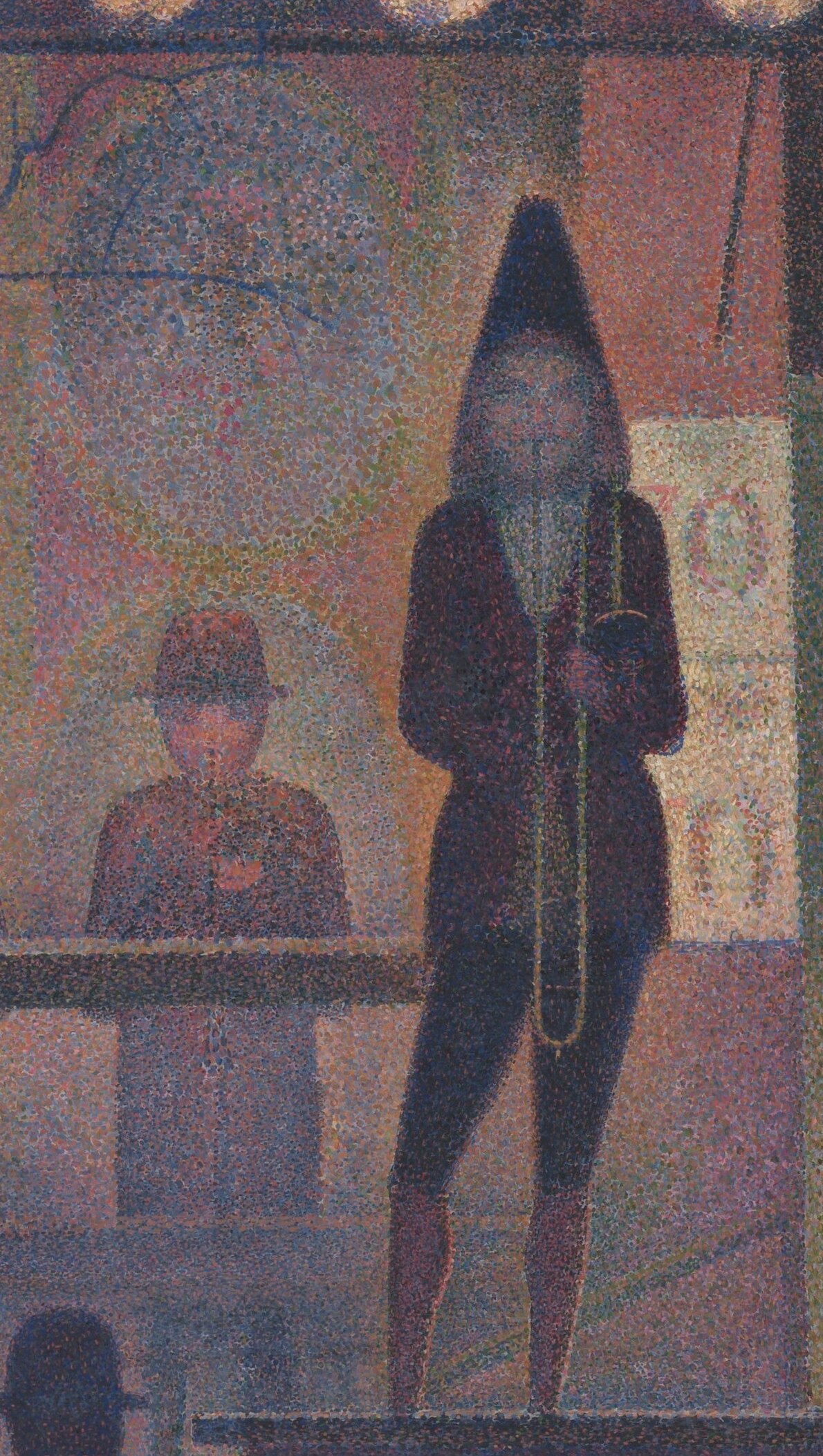
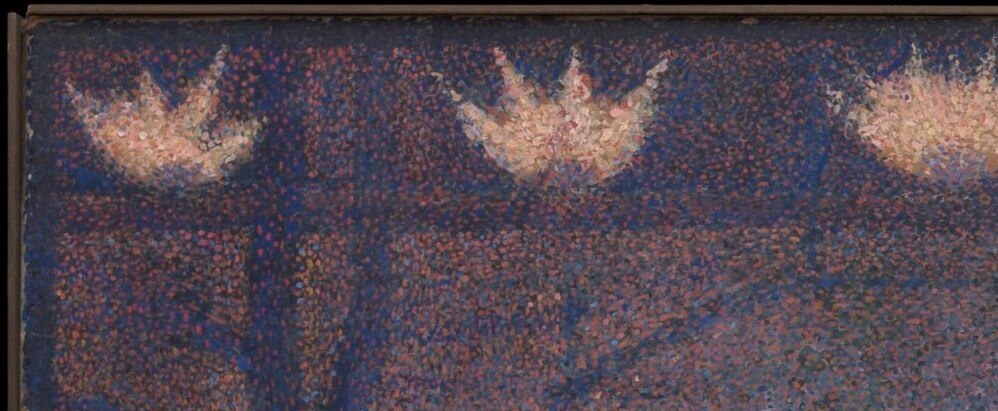
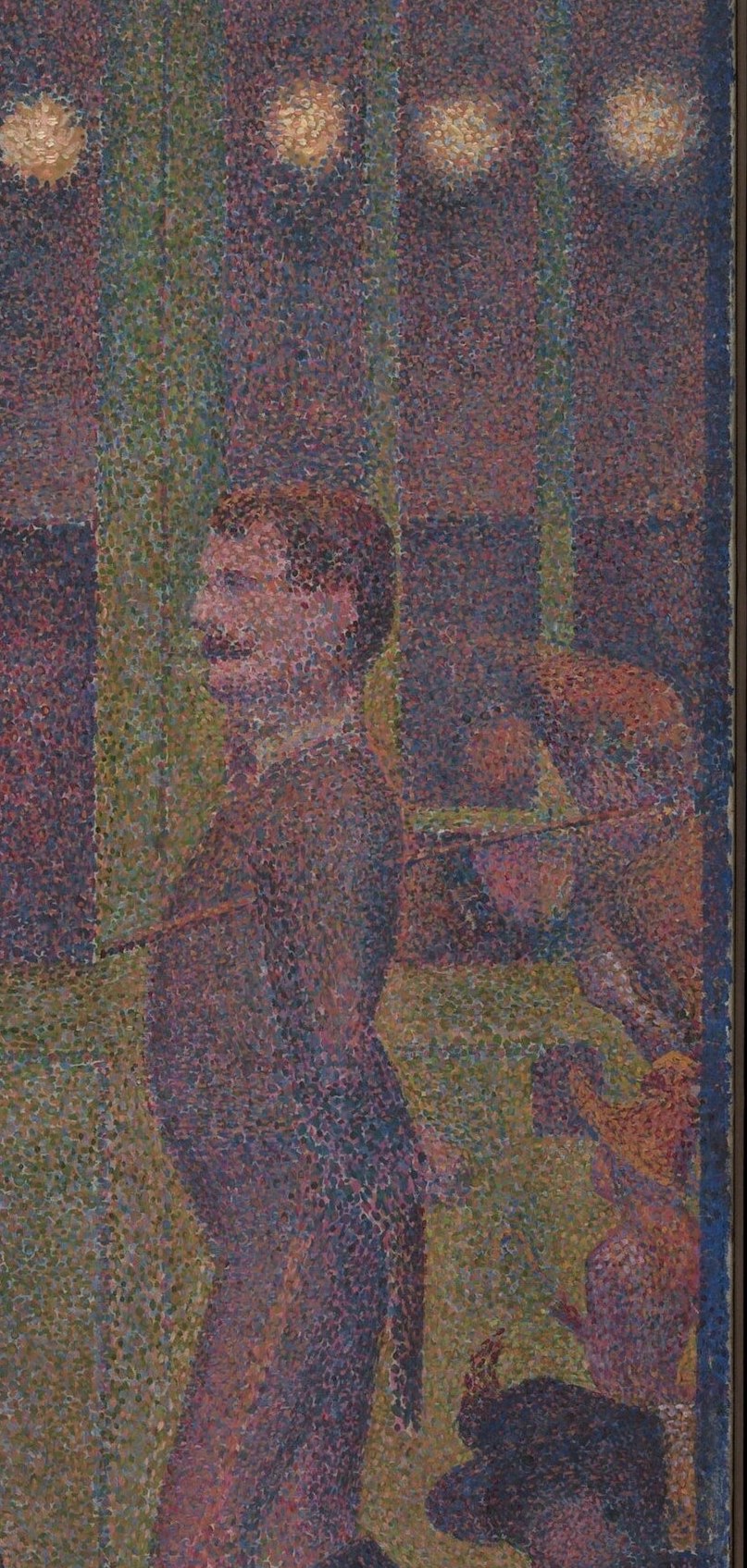
But the painting is larger than almost every reproduction. Cropped out of the frame consistently are the lotus-like decorative light fixtures at the top-left corner and a lone figure at the far right. Seurat painted every inch of this canvas with intention. Come in tight on the gas lamps, and the 'orange' dissolves into a pointillist mosaic of yellow, white, and warm ochre dots. The central ringmaster is a radical experiment in graphic silhouette, nearly featureless, anticipating Art Nouveau poster design by a decade.
This was Seurat's first nocturnal painting. He spent six years working toward it. Art historian Alfred H. Barr Jr. called it 'the most geometric in design as well as the most mysterious in sentiment' of his major works, and the strict horizontal of the platform bisects the canvas, severing the glowing world of the performers from the anonymous dark mass of us, the spectators.
It might have been a flop at the 1888 Salon des Indépendants. A century later, its rigid symmetry and strange calm went on to shape Fauvism, Cubism, and Futurism. What detail do you notice first when you see it uncropped?
Details


Transcript
This was Seurat's first night painting. Circus Corvi, place de la Nation. 1887. The gaslight isn't yellow. It's a mosaic of orange, yellow, and white dots. And the central figure is a radical experiment: nearly pure silhouette. No face, no costume detail. Just a graphic flat shape against the night. Most reproductions crop the top-left corner completely. And the far-right edge holds a figure you have almost certainly never seen. Seurat designed every edge. The painting is six inches wider than you knew.