활호자 김수규 산수도 조선|活毫子 金壽奎 山水圖 朝鮮|Rainy Landscape by Kim Su-gyu
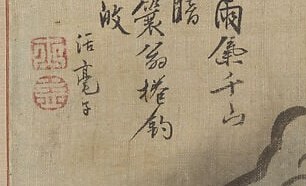
Kim Su-gyu’s *Rainy Landscape*, from 1783, is a serene painting from the late Joseon dynasty, housed at The Metropolitan Museum of Art. Originally an album leaf, it is now presented as a hanging scroll.
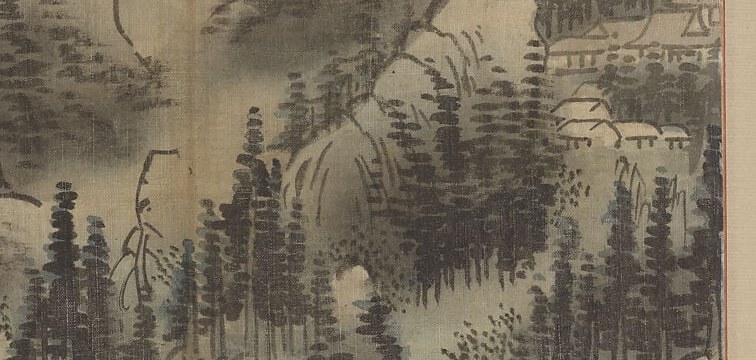
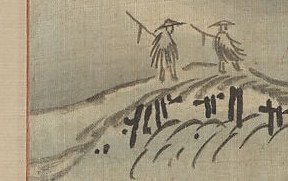
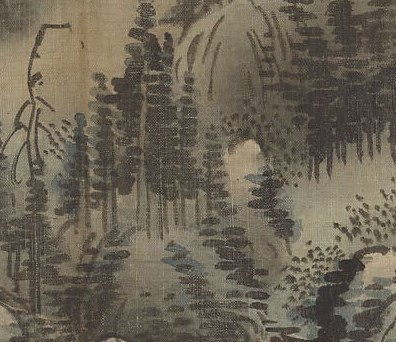
The painting captures a tranquil mountain scene, enveloped in a soft, atmospheric mist. Subtle gray washes evoke the feeling of rain, while pale blue-green tones define the foliage. A striking red bridge at the lower edge is the only vibrant color, drawing the viewer's eye and contrasting with the otherwise muted palette. Look closely at the two small travelers, underscoring the solitude and vastness of nature.
Kim Su-gyu was active in the late 18th to early 19th centuries, a period when Korean artists often pursued individual expression. This allowed him to develop a distinctive style, offering a personal vision of nature. His work reflects the introspective character common in Joseon dynasty painting.
What feeling does this quiet landscape evoke for you?
Details
Transcript
This painter was active in Korea, in the late 1700s. His name, Kim Su-gyu, is written here. He captures a quiet, rainy mountain view. Only this little red bridge offers a splash of color. Notice the two small figures, walking along the path. They emphasize the vastness of nature, and solitude.