Sir John Dick by Stuart, Gilbert
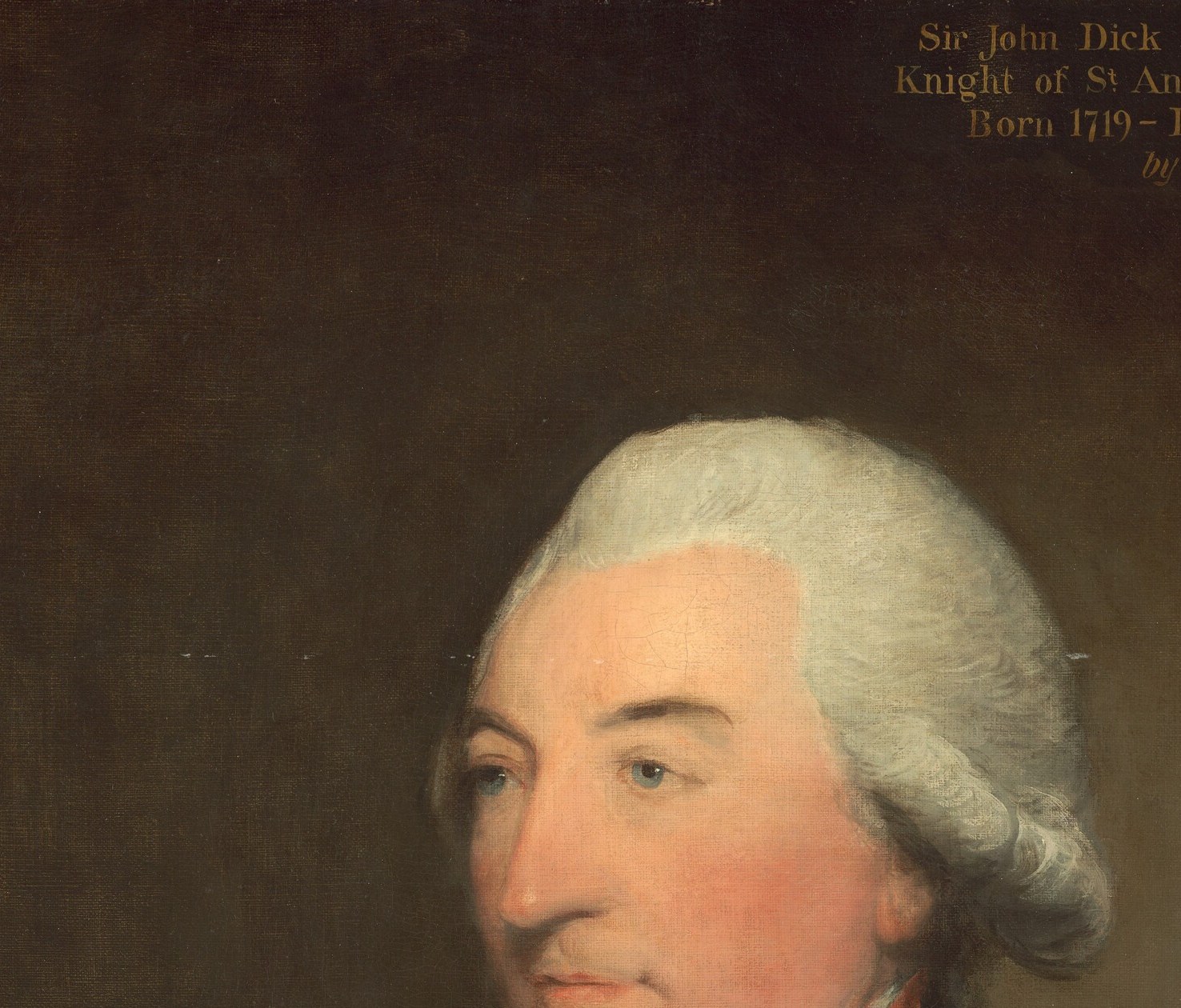
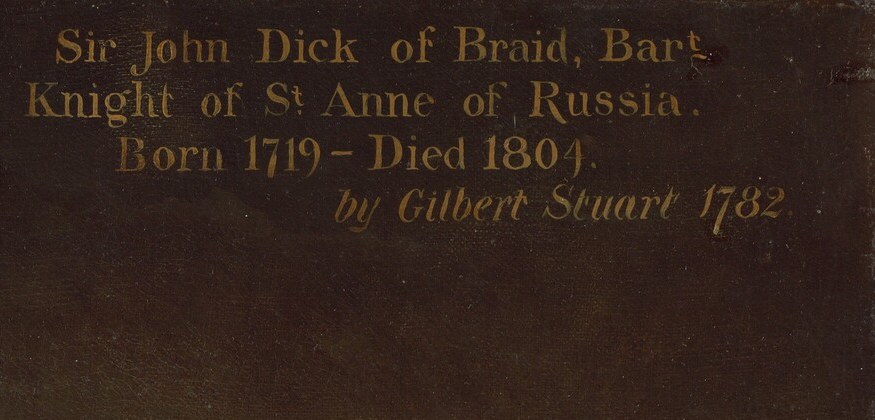
This is Gilbert Stuart's portrait of Sir John Dick, painted in 1783. For a very long time, the painting was misidentified and attributed to another sitter entirely. A later inscription in the upper right corner even recorded the wrong name, and the identity of the man in the painting was not corrected until modern scholarship matched the heraldic evidence to the historical record.
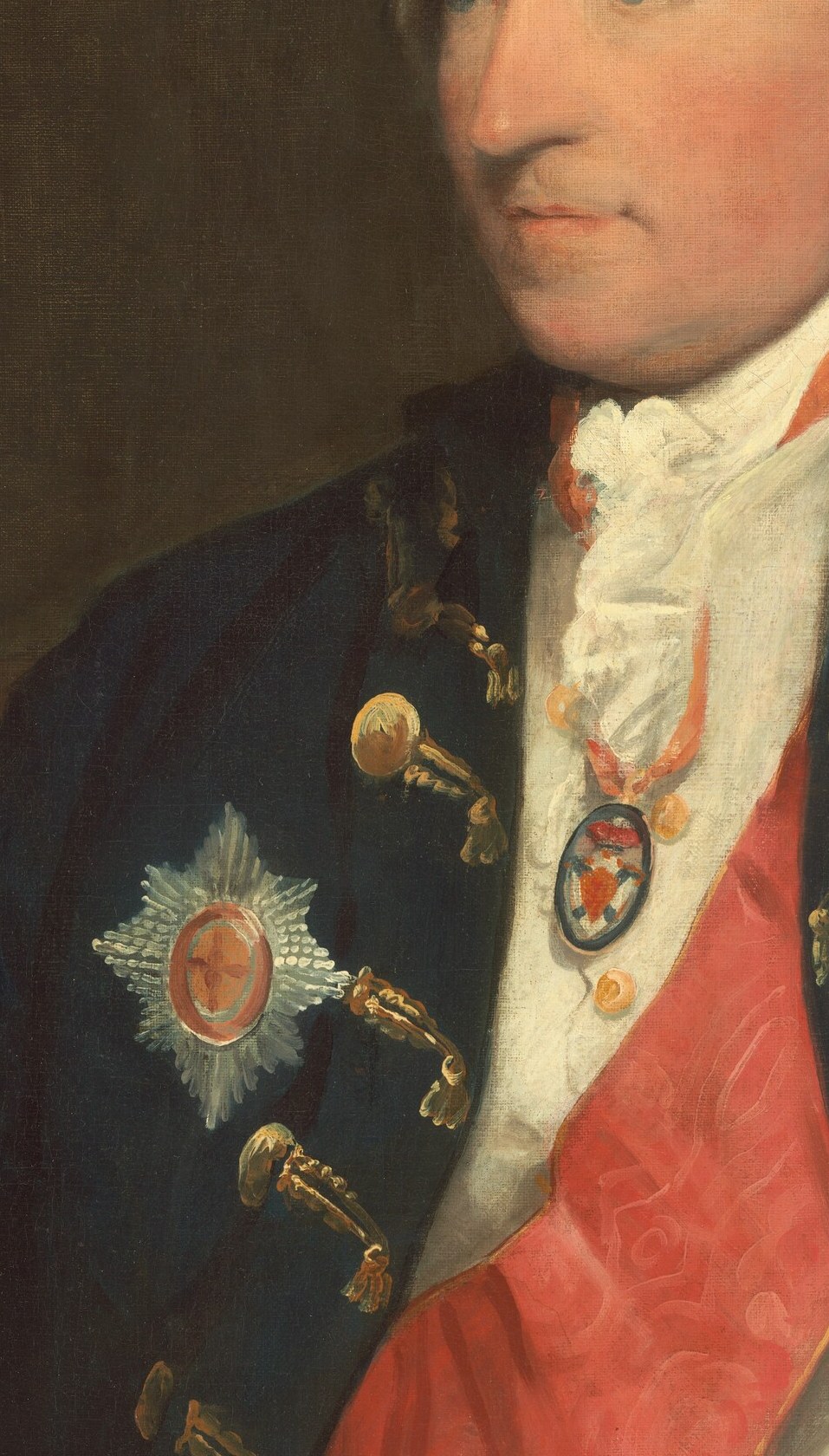
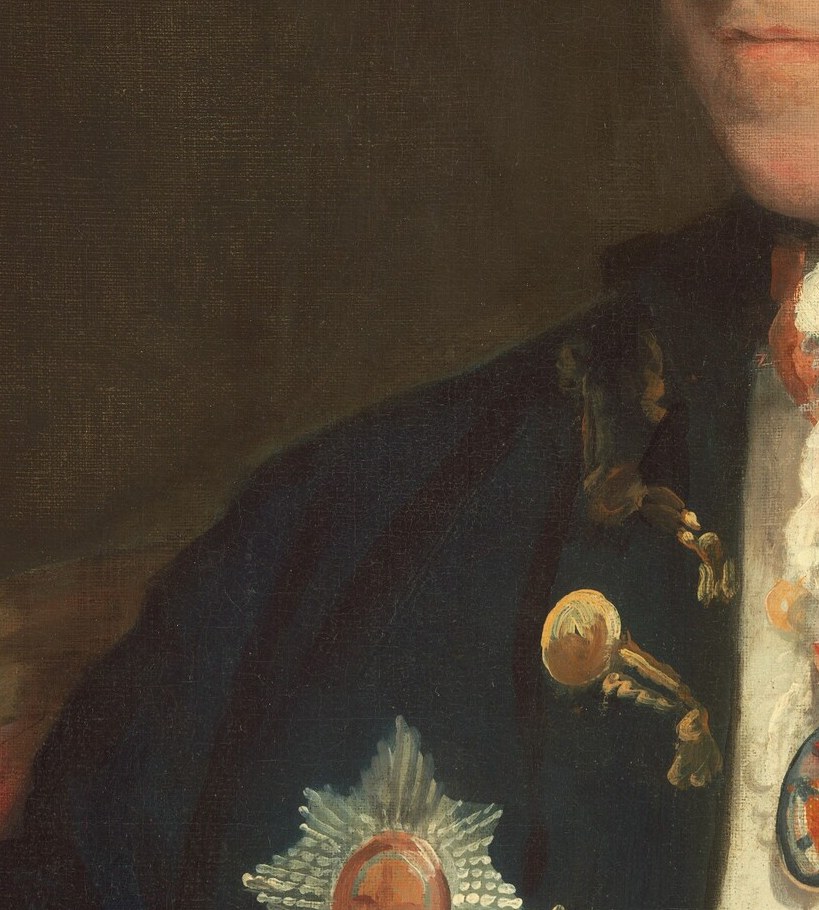
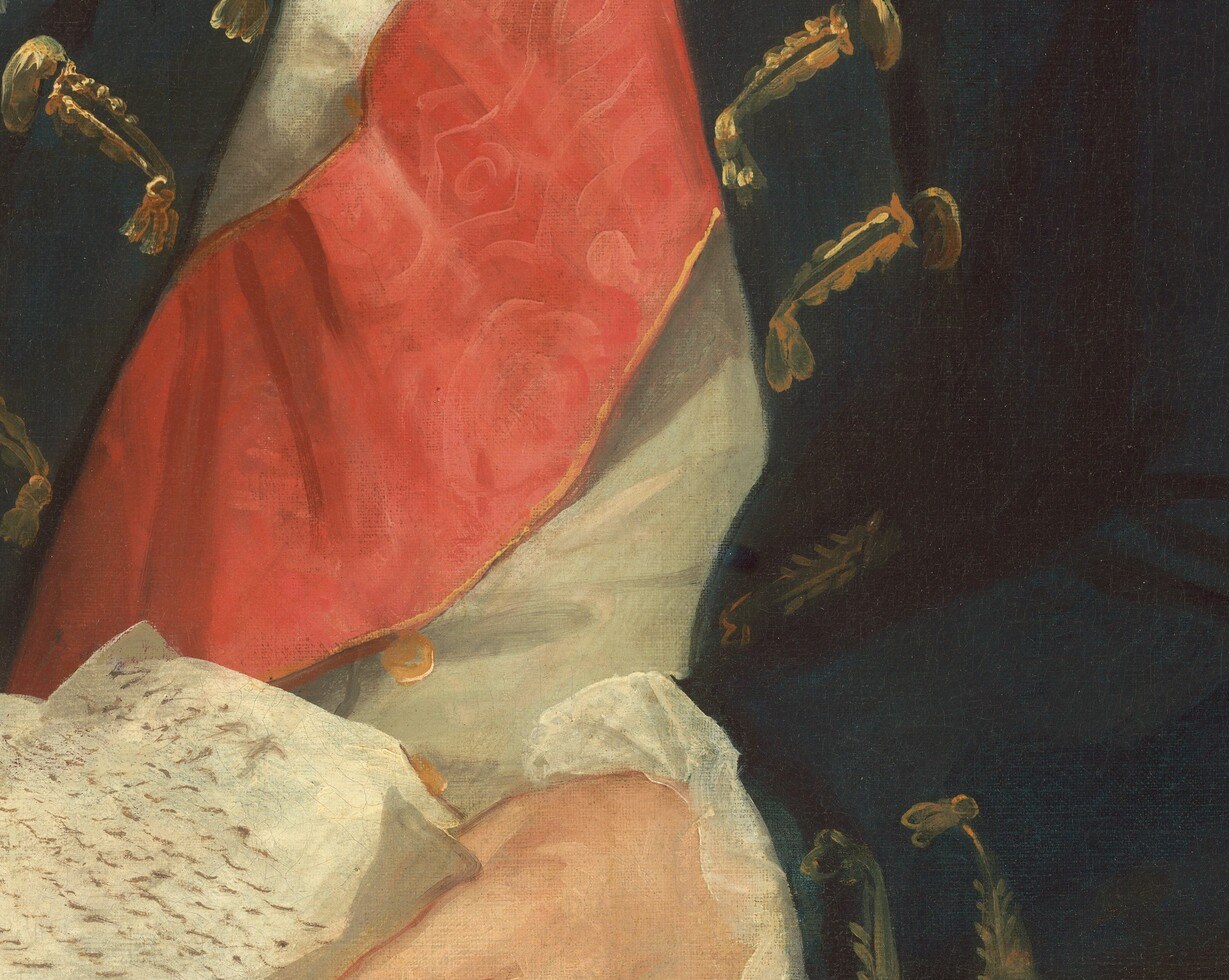
Look at the crimson sash cutting across the dark blue coat. That diagonal is the compositional anchor, identifying him as a Knight of the Order of the Bath. The star-shaped medallion on his chest confirms it. These are not generic decorations. They are specific, identifiable honors that proved crucial to restoring his name. The document in his hand, the writing table, and the relaxed left hand all point to a man of letters and diplomacy rather than the battlefield.
Gilbert Stuart was only 28 years old when he painted this in London, early in his career, before he became George Washington's favorite portraitist and long before the unfinished Athenaeum portrait would become the face of the American dollar bill. The portrait shows a young painter already in full command of texture and psychological presence. The face is fleshy, alert, and sharp; the powdered wig and linen cravat are rendered with a crisp economy the background never gets.
The misattribution happened at some point after the painting left the sitter's family. Provenance records are thin for the 19th century, but by the time it resurfaced in collections, the name had shifted. It took a combination of art-historical study and heraldic analysis to restore Sir John Dick to his own likeness. The faint inscription in the upper right, once taken as truth, is now understood as an artifact of the painting's lost history.
Details
Transcript
For decades, no one knew whose face this was. The name on the frame said another man entirely. The red sash marks him as a knight of the Bath. The star on his chest confirms it. A document in hand. A diplomat, not a soldier. Gilbert Stuart painted this in 1783, when he was only 28. Centuries later, the real Sir John Dick was finally identified.