Doge Alvise Mocenigo (1507–1577) Presented to the Redeemer by Jacopo Tintoretto
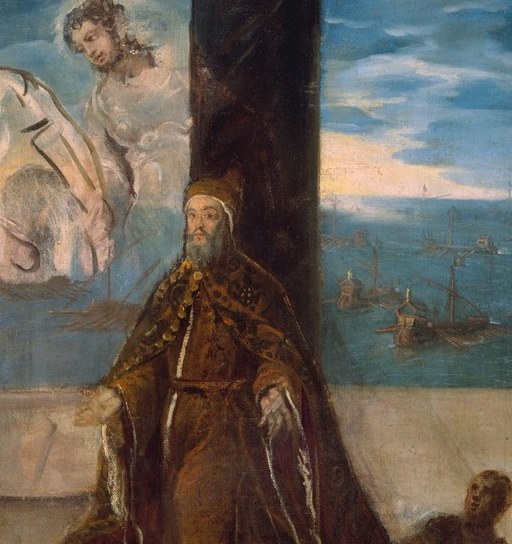
Doge Alvise Mocenigo Presented to the Redeemer is Jacopo Tintoretto’s official portrait of a city in crisis. Painted in 1577, it records the moment plague was devastating Venice, eventually killing over 50,000 people, including Doge Alvise Mocenigo himself.
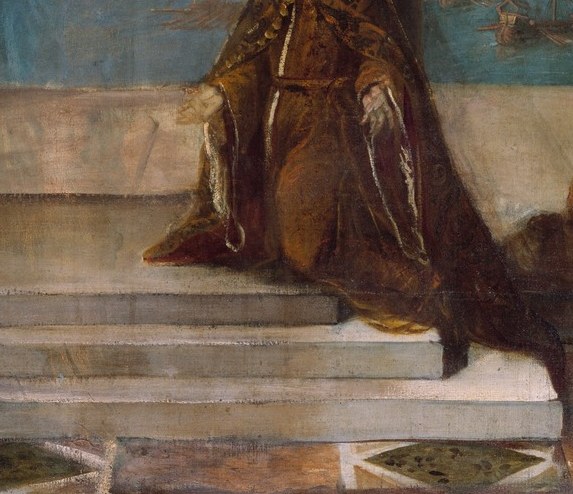
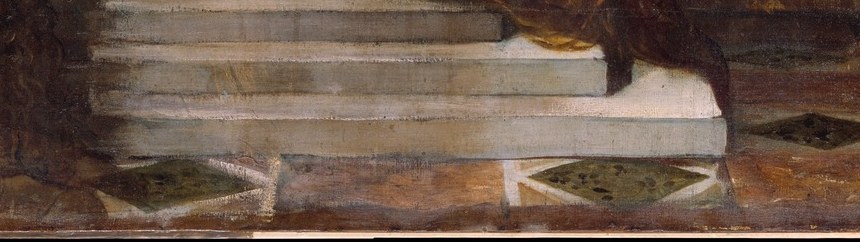
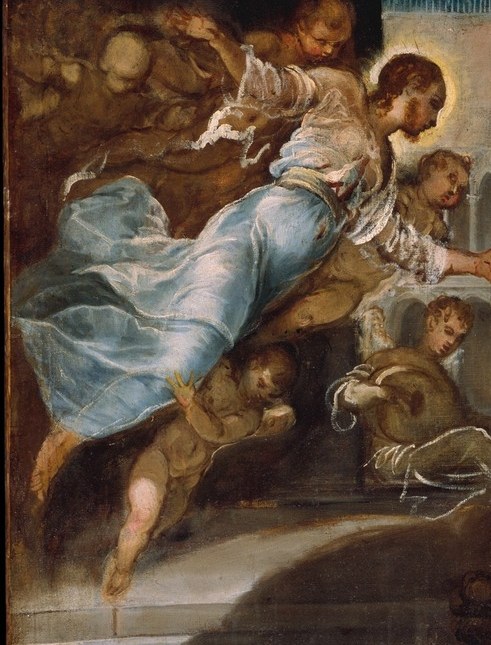
Look closely at the raised platform beneath the figures. Tintoretto has set this celestial audience inside a real Venetian governmental chamber, fusing civic space with sacred appeal. The radiant Christ accepts the white Agnus Dei, the symbolic offering brought by the kneeling Doge. To his left, an allegorical female figure in blue, likely Venice personified, reaches toward him, her gesture a formal intercession.
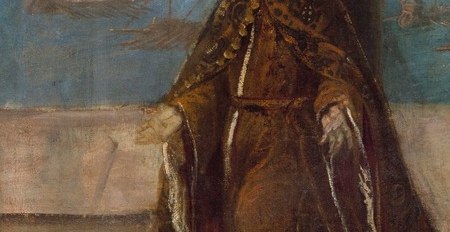
The painting functions as a votive vow, not merely a devotional image. The Doge and his Senate commissioned it in direct response to the epidemic, a public act of collective bargaining with the divine. Tintoretto delivered the work with his characteristic dramatic chiaroscuro, building a literal wall of shadow that separates the mortal petitioners from the heavenly light breaking through the clouds.
The Doge died before the year ended. The vow remained on canvas.
Details
Transcript
Venice, 1577. The plague is killing a third of the city. The Doge himself, Alvise Mocenigo, will die of it this year. Here, he kneels before Christ the Redeemer. He commissioned this painting as a desperate public vow. A female figure, Venice herself, intercedes on his behalf. The Lamb of God is the offering. The city asks in exchange for its life. The light in the sky breaks open: divine sanction for the vow.