The Village of La Celle-sous-Moret by Eugène Lavieille
Eugène Lavieille's 'The Village of La Celle-sous-Moret,' painted in 1864, offers a serene glimpse into rural France. This oil painting, held at The Metropolitan Museum of Art, captures the peaceful daily life of a specific village.
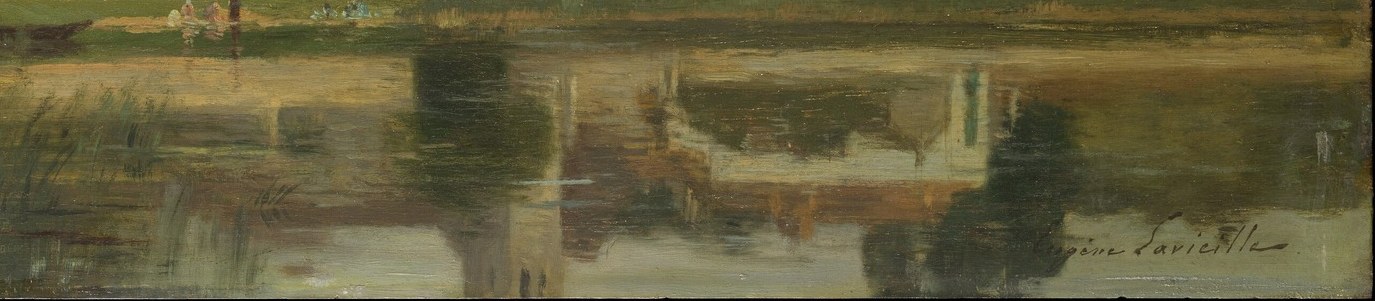
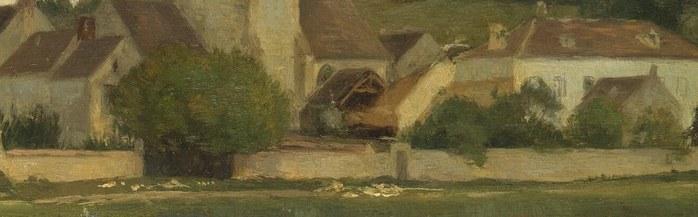
Notice how the soft light plays across the red-tiled roofs, and the village seems to gently reflect in the river below. The grazing cow and resting figures add a sense of quiet activity, typical of such a community in the mid-19th century.
Lavieille was known for his atmospheric landscapes, moving towards a lighter palette than his contemporaries from the Barbizon school. This work exemplifies his dedication to observing the unique character of the French countryside and the subtle effects of natural light. It reflects a period when artists were increasingly turning to the everyday world for their subjects.
This painting invites us to pause and appreciate the enduring charm of a simpler time, witnessed through the artist's keen eye.
Details
Transcript
This quiet village scene shows rural France, 1864. In the river's soft reflection, the village seems to float. Red-tiled roofs dot the hillside, a common sight then. A cow grazes peacefully by the water, part of daily life. The church tower anchors the community, as it had for centuries. This painter was known for capturing specific places and light.