清 佚名 倣郭熙 溪山無盡圖 卷|Streams and Mountains Without End by After Guo Xi
The mountain is not just a mountain.
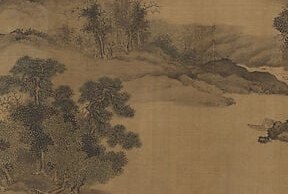
This 17th-century handscroll, Streams and Mountains Without End, is an anonymous Qing-dynasty tribute to the 11th-century master Guo Xi. The artist copied not just his brushstrokes but his philosophical code. In Guo Xi's theory, a landscape was a place for the mind to wander, every gnarled tree was a scholar's endurance, every band of mist was the Daoist principle of the void.
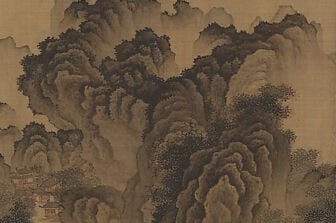
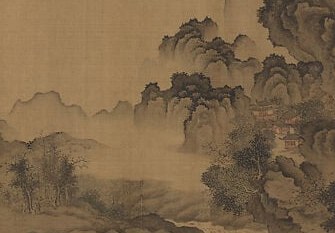
This painting rewards the decoder. The bare, angular crab-claw branches in the upper register are Guo Xi's signature motif, a deliberate archaism. The layered rock textures, built from hundreds of tiny curved strokes, are called 'cloud-scroll cun', a technique so difficult that a close look at this scroll reveals whether the 17th-century copyist truly mastered it or merely traced its outline. The mist is not cloud. It is unpainted silk. Emptiness is drawn as presence.
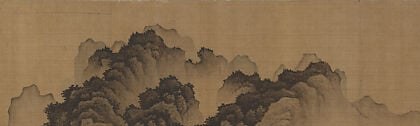
The scroll's original title translates to Streams and Mountains Without End. The highest peak towers through the mist at the center; to its right, distant mountains dissolve into the silk in the palest possible ink wash. There is no figure present. The viewer was never meant to merely look. The viewer is meant to enter.
What else do you see coded in the landscape?
Details
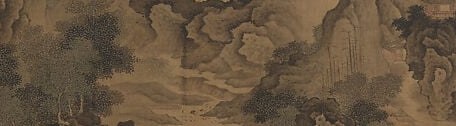
Transcript
Every landscape by Guo Xi is a puzzle. The painter hides a code in the rocks, trees, and empty space. Layered texture strokes build rock from crumpled paper. Bare branches, bent like claws, Guo Xi's signature of endurance. A gnarled pine clings to the cliff: the scholar's refusal to be broken. Mist divides the world. Unpainted silk reads as the Daoist void. Mountain bases dissolve into nothing, solid matter returning to emptiness. The highest peak dwarfs every human concern.