The Interior of an Atelier of a Woman Painter by Marie-Victoire Lemoine

The most intriguing detail in Marie‑Victoire Lemoine’s The Interior of an Atelier of a Woman Painter (1789, Met) is that the artist painted herself at work, just weeks before the French Revolution erupted.

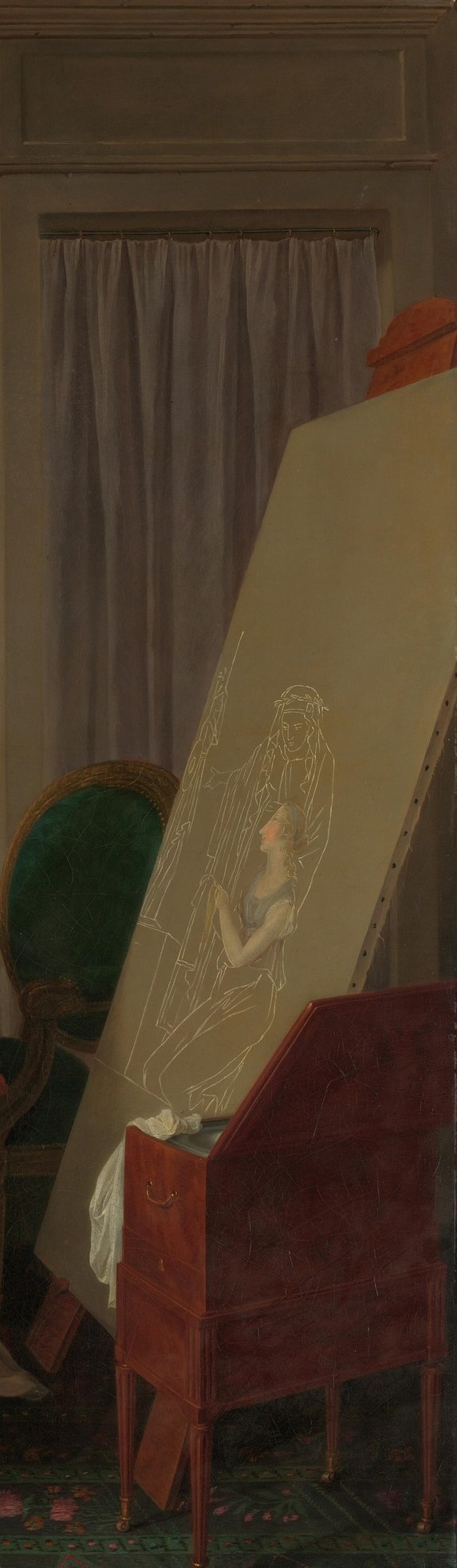
Notice the palette she holds, the sketch on the easel showing a woman’s profile, and her gloved left hand resting on the table. The vase of fresh flowers and the green upholstered chair frame a domestic yet professional space.

Signed “M. Vicre Lemoine,” the canvas entered the Met in 1957 as a gift from Mrs. Thorneycroft Ryle. Lemoine, an unmarried painter, supported herself entirely through art, a rarity for women of her time.

What does it feel like to see a woman document her own artistic life at such a pivotal moment in history?

#arthistory #MarieVictoireLemoine

Details
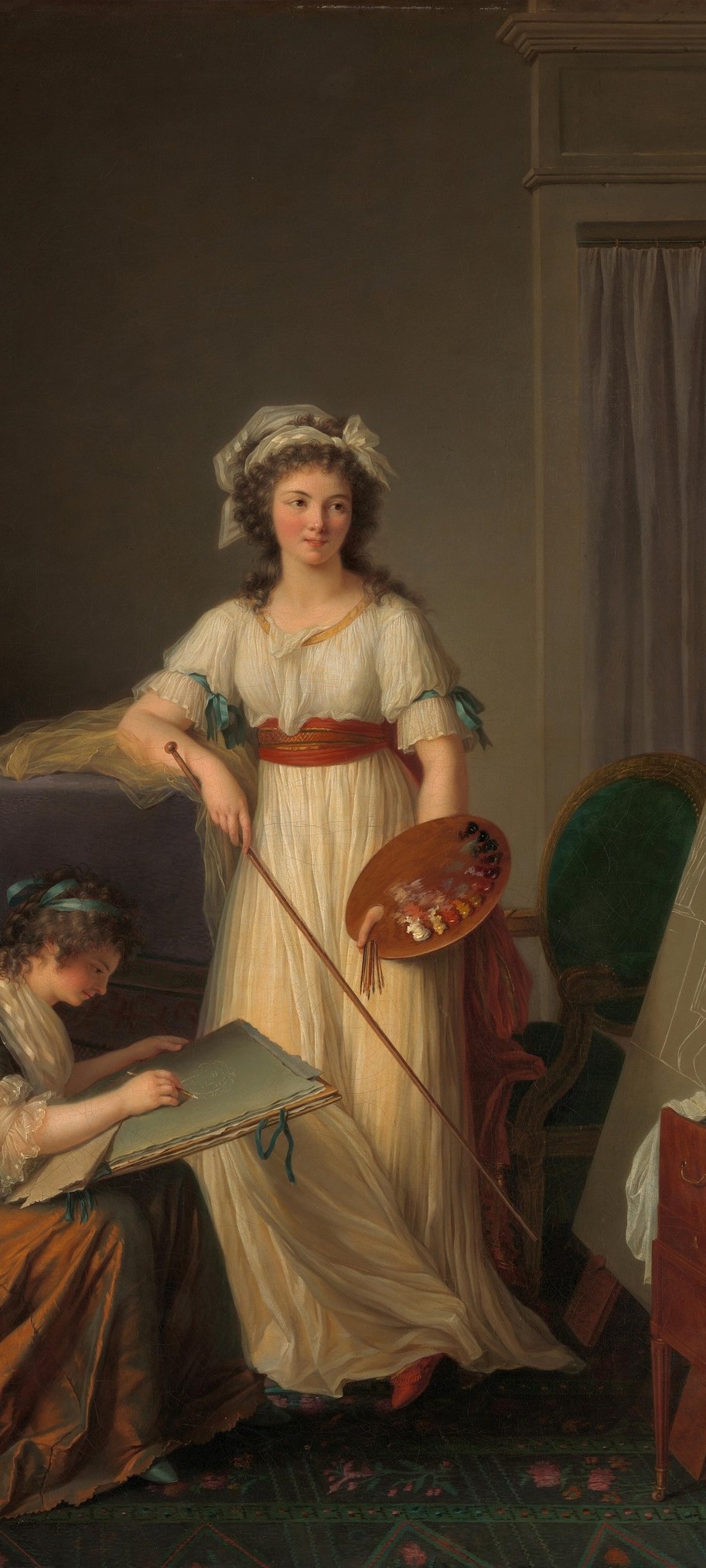
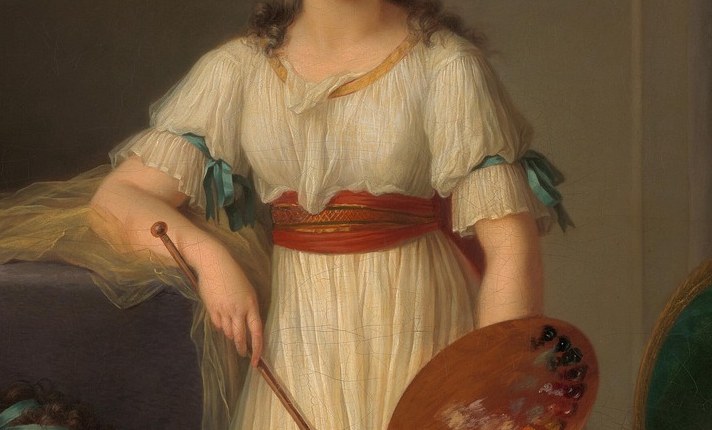
Light falls across the white dress in long gradients, demonstrating Lemoine's mastery of tonal modulation; the upright posture reads as professional pride.
Her composed, confident look straight at the viewer announces professional self-possession , rare for a woman artist in 1789; the slight tilt and calm expression make this a riveting close-up target.
The blank canvas occupies a third of the composition; its sheer scale signals serious professional ambition and frames the figures like a stage wing.
A single chromatic accent in a palette of whites and neutrals; its red draws the eye to her center and visually asserts vitality and agency.
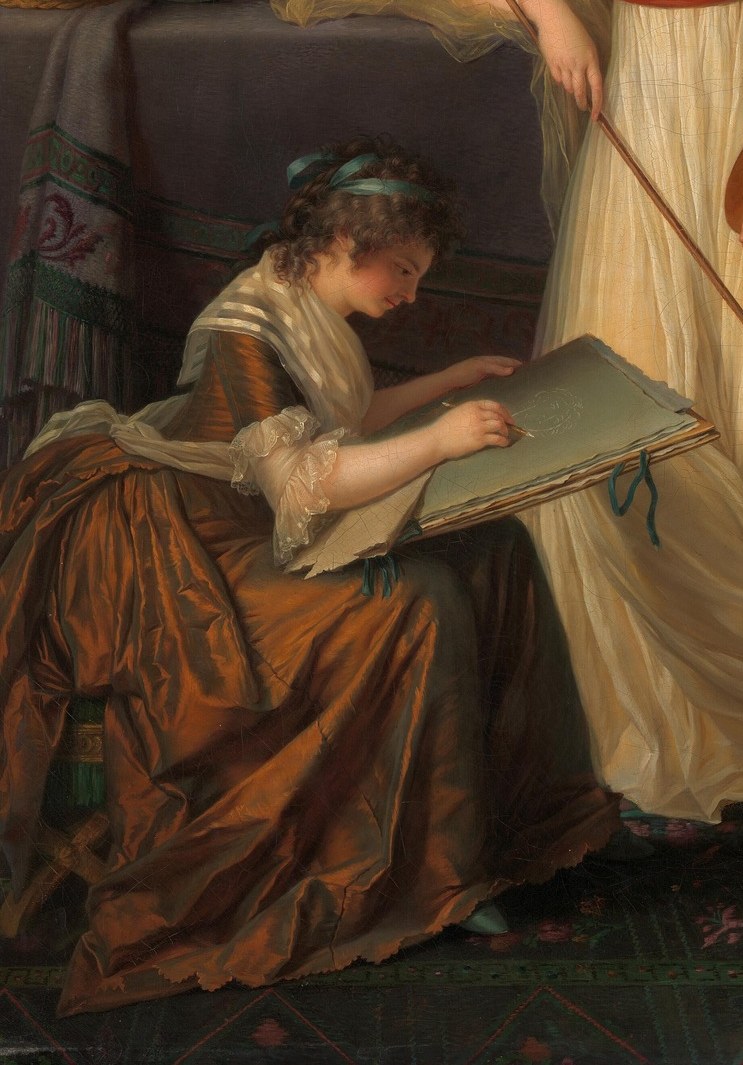
Likely Marie-Élisabeth Gabiou, the artist's sister , her absorbed, downward gaze creates an asymmetry of attention that implies a teaching or mentoring relationship.
Transcript

In 1789 a woman painted her studio before revolution. She holds a palette, tools poised beside the canvas. The easel displays a sketch of a woman in profile. Her gloved left hand rests gently on the table. The lower edge bears the signature M. Vicre Lemoine.