Artwork
The Interior of an Atelier of a Woman Painter
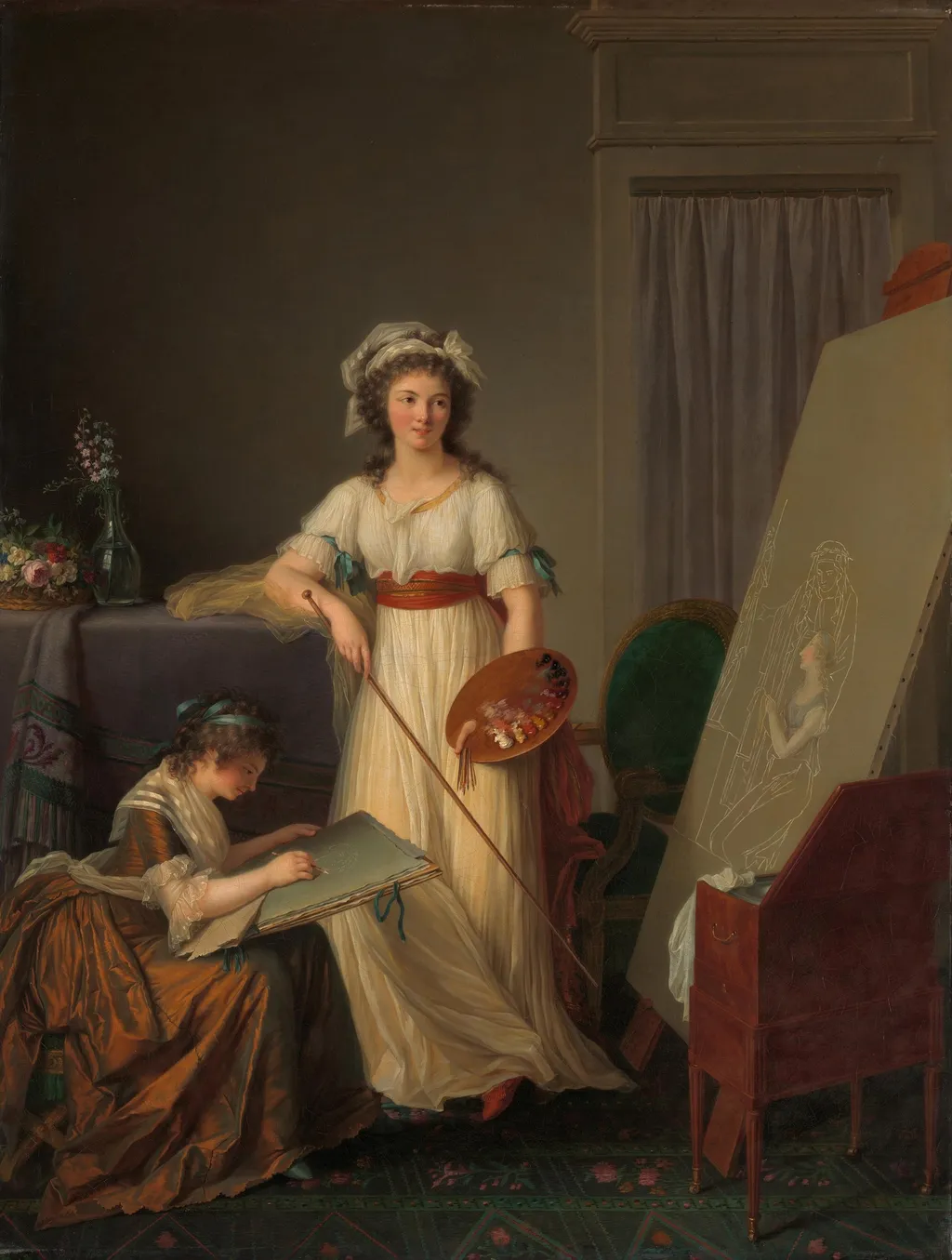
The Interior of an Atelier of a Woman Painter is an oil painting by the Academic Art artist Marie-Victoire Lemoine. It dates from 1795 and is held in the collection of the Metropolitan Museum of Art.
About this work
In a sunlit studio on the eve of the French Revolution, Marie-Victoire Lemoine painted herself at work beside her sister. The canvas, signed "M. Vicre Lemoine," entered the Metropolitan Museum of Art in 1957. What once looked like Élisabeth Vigée Le Brun teaching a pupil now reads as a quiet act of self-documentation by a woman who lived from oil and canvas.
Subject & Meaning
However, later researchers have reidentified the figures as Marie-Victoire Lemoine herself and her sister Marie-Élisabeth Gabiou.
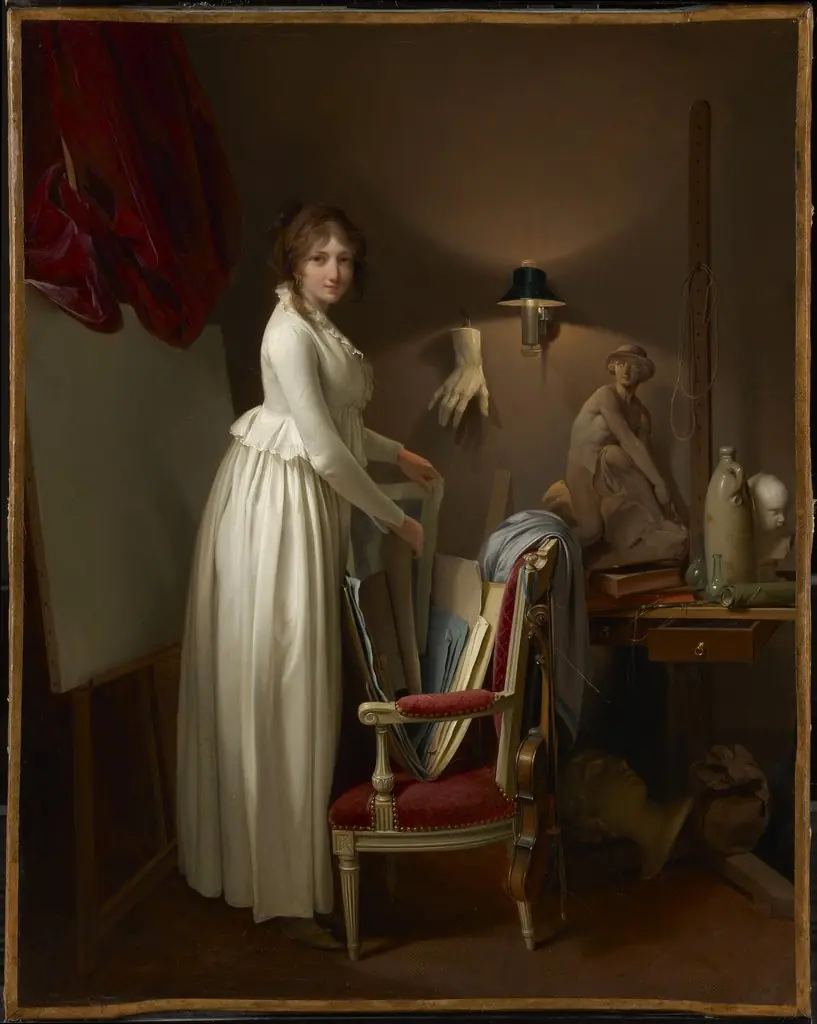
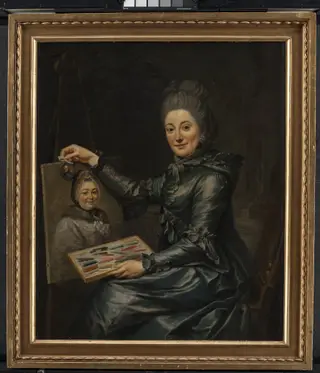
The painting depicts an interior studio scene centered on a woman painter at her easel, surrounded by artistic tools, a palette, brushes, a sketch, and a paint box, as well as a bouquet and vase. Early scholarship interpreted the work as a tribute to the celebrated portraitist Élisabeth Vigée Le Brun. However, later researchers have reidentified the figures as Marie-Victoire Lemoine herself and her sister Marie-Élisabeth Gabiou.
This reinterpretation shifts the meaning from homage to a self-reflexive assertion of professional identity. The composition foregrounds the female artist actively at work, symbolizing women's legitimate place in the academic art tradition and the broader pursuit of artistic visibility during the late 18th century.
Technique & Style
Executed in oil on canvas, the painting measures 116.5 × 88.9 cm and belongs to the academic art tradition. The composition depicts an interior atelier furnished with a palette, easel, canvas, and other painter's implements, with a woman artist seated before her work. The brushwork and handling are consistent with late eighteenth-century academic practice, emphasizing clear contours and a refined finish.
The scene is notable for its self-referential quality, the artist shown is believed to be Marie-Victoire Lemoine herself, and the inclusion of studio props reinforces the professional identity of the female painter. No condition information is provided in the sources.
History & Provenance
Painted in 1795 by Marie-Victoire Lemoine, this oil-on-canvas work was exhibited at the Salon of 1796. It entered the collection of the Metropolitan Museum of Art in New York, where it remains. It was also included in the exhibitions "Exposition des femmes peintres du XVIIIe siècle" and the traveling survey "Women Artists: 1550–1950," which highlighted female artists across centuries. No specific accession number has been published for the work in the available sources.
Context
The painting was first exhibited at the Salon of 1796, early in Marie-Victoire Lemoine's career after the French Revolution. For decades, art historians believed the work depicted the celebrated portraitist Élisabeth Vigée Le Brun in her studio, but later scholarship reinterpreted the subject as Lemoine herself with her sister Marie-Élisabeth Gabiou, repositioning it as a self-reflexive assertion of a woman artist's professional identity. Its inclusion in landmark exhibitions such as 'Women Artists: 1550–1950' and 'Exposition des femmes peintres du XVIIIe siècle' helped secure its place within the canon of eighteenth-century women artists.
Legacy
The painting was first exhibited at the Salon of 1796, establishing its initial public presence. It later gained prominence in twentieth-century scholarship and exhibitions, notably featured in 'Exposition des femmes peintres du XVIIIe siècle' and the landmark survey 'Women Artists: 1550–1950,' which solidified its place in the history of women artists. Its interpretation has evolved: once believed to be a tribute to Élisabeth Vigée Le Brun, more recent analysis identifies the subject as Lemoine herself with her sister Marie-Élisabeth Gabiou, reflecting broader shifts in feminist art history.
The work continues to attract scholarly attention in discussions of female artistic agency and self-representation during the revolutionary period.
Overview
Marie-Victoire Lemoine's 1789 oil painting, The Interior of an Atelier of a Woman Painter, captures a scene within a sunlit studio. This work, now housed at the Metropolitan Museum of Art, was initially thought to honor a prominent contemporary. However, scholarly re-evaluation identifies the artist herself, Marie-Victoire Lemoine, alongside her sister, Marie-Élisabeth Gabiou, engaged in artistic practice.
The canvas serves as a personal record of a woman artist's professional life on the cusp of significant historical change.
Own this work as a print
Artist & collection
Artist
Marie-Victoire Lemoine was born in Paris in 1754, the eldest daughter of Charles Lemoine and Marie-Anne Rousselle.

 The Painter in his Studio
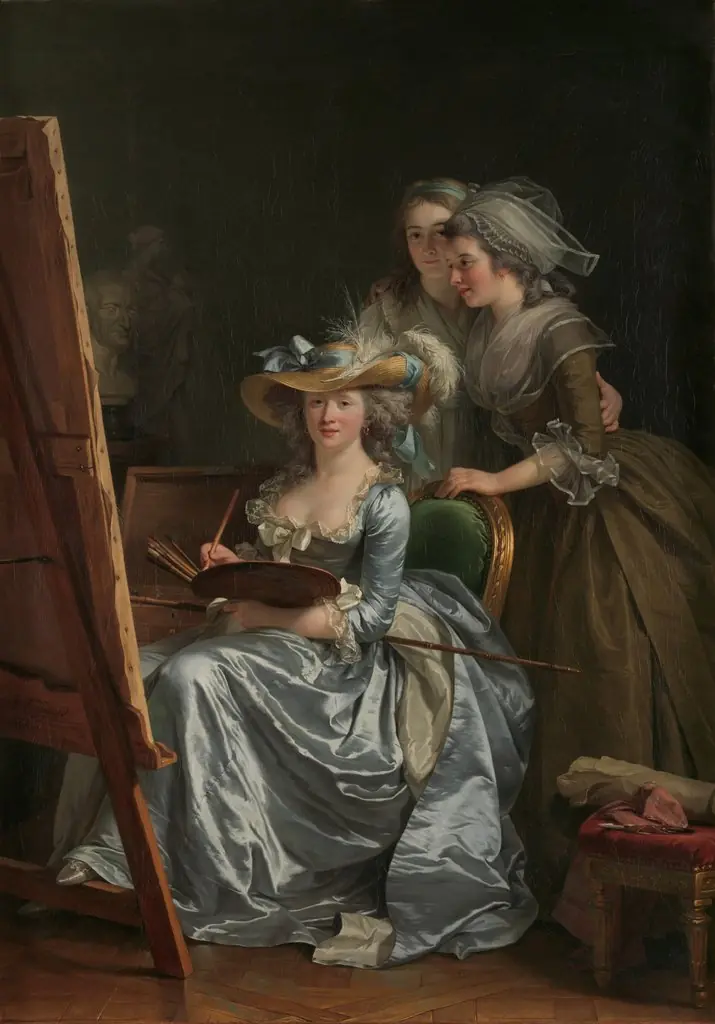 Self-Portrait with Two Pupils
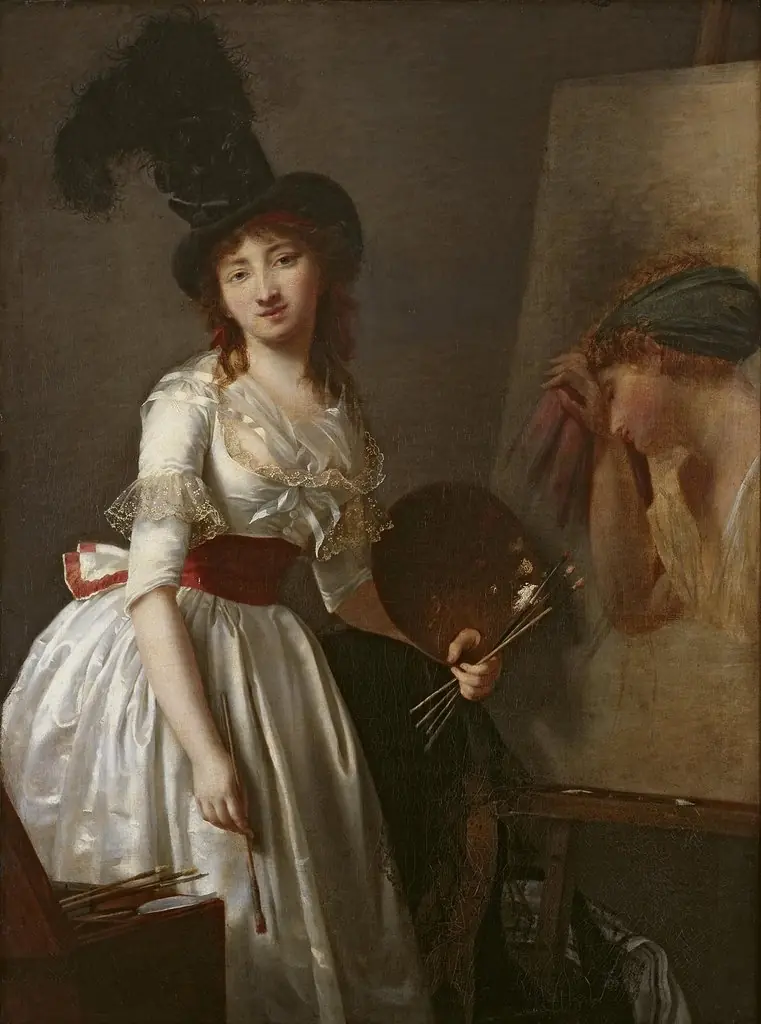 Portrait of a Female Painter, Pupil of David
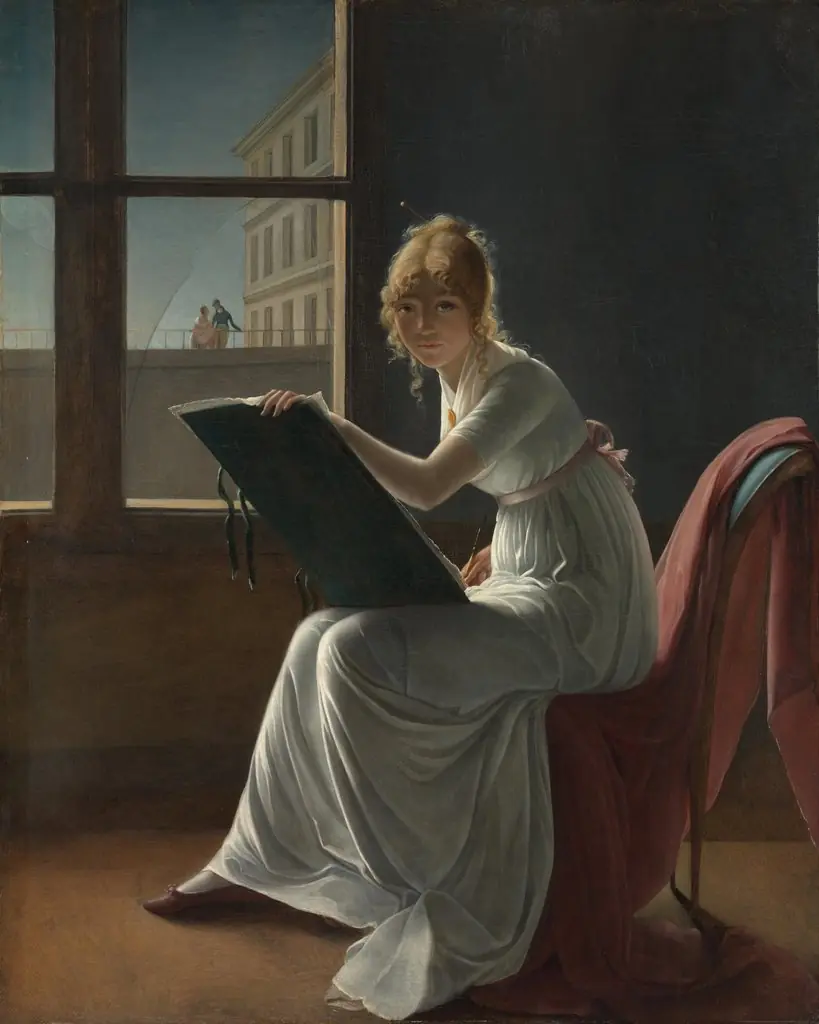 Portrait of Charlotte du Val d'Ognes
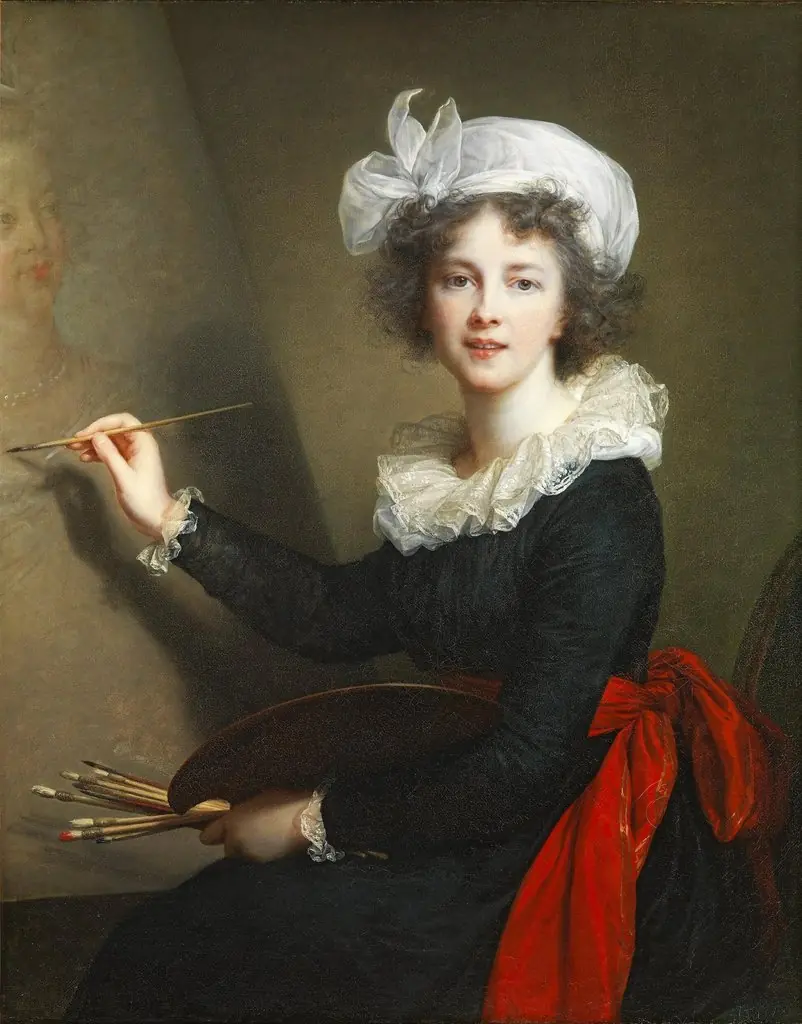 Self-portrait of Élisabeth Louise Vigée Le Brun
 The Artist's Wife in His Studio
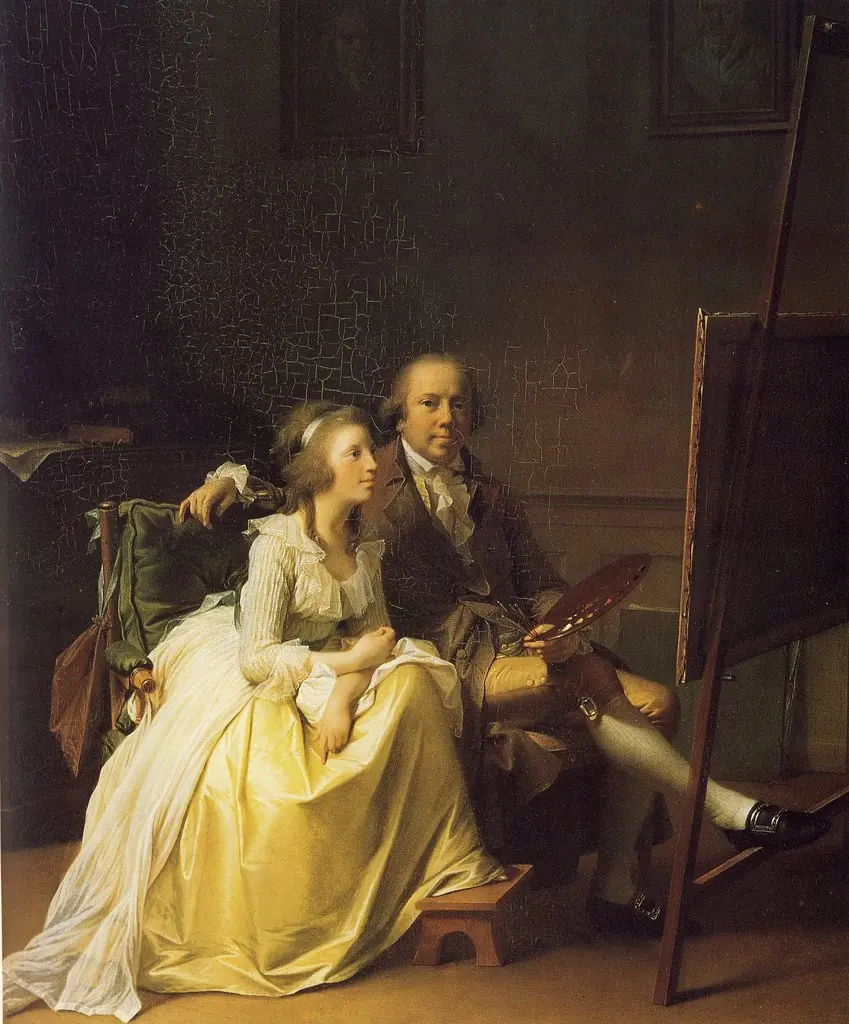 The Artist and his Wife Rosine, née Dørschel
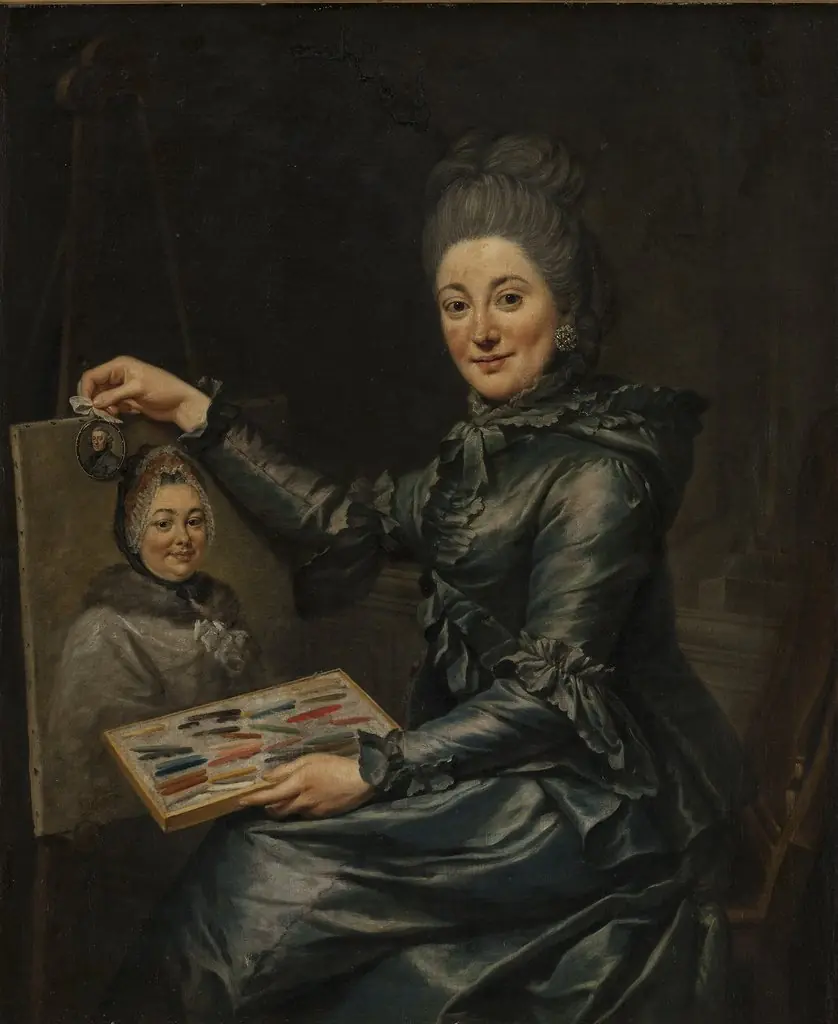 Portrait of the Artist's Daughter Elisabeth, Married Lampe
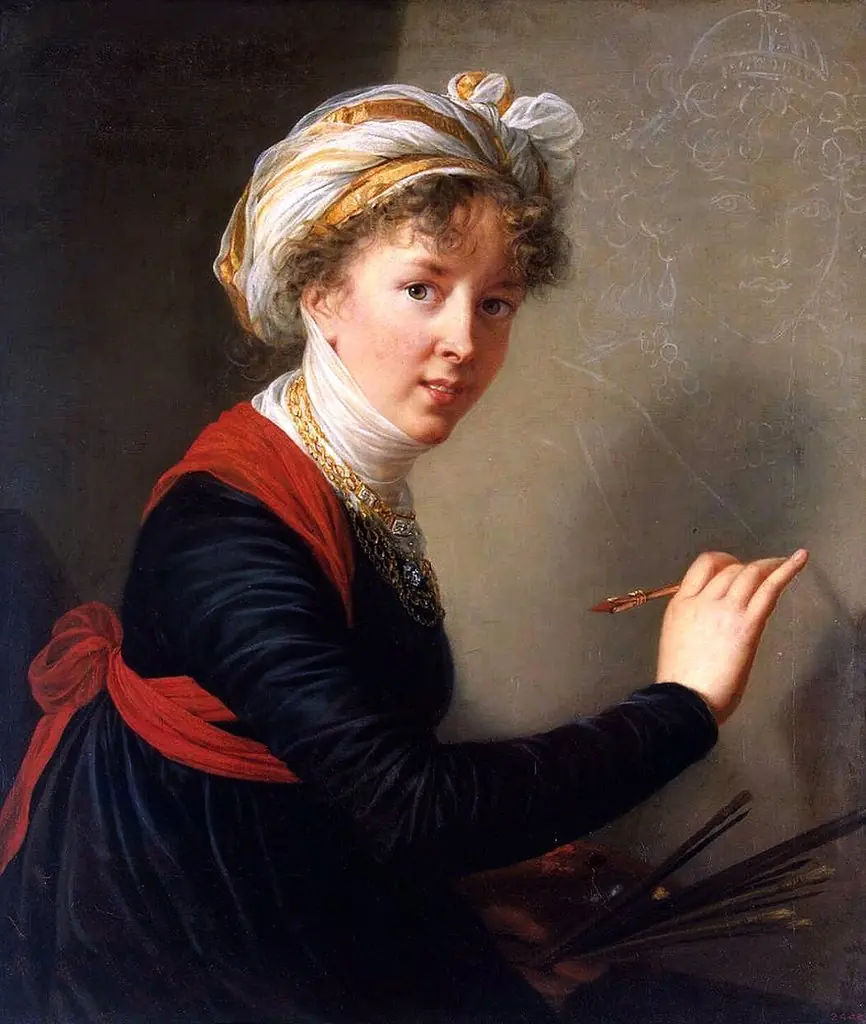 Self-portrait
 Portrait of the Artist's Daughter Elisabeth, Married Lampe
 The Draughtsman
- A Painter's Studio