The Voyage of Life: Youth by Cole, Thomas
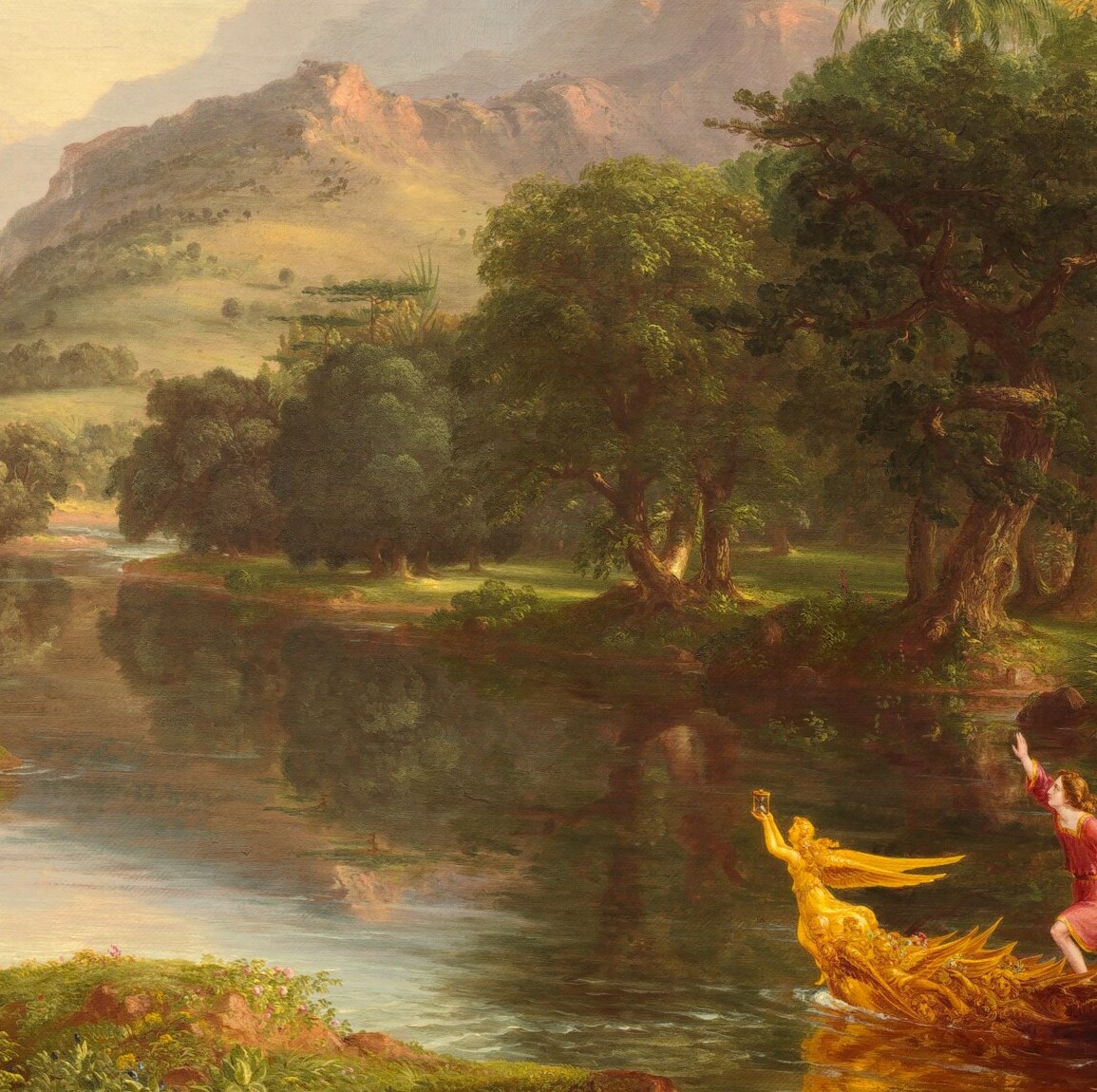
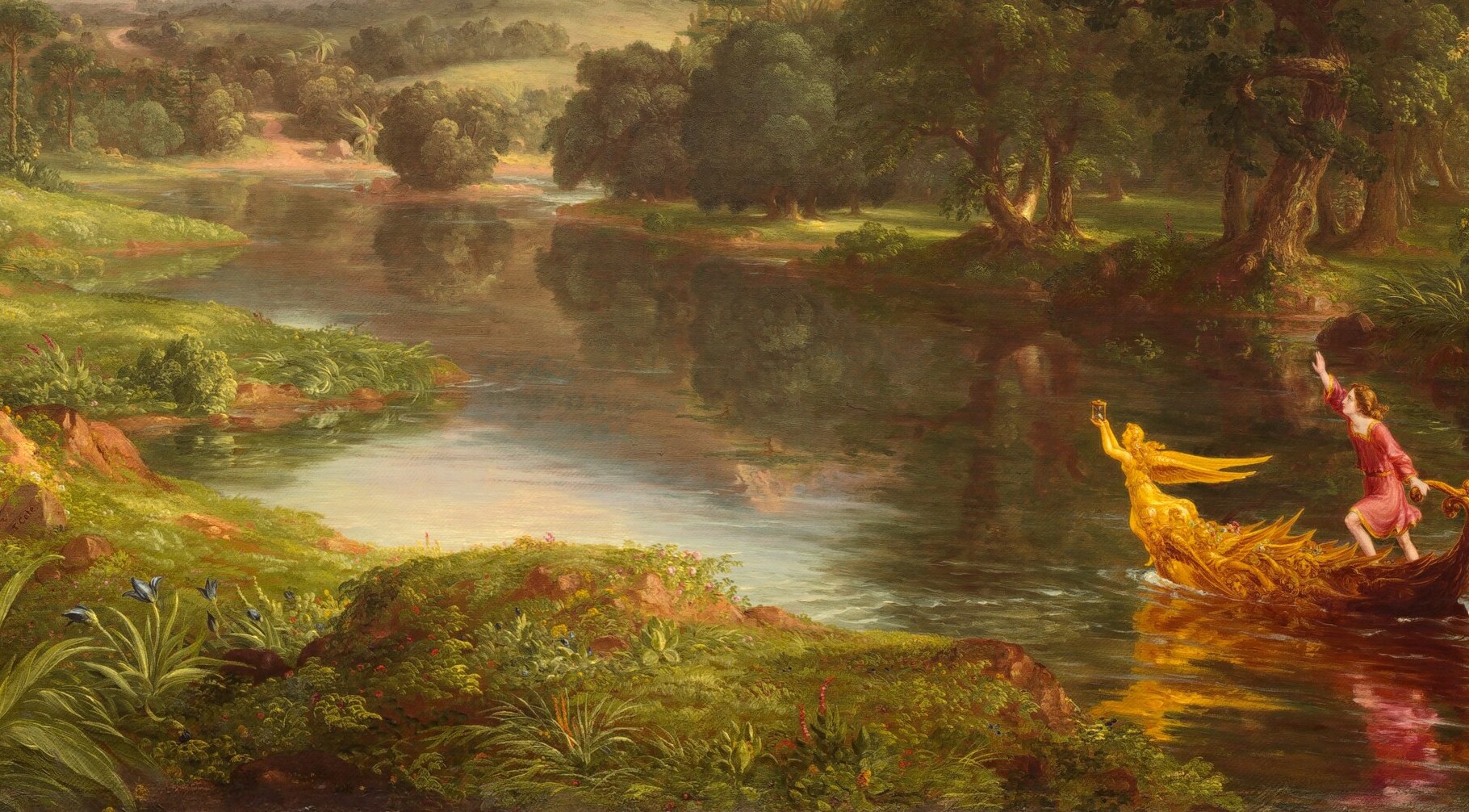
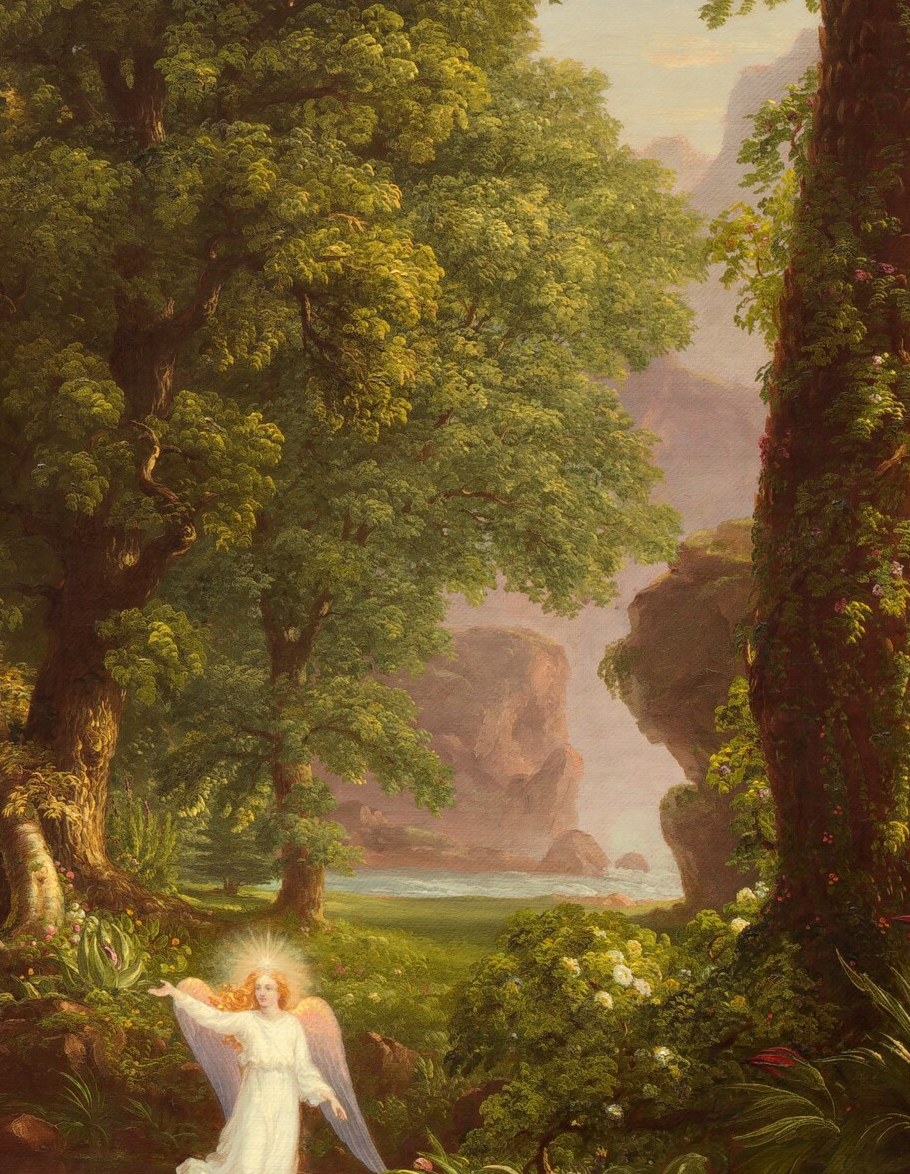
This is 'The Voyage of Life: Youth,' the second panel in Thomas Cole's four-part allegorical series. Painted in 1842 and now held at the National Gallery of Art in Washington, D.C., it shows a young man taking the helm of his own life for the first time. The angel who steered his boat in the 'Childhood' panel has stepped quietly onto the bank.
Look first at the young man's outstretched arm. His whole body leans toward a castle that Cole painted floating in the clouds, not anchored to the earth. The ambition is beautiful, but already ungrounded. Then find the white-robed angel on the right shore. Her clasped hands are the emotional hinge of the painting: she is still present, still watching, but she will not intervene. The vessel itself carries a small angel figurehead on its prow, a detail easy to miss, suggesting divine protection persists even when ignored.
Thomas Cole was 41 when he painted this series, the founder of the Hudson River School and an artist who saw the American landscape as a stage for moral and spiritual drama. The river here is glassy and golden, a luminist light flooding the scene with what feels like divine optimism. But Cole knew what came next. The third panel, 'Manhood,' shows the same traveler battered by rapids and dark crags, praying for a help he can no longer see. 'Youth' is the last moment of calm, and the last moment the young man believes he is steering alone. What would you have reached for at his age?
Details
Transcript
He stands alone at the helm, arm reaching for the sky. The boat is the same gilded vessel from his childhood. But the guardian angel has stepped onto the shore. She watches with clasped hands. He does not look back. Thomas Cole painted this in 1842, the year he turned 41. The castle he sails toward floats in the air, not on the land. His ambitions are airy. The destination recedes as he approaches. A divine light floods the river, but the rapids are already ahead.