Mount Auburn Cemetery by Chambers, Thomas
View the artwork: Mount Auburn Cemetery →
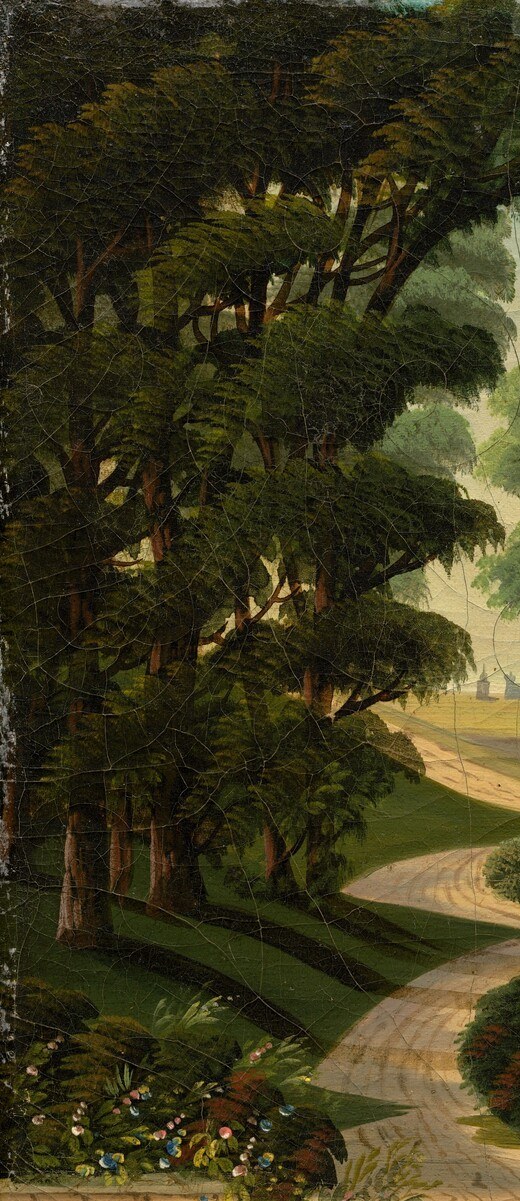
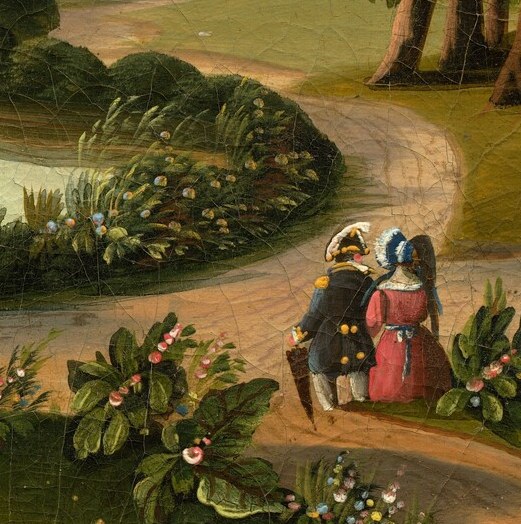
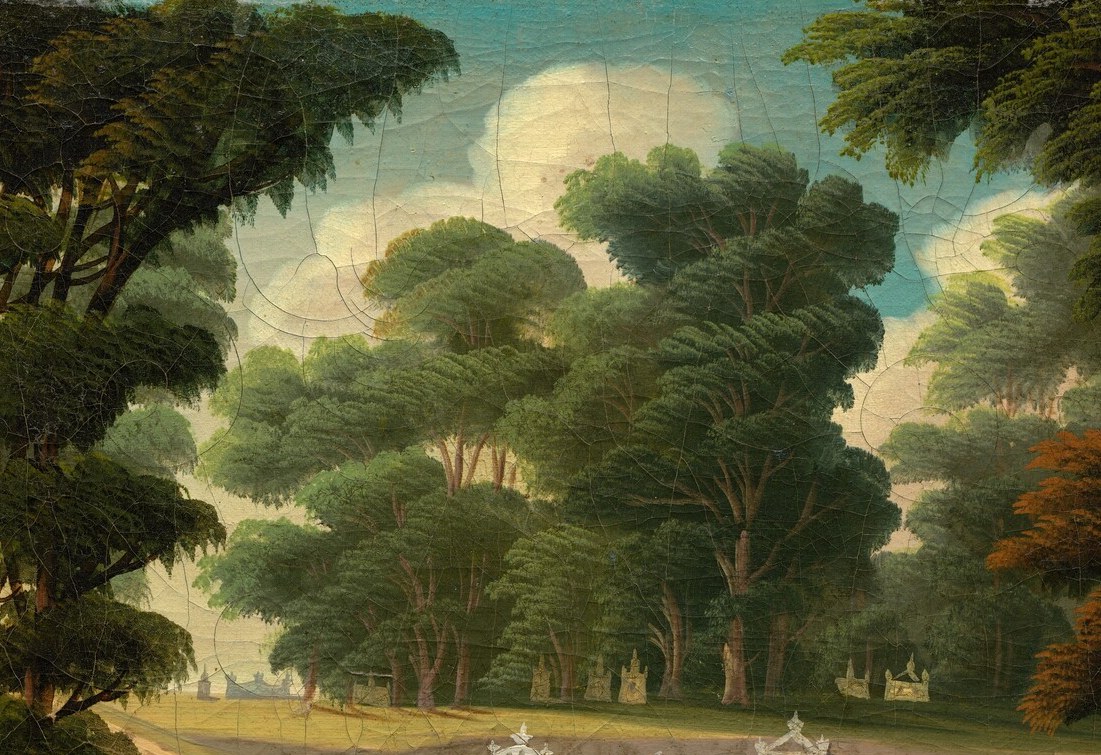
Thomas Chambers' 'Mount Auburn Cemetery' is a painting of a burial ground that refuses to look like one. Painted in the mid-19th century, this small oil on canvas depicts America's first rural cemetery, founded in 1831 in Cambridge and Watertown, Massachusetts, as a lush and inviting public park. Chambers, a largely self-taught immigrant from Yorkshire, treats the grounds as a landscape for the living, flooded with sunlight and strolling couples, rather than a place of mourning.
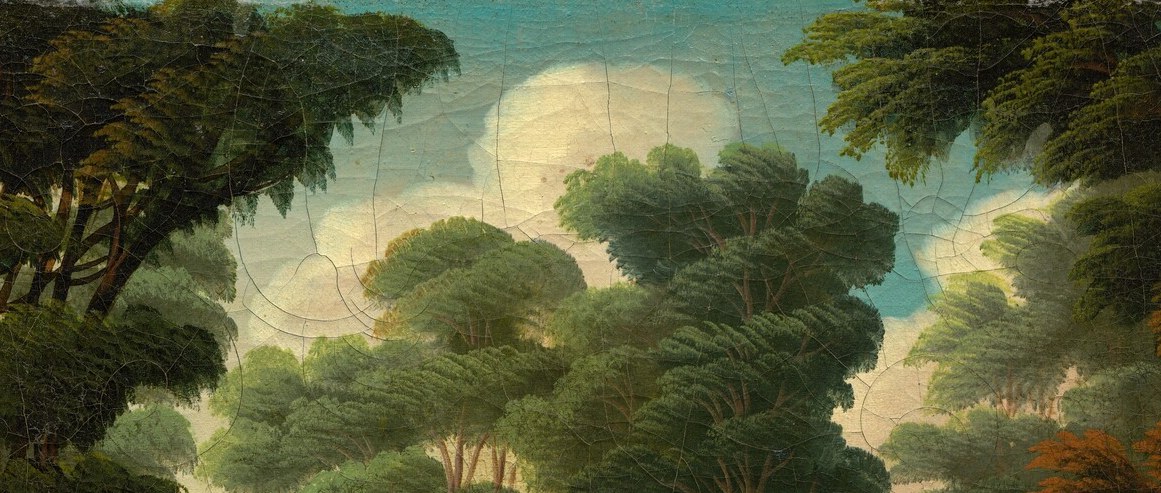
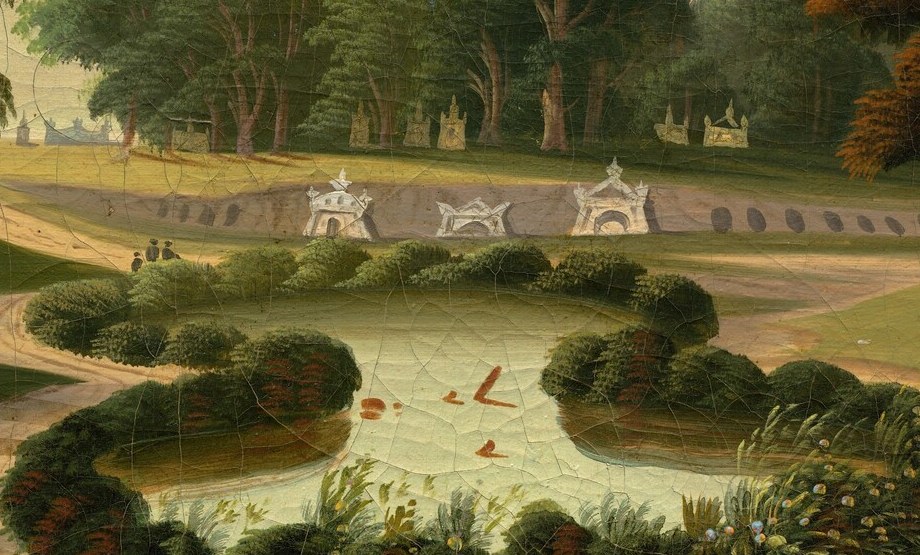
Look closely at the clearing just right of center. A tiny white classical pavilion, barely an inch tall on the canvas, is the one architectural whisper that you are in a cemetery. The two women in Victorian dress walk the winding gravel path as if on a social promenade, and the arching trees form a natural green vault above them, a cathedral of leaves rather than stone. Every other signal reads: pleasure garden.
Chambers painted this while he was active in Boston, working from popular prints and developing a flat, boldly patterned style that would later earn him the posthumous nickname 'America's first modern'. He died in a poorhouse in Whitby, England, in 1869, largely unknown. The painting was acquired by the collectors Edgar William and Bernice Chrysler Garbisch in 1949 and donated to the National Gallery of Art in 1958.
Mount Auburn was designed as a place for contemplation and leisure, not sorrow. Chambers understood that assignment perfectly. Next time you see this painting, find the white pavilion first, then notice how easily you might have missed it.
#arthistory #americanart #thomaschambers
Details
Transcript
It looks like a park on a summer afternoon. But this is a cemetery. America's first rural cemetery, in fact. Two women stroll the grounds as if in a pleasure garden. The painter, Thomas Chambers, was a self-taught English immigrant. His flat, rhythmic style earned him the title 'America's first modern.' But the real surprise is back here, tucked among the trees. A white classical pavilion, only an inch tall on the canvas. It is the one quiet marker that you are among the dead.