Artwork
Mount Auburn Cemetery
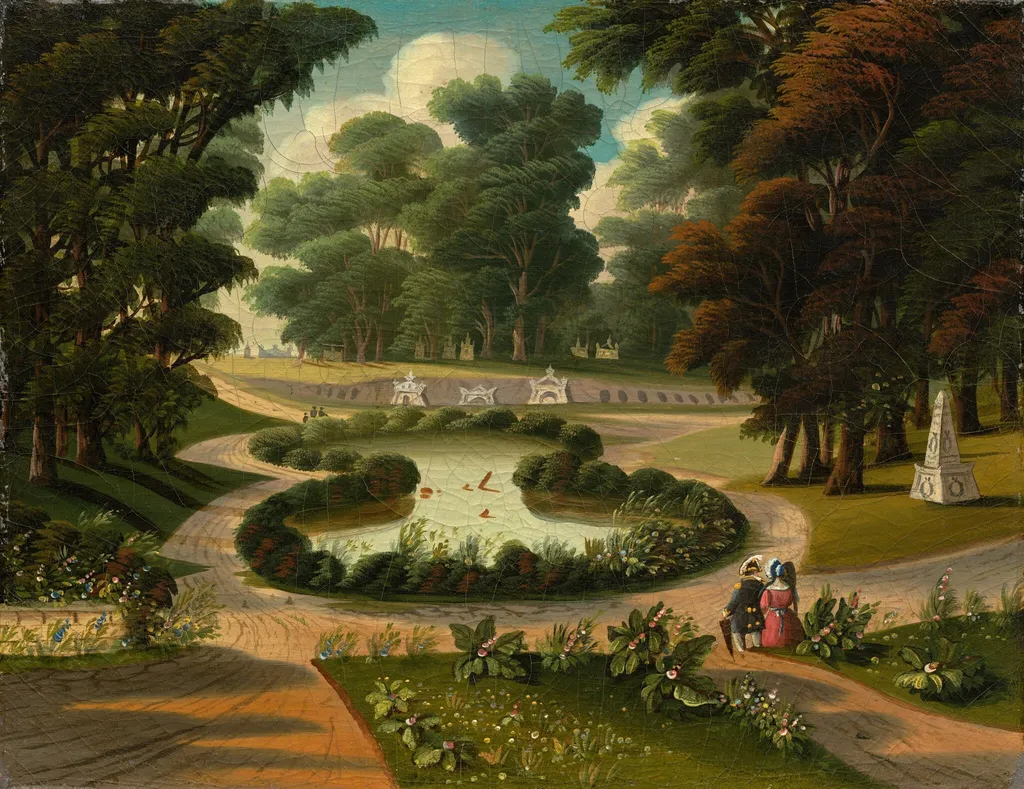
Mount Auburn Cemetery is an oil painting by the American Folk Art artist Thomas Chambers. It dates from 1850 and is held in the collection of the National Gallery of Art.
About this work
Paths wind through dense greenery in this compact painting, showing Mount Auburn Cemetery as a pleasure ground for the living rather than a somber burial site.
Paths wind through dense greenery in this compact painting, showing Mount Auburn Cemetery as a pleasure ground for the living rather than a somber burial site. Thomas Chambers, an English-born painter active in Boston during the 1840s, used bold color and rhythmic shapes to turn America's first rural cemetery into a decorative landscape. Just fourteen by eighteen inches, it entered the National Gallery of Art in 1958.
Subject & Meaning
The painting depicts Mount Auburn Cemetery in Cambridge, Massachusetts, the first rural cemetery in the United States. The scene includes a man and a woman strolling along a path, an artificial pond, tombs, trees, clouds, and sky, capturing the cemetery’s designed landscape of natural beauty interwoven with memorial structures. The presence of visitors with an umbrella suggests a moment of leisure or mourning in a serene, park-like setting.
This subject reflects the 19th-century rural cemetery movement, which reimagined burial grounds as places for peaceful contemplation and reconciliation with mortality, blending art, nature, and memory. The iconography, path, pond, tomb, and living figures, embodies the ideal of the cemetery as a tranquil retreat for reflection on life and death.
Technique & Style
Thomas Chambers executed this landscape in oil on canvas, a common medium and support for 19th-century American painting. The canvas measures 35.6 by 46 cm. The composition presents a panoramic view of Mount Auburn Cemetery, incorporating figures, trees, a pond, tombs, and a path. The handling and condition of the paint surface are not documented in the available sources.
History & Provenance
Thomas Chambers painted Mount Auburn Cemetery in 1850. The work was recorded as originating in Boston. It was purchased in 1949 by Edgar William and Bernice Chrysler Garbisch, who later gifted it to the National Gallery of Art in 1958. No commission details are known.
Overview
Thomas Chambers's Mount Auburn Cemetery, an oil on canvas from the mid-nineteenth century, captures America's first rural cemetery as a vibrant, park-like setting. This compact painting, measuring 35.6 by 46 centimeters, exemplifies Chambers's distinctive approach to landscape, transforming the burial ground into a space for public enjoyment rather than solemn remembrance. The work reflects the artist's period of activity in Boston, where he was active as a painter.
Context
Thomas Chambers, born in England in 1808, established himself as a marine and landscape painter after immigrating to America in 1832. Despite working in major East Coast cities like Boston, New York, and Albany, he remained largely unrecognized during his lifetime, ultimately dying in a poorhouse in 1869. His artistic contributions, however, gained appreciation posthumously, leading to his later designation as "America's first modern."
Own this work as a print
Artist & collection


- Het Herepad in het Haagse Bos
 The Bathing Pool
 A Formal Garden
 The Herepad in the Haagse Bos
 View of the Nieuwe Gracht near the Bolwerk, Haarlem
 Landscape with a Stream
 A Forrest near Hellebæk in the North of Zealand. Afternoon.
 The Cascade in Frederiksberg Garden near Copenhagen
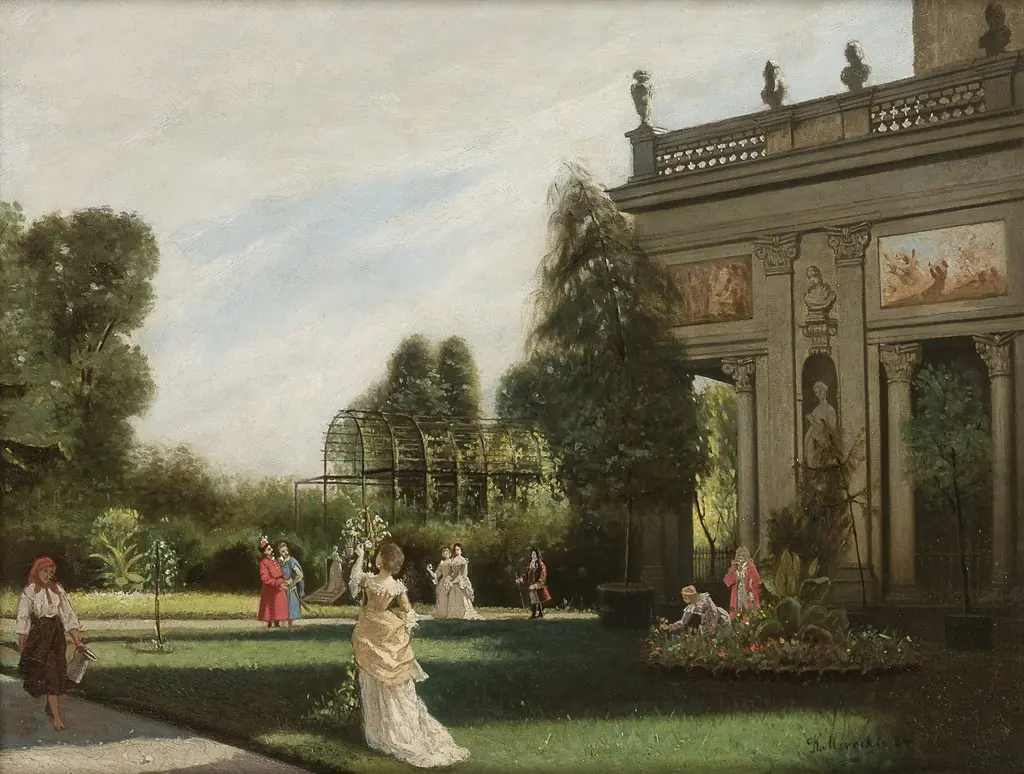 Wilanów
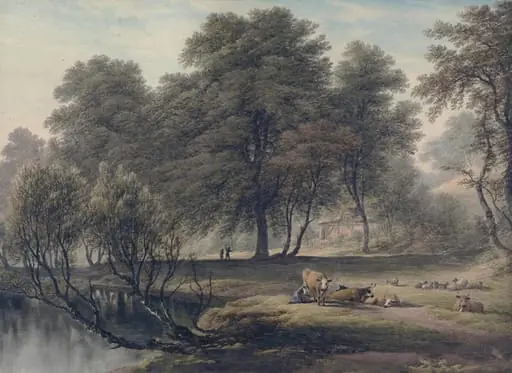 View near Lichfield - Morning
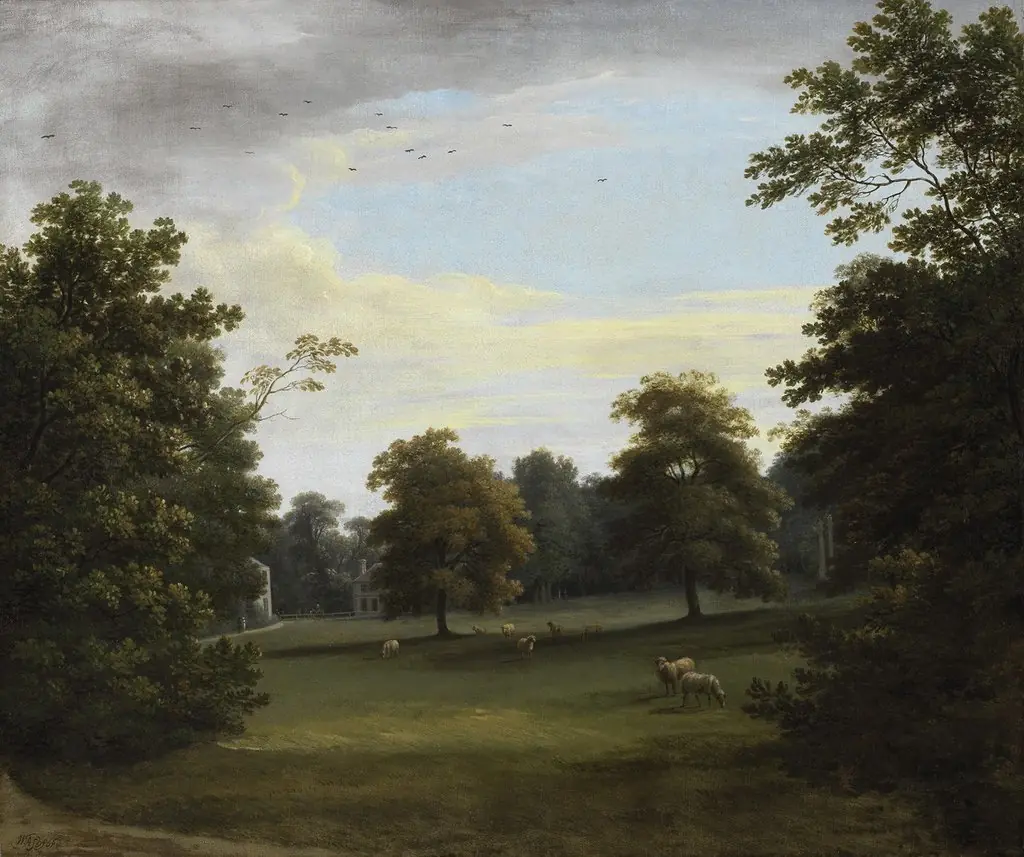 View in Mount Merrion Park
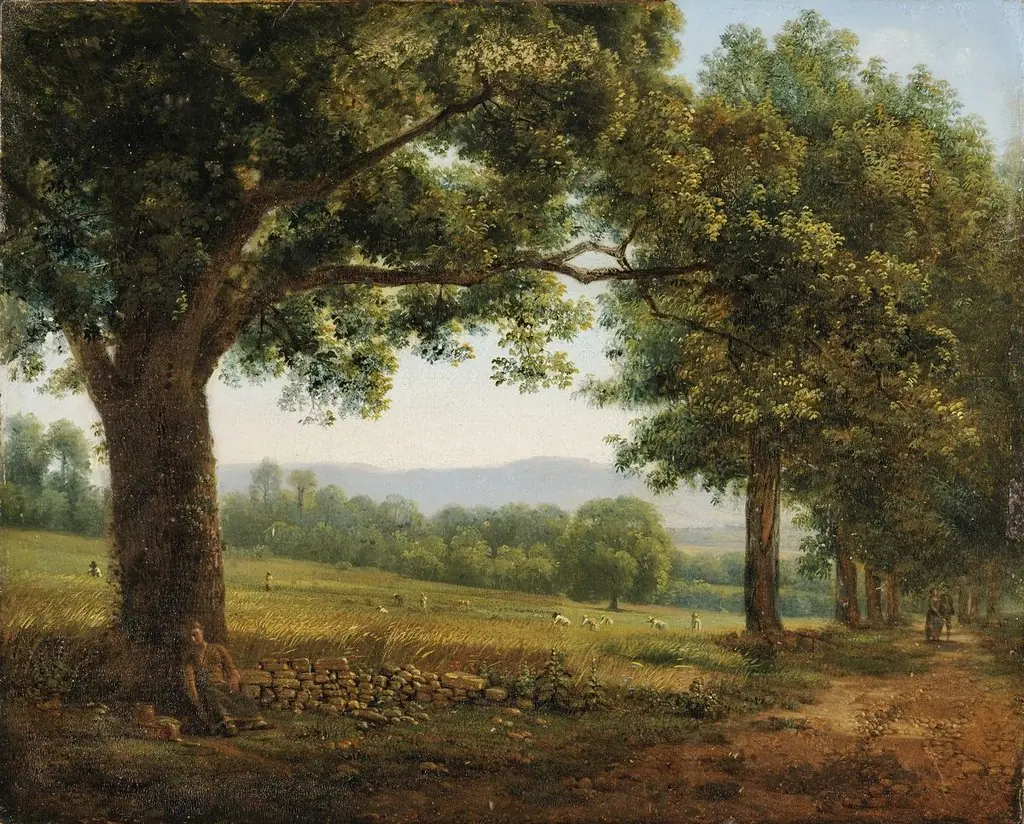 Vue aux environs de Lyon