Pont Neuf, Paris by Renoir, Auguste
View the artwork: Pont Neuf, Paris →
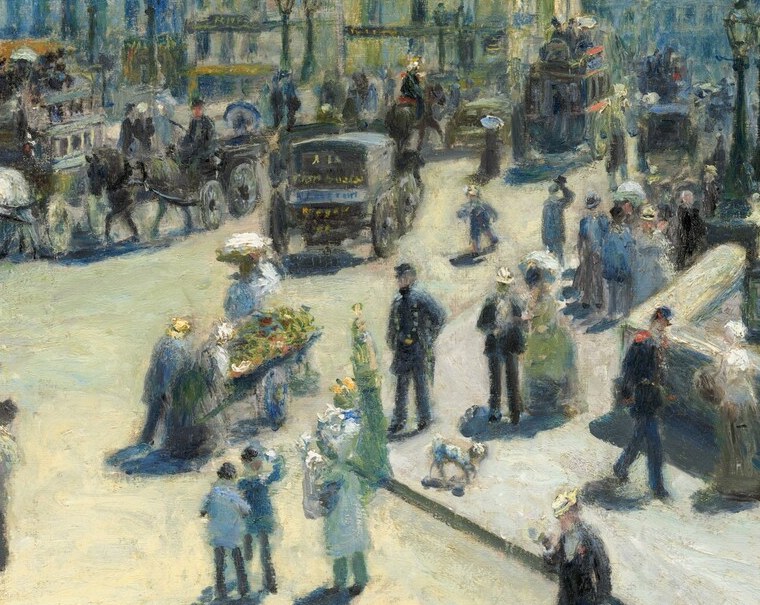
Renoir painted "Pont Neuf, Paris" in 1872, one year after the Franco-Prussian War ended. He positioned himself in an upper-floor café on the Right Bank, looking down onto the oldest bridge in the city. What he saw was a capital shaking off its siege, returning to business, sunlight, and the simple act of walking across a bridge.
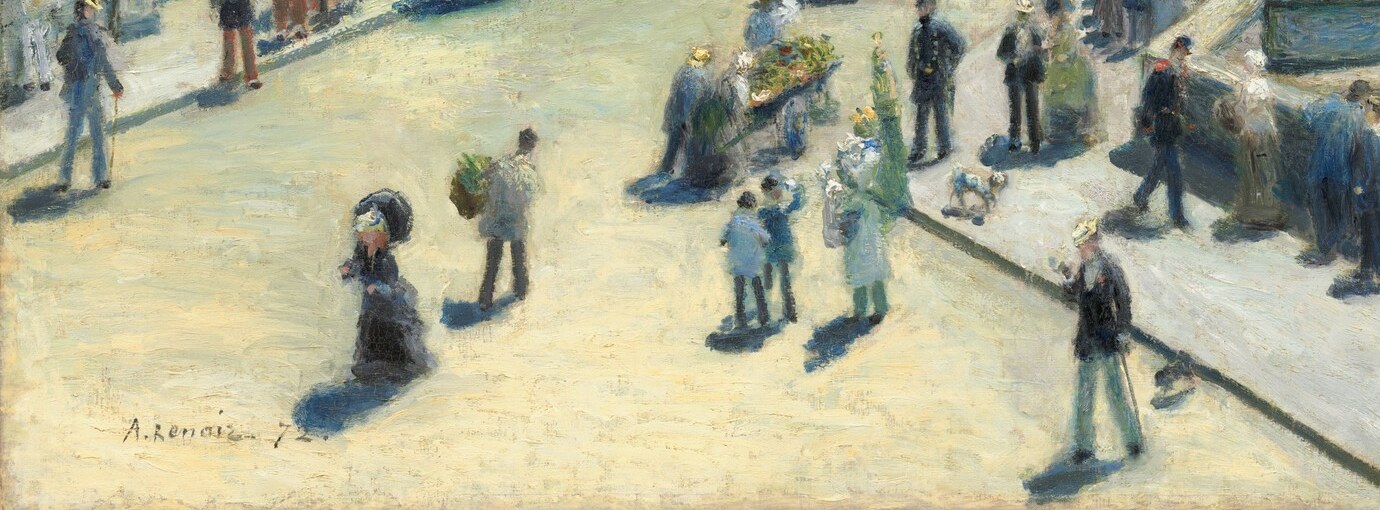
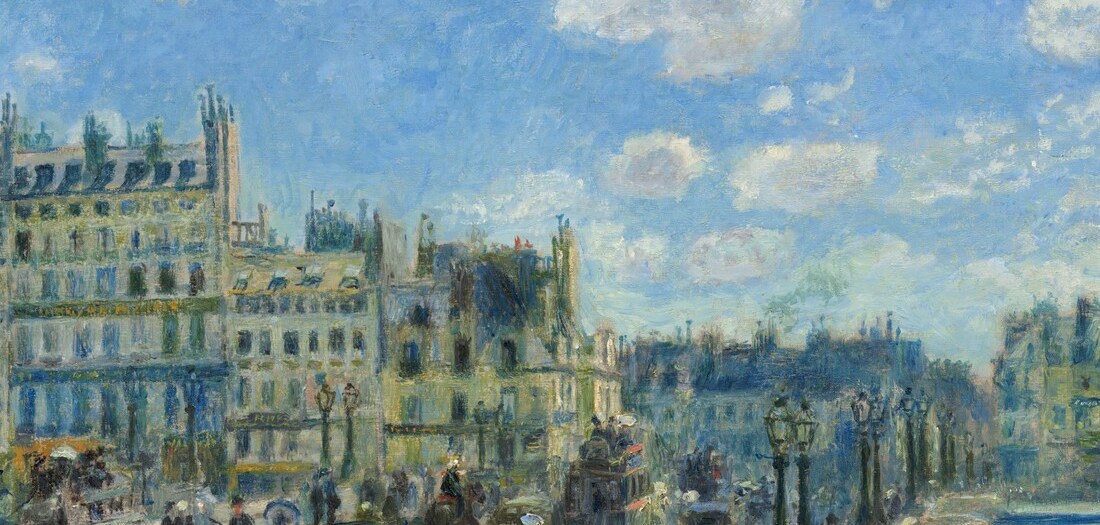
The painting is a panoramic snapshot of 1870s Parisian life. To capture the crowd, Renoir enlisted his brother Edmond, who stood on the bridge stopping passers-by and asking them to pause long enough for the artist to include them from his elevated window. You can spot Edmond twice in the finished canvas, including the solitary man standing near the right balustrade. The horse-drawn omnibus, the carriages, the fashionably dressed woman with a child, and the Haussmann-era limestone buildings on the Left Bank all document the city at a precise moment of transition.
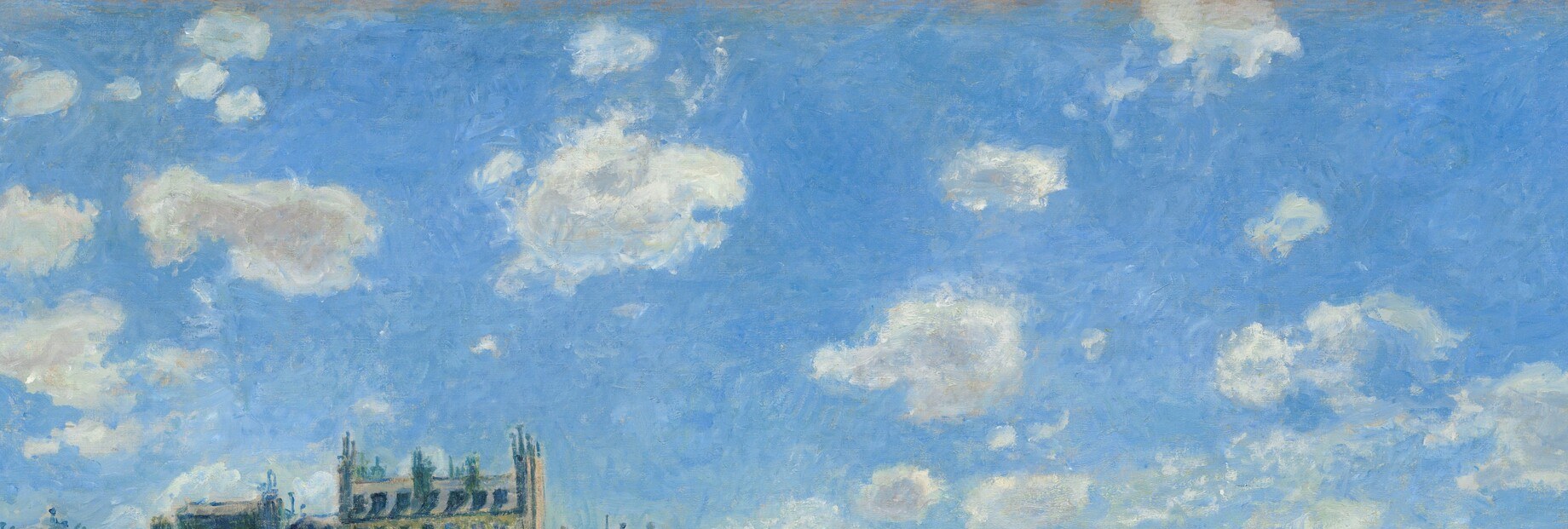
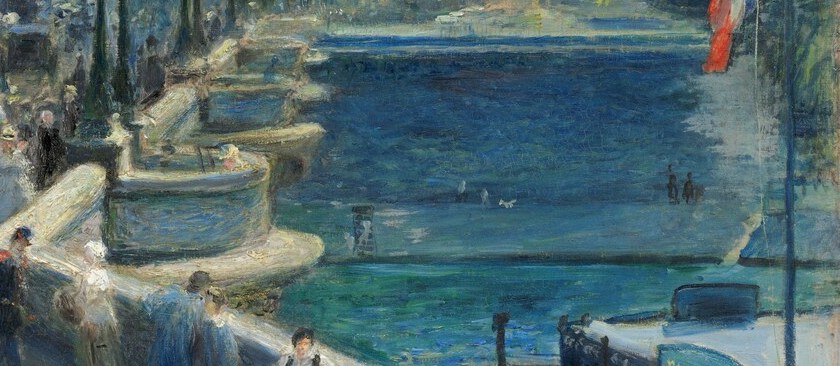
Renoir made this just before the first Impressionist exhibition in 1874, and the painting bristles with the movement's emerging language: broken color on the Seine, loose brushwork in the clouds, and an instinct that light itself is a subject worth chasing. The National Gallery of Art holds it today.
On a bridge built in 1607, a 31-year-old painter mapped the modern city with his brother's help.
#arthistory #renoir #impressionism
Details
Transcript
Paris, 1872. The smoke of the Franco-Prussian War has barely cleared. A young painter sets up in a café window above the Pont Neuf. Down on the bridge, his brother Edmond stops strangers, asking them to pose. Look for Edmond. He is in here twice. The city is already rebuilding. On the right, a tricolor flag flies from a mast. Renoir never called himself an Impressionist. But here, sunlight is the real subject. He painted this entire record of the city's pulse from a single borrowed seat.