Artwork
Pont Neuf, Paris
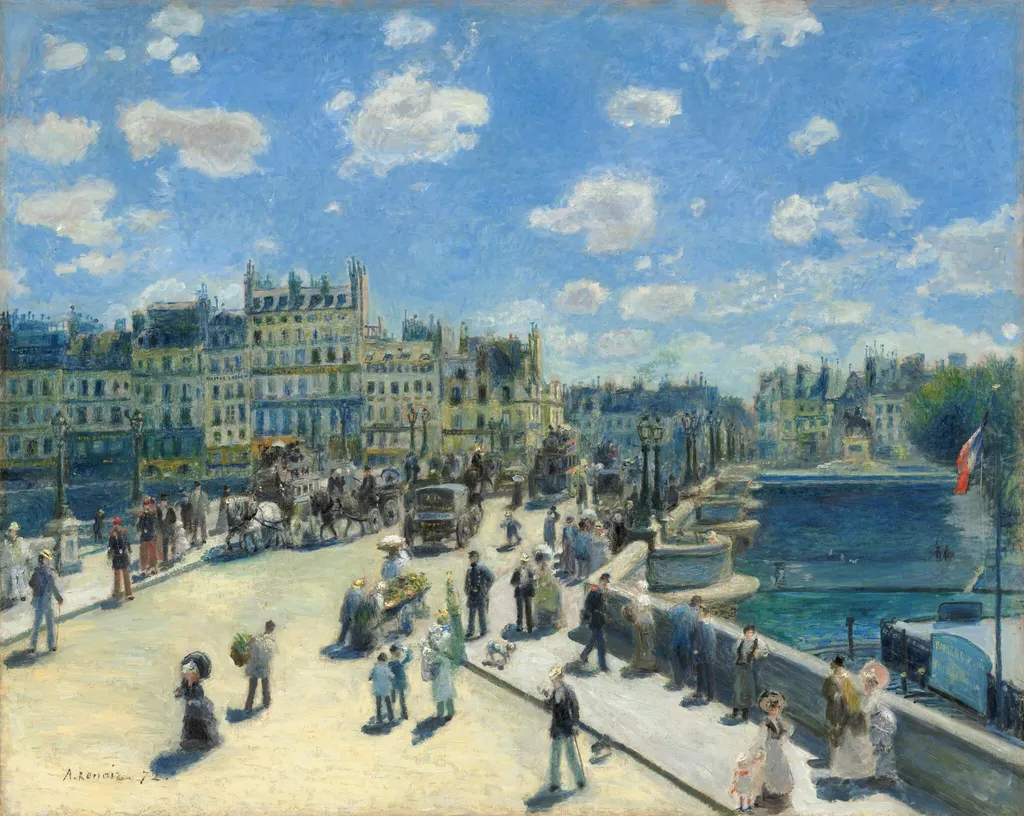
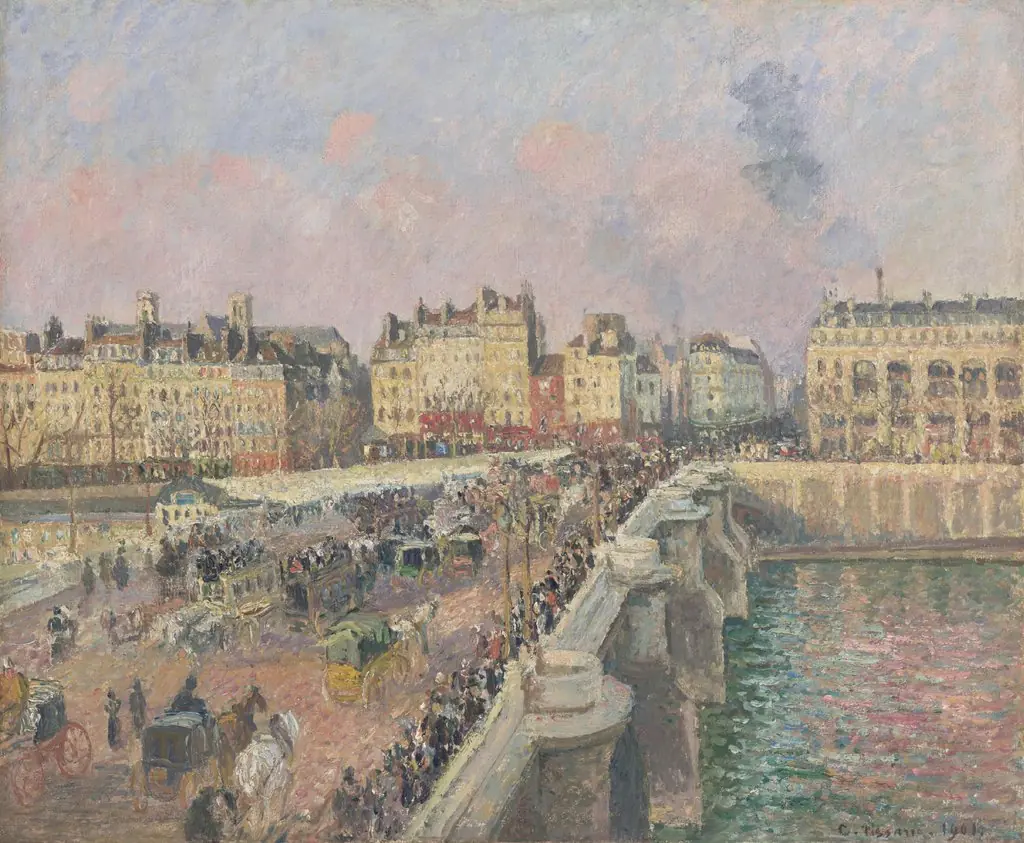
Pont Neuf, Paris is an oil painting by the Impressionist artist Pierre-Auguste Renoir. It dates from 1872 and is held in the collection of the National Gallery of Art.
- Inscription
- Inscribed:lower left: A. Renoir. 72.
About this work
From an upper-floor café window on the Right Bank, Renoir looked down on the Pont Neuf in 1872 as midday sun flooded the oldest bridge in Paris. His brother Edmond stopped passers-by so Renoir could record their dress and posture, and Edmond appears twice in the crowd, straw hat in hand. Omnibuses, pedestrians, and horses cross the Seine below Henri IV's statue, the tricolor waving at the right.
Subject & Meaning
The painting depicts the Pont Neuf, Paris’s oldest standing bridge (completed in 1607 by Henry IV), viewed from an elevated café window.
The painting depicts the Pont Neuf, Paris’s oldest standing bridge (completed in 1607 by Henry IV), viewed from an elevated café window. The composition includes the equestrian statue of Henry IV, a blue sky, the French flag, and trees, while bustling pedestrians fill the bridge, among them Renoir’s brother Edmond, visible twice in a straw boater and cane, who delayed passersby so the artist could sketch them–5). Painted in 1872, after the Paris Commune’s turbulence, the work celebrates the resurgent vibrancy of bourgeois Parisian life.
Renoir’s audacious use of color and light, particularly the “almost raw” blues, makes the atmosphere luminous and joyful, with figures reduced to swift strokes of pure color. The scene thus represents modern urban vitality, using impressionist techniques to convey the fleeting, festive energy of a summer morning on one of the city’s iconic landmarks–5).
Technique & Style
Executed in oil on canvas, the painting measures 75.3 × 93.7 cm. Renoir’s handling is characterized by rapid, loose brushwork: figures are delineated with a few swift strokes, their faces and clothing reduced to pure patches of light and color. The overall composition is steeped in a blue-toned atmosphere, with intense sunlight and delicately depicted cool shadows. Renoir employs the technique of couleur locale, applying unmixed color freely in dots; the blues in particular were considered audacious for the time.
Although not yet fully Impressionist, the work’s sketchy execution already reveals the artist’s hand. The viewpoint looks down from a second-floor café window onto the Pont Neuf, capturing the equestrian statue, flags, trees, and lively strollers.
History & Provenance
Painted in 1872, this cityscape by Pierre-Auguste Renoir was executed from a second-floor cafe window overlooking the Pont Neuf. The artist’s brother, Edmond, helped by delaying pedestrians to allow Renoir to sketch their likenesses. The work was not commissioned; Renoir sold it at auction on March 24, 1875, no. 42, where it was purchased by dealer Paul Durand-Ruel.
It then passed to Nicolas Auguste Hazard (Paris) and was sold at his estate sale on December 1, 1919, no. 206, to Georges Bernheim. By 1921 Ralph M. Coe (Cleveland) owned it, and it was later on joint account with Carroll Carstairs and M. Knoedler & Co. Marshall Field acquired it in 1936.
Subsequent owners included Dr. and Mrs. Robert Boggs and Mr. and Mrs. Peter Benziger. Knoedler sold it to Ailsa Mellon Bruce in December 1966, and it entered the National Gallery of Art, Washington, via her 1970 bequest.
The painting is held by the National Gallery of Art in Washington, D.C., having entered the collection as a bequest from Ailsa Mellon Bruce in 1970. Its exhibition history includes a 1933 loan to the Pennsylvania Museum in Philadelphia (while owned by Ralph M. Coe) and a 1935–1936 showing at Carstairs Gallery in New York as part of 'French Impressionists and After', after which it was acquired by Marshall Field. Field subsequently lent the work to multiple exhibitions between 1937 and 1944.
Context
Painted in 1872 in the aftermath of the Paris Commune, Pont Neuf, Paris was created by Renoir during a formative moment for Impressionism. The work is often discussed in art-historical scholarship, John Rewald’s History of Impressionism analyzes its development, and is noted for its audacious use of color, especially the raw blues that contemporary viewers found startling. Although not yet fully Impressionist, its free brushwork and emphasis on light and atmosphere anticipate the movement’s principles.
Renoir and Monet had first depicted the bridge in 1867; Renoir’s brother Edmond helped by delaying pedestrians so Renoir could sketch them. The painting exemplifies Impressionism’s focus on modern Parisian life and vibrant cityscapes. It is classified as an Impressionist cityscape.
Overview
Pierre-Auguste Renoir's 1872 oil on canvas, "Pont Neuf, Paris," depicts a vibrant street scene on the historic bridge in the heart of the French capital. Captured from an elevated viewpoint, the painting showcases the bustling activity of pedestrians, vehicles, and the river Seine under the midday sun. This work is part of the collection at the National Gallery of Art in Washington, D.C.
Own this work as a print
Artist & collection
Artist
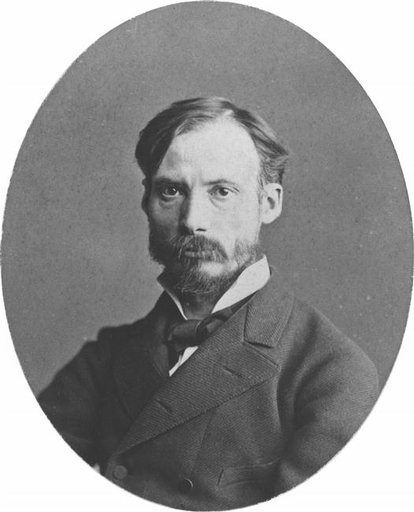
Pierre-Auguste Renoir was a French artist who was a leading painter in the development of the Impressionist style.