Esther, Ahasuerus, and Haman by Jan Steen
Jan Steen painted "Esther, Ahasuerus, and Haman" around 1668, and it hangs today in the Cleveland Museum of Art. The scene is the Bible's Book of Esther, the moment Queen Esther reveals a plot to annihilate her people. Steen treats a sacred story not as a frozen icon but as a chaotic, crowded piece of theatre. The real surprise is how many characters he actually included.
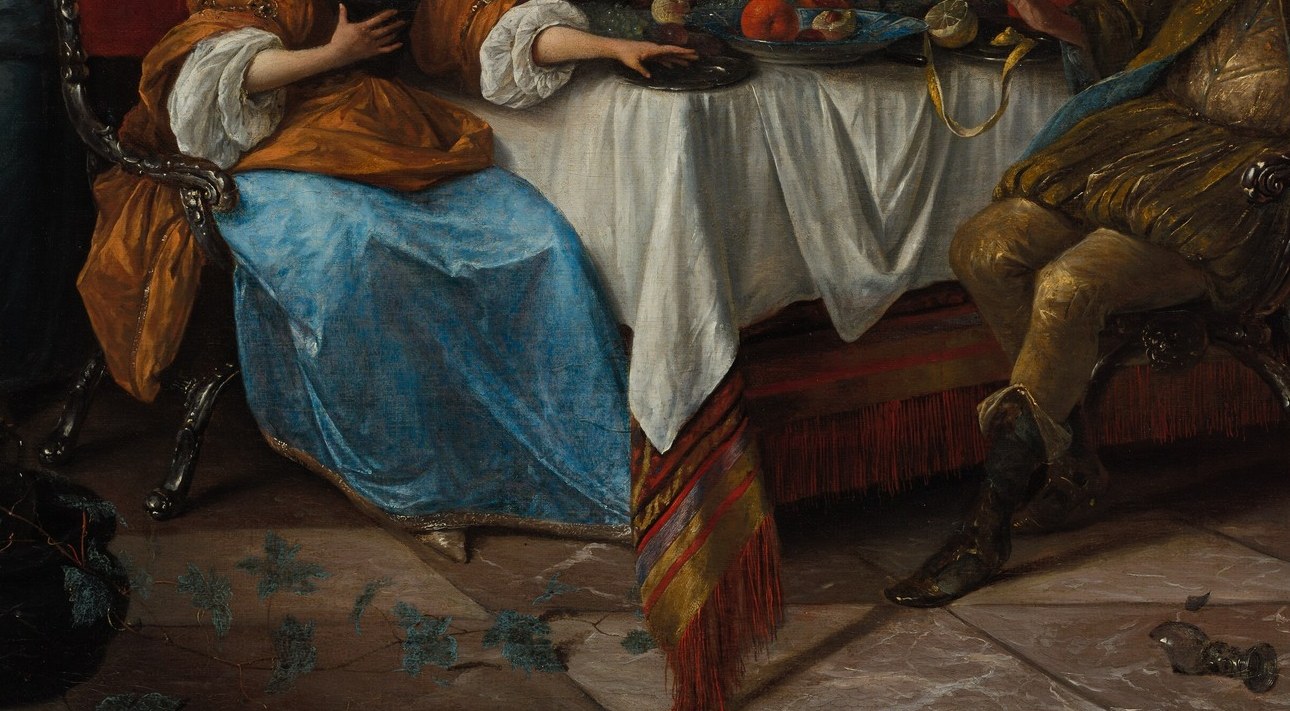
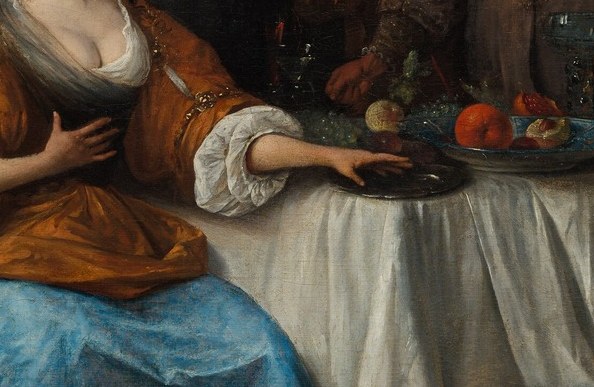
First, watch the core drama. King Ahasuerus, swamped in red, raises his arm to shift his anger from Esther to the cowering Haman at lower right. Esther herself is a centre of composure, her blue silk skirt is pure ultramarine, an expensive pigment that quietly insists on her royal status. Her hands assume the posture of supplication, mirroring the prayer that fasted her for three days before this moment.
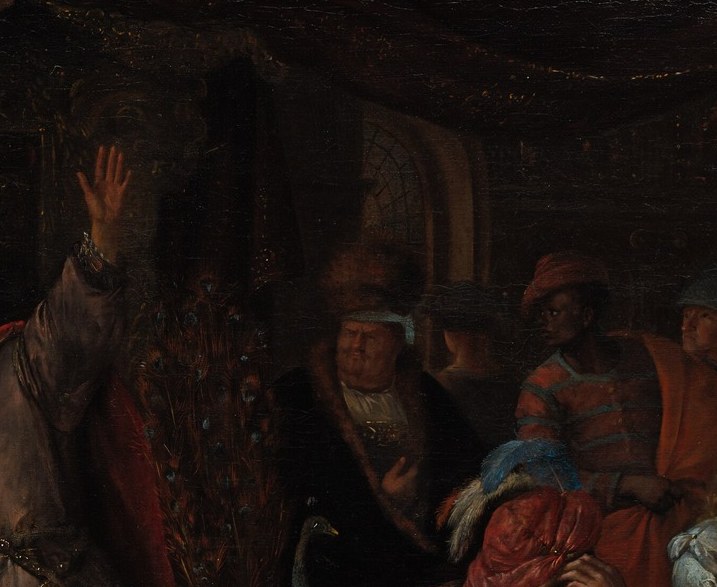
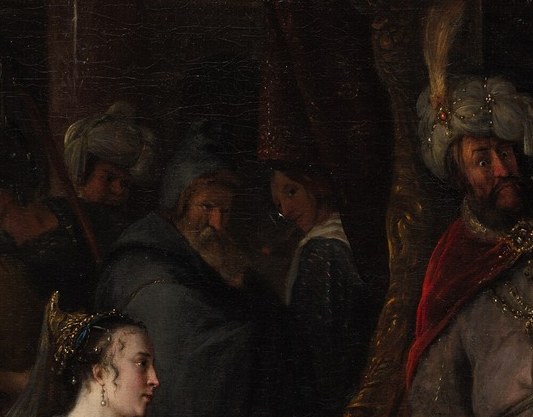
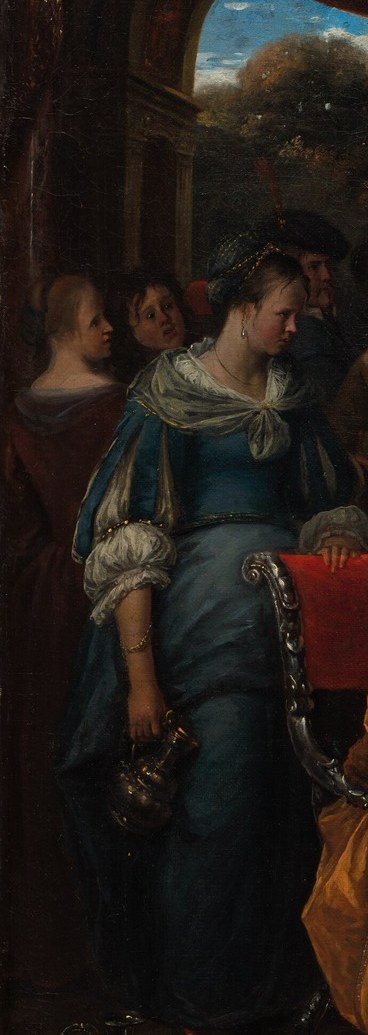
Now let your eye drift into the shadows. Pressing in from the background are courtiers whose faces Steen rendered with distinct, individual care, witnesses to a private crisis made strangely public. But the figure that rewards the closest look is almost off the canvas entirely. At the far left edge stands a female attendant, likely one of the handmaids mentioned in Esther 4:16. She is so marginal that scrolling past her is easy, yet her presence completes the scriptural picture. Steen hid her in plain sight.
The painting is a slow reveal disguised as a busy banquet. What else might be tucked into the architectural darkness of the upper right?
Details
Transcript
A biblical queen risks her life to save her people. At this banquet, her secret is about to break. The king's raised arm seals the traitor's fate. Esther's hands echo a prayer of deliverance. Her story says she was not alone here. Now look at the far left edge of the canvas. A handmaid stands in the shadow, nearly invisible.