Christ Appearing to His Mother by Juan de Flandes
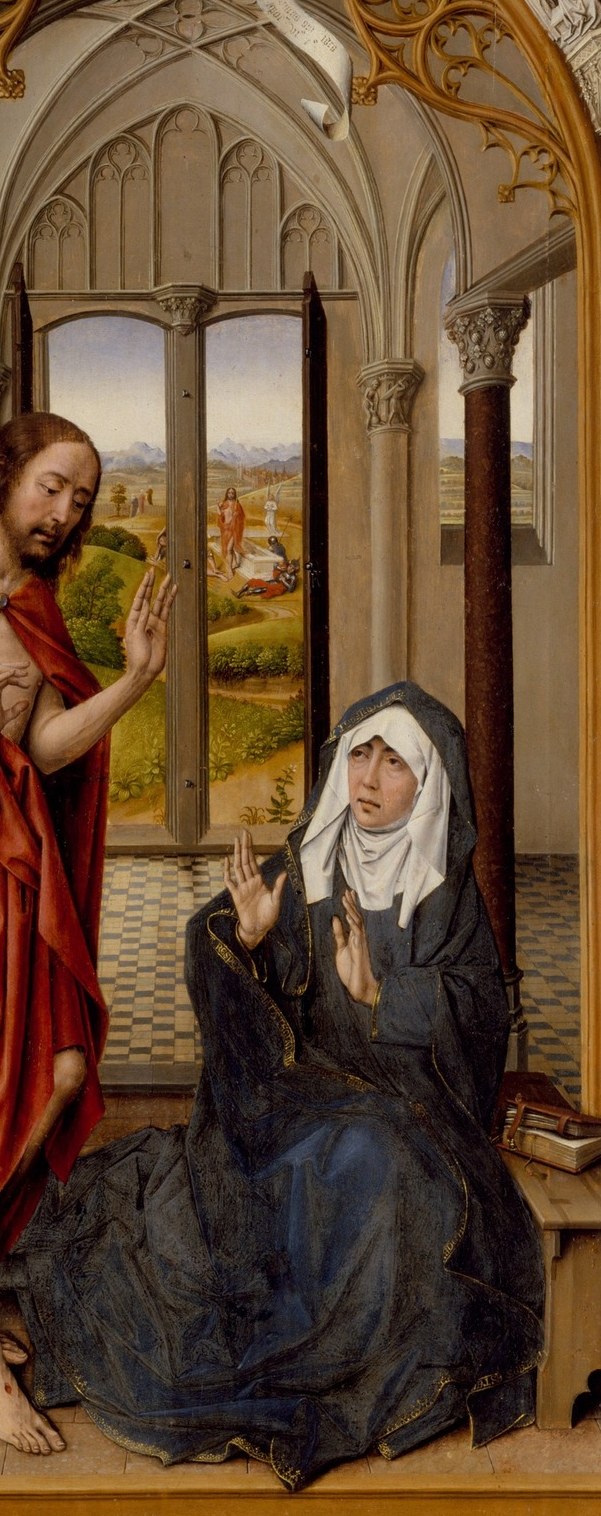
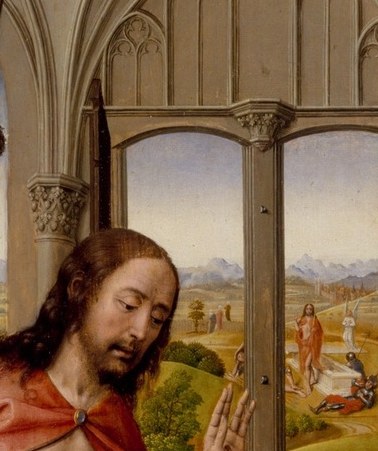
This is Christ Appearing to His Mother, painted around 1498 by Juan de Flandes. It shows a moment the Gospels never describe: the risen Christ appearing to Mary in private. There is no crowd, no witness, no recording of the words. Just a man and his mother in a quiet room arranged like a small stage.
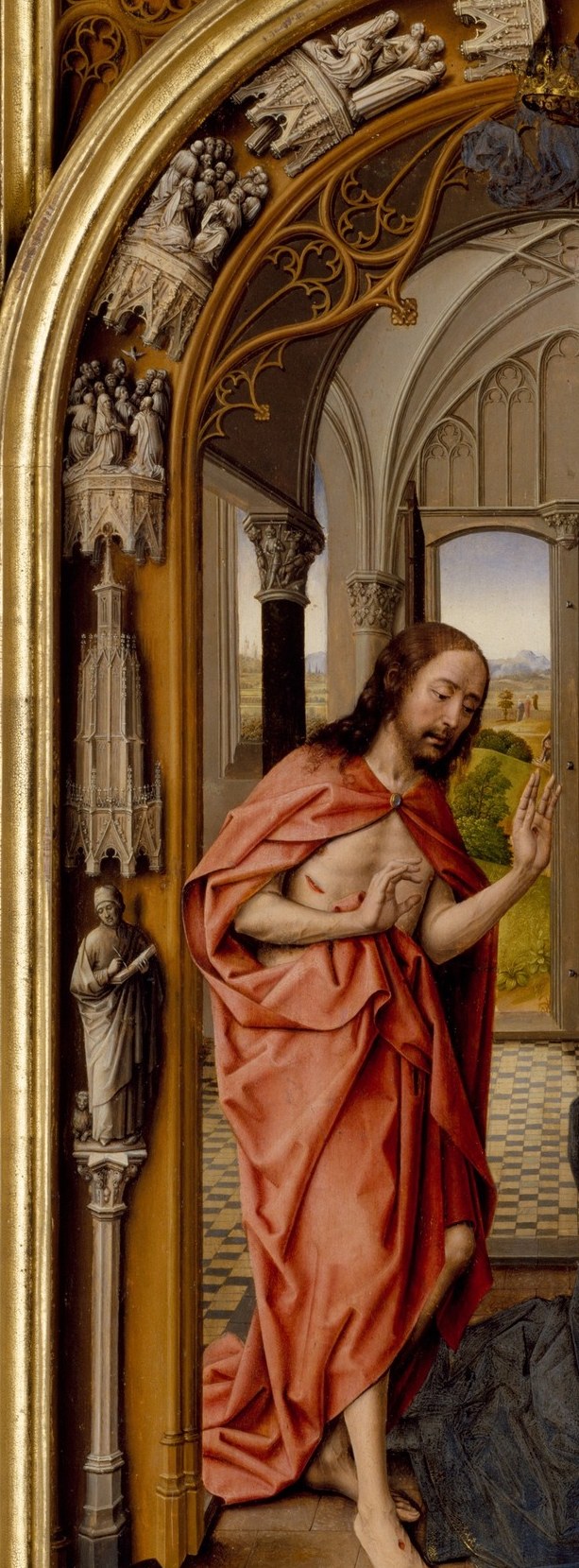
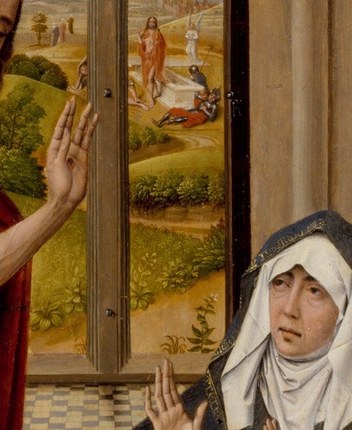
The painter built the emotion in fabric and hands. Christ wears a saturated red mantle, the color of both sacrifice and kingship. Mary is wrapped in a dark blue-black drape that pools around her kneeling form like the heaviness of grief. Her white head covering frames her upturned face, drawing the eye to the connection between her gaze and his. Their hands carry the whole story: hers are clasped at her chest, tight and prayerful, and his right hand is raised in a gesture of gentle address. No triumph, no proclamation. Reassurance.
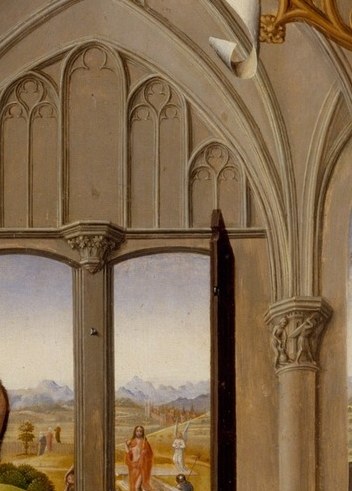
Juan de Flandes was a Netherlandish artist who worked at the court of Queen Isabella of Castile. His training in the Northern tradition shows in the precise architecture, the illusionistic floor tiles, and the tiny sculpted figures tucked into the Gothic arch above. He brought Flemish realism to a deeply intimate Spanish devotional subject. The painting lives today at The Metropolitan Museum of Art, a small and steady object of contemplation.
What do you think his first words to her would have been?
Details
Transcript
It looks like a scene from a royal court. But this is the first moment a mother sees her son alive again. He appears in a red mantle. The color of martyrdom and glory. She wears a darkness that has not yet lifted. Look at her hands. Clasped tight. Grief and relief held in a single knot. His hand speaks for them both. A quiet reassurance. The Bible never records this moment. The painter gave it to her anyway.