清 佚名 倣王翬 倣仇實父採菱圖 扇|Gathering Water Chestnuts by Wang Hui
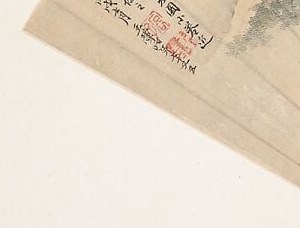
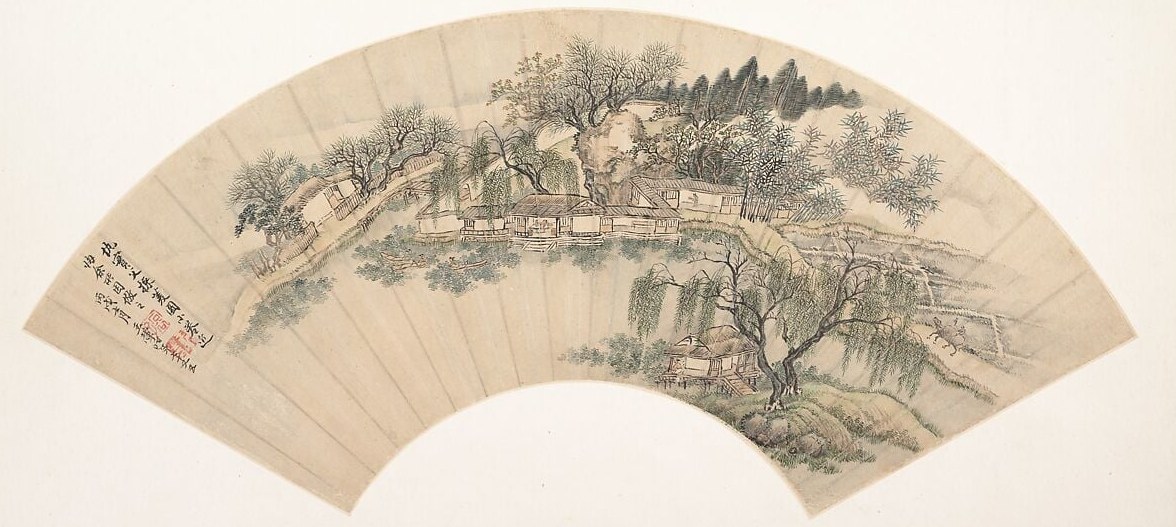
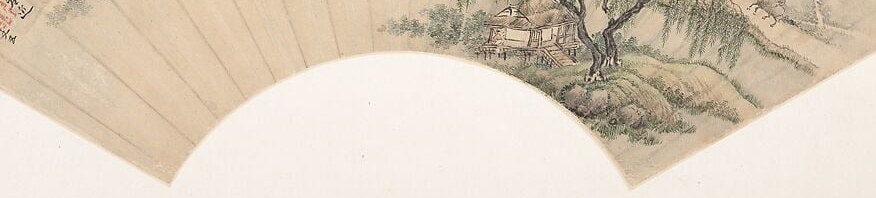
Gathering Water Chestnuts is an anonymous Qing Dynasty painting from around 1805, created with ink and color on paper as a folding fan. The Met holds it mounted as an album leaf. The work came with an elaborate inscription and red seals attributing it to the much older Ming master Qiu Ying, known as Qiu Shifu, but that signature is a spurious addition, likely made to sell the piece as a lost treasure rather than a study by a later hand.
A forger exploited the intense market hunger for named masters. The vermilion seals and calligraphy in the lower left declare the painting a work of Qiu Ying, a name that commanded high prices. Scholars have since decoded the false date and the stylistic imitation of Wang Hui underneath it all. The forgery was good enough to fool collectors for a long time.
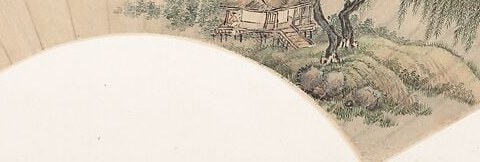
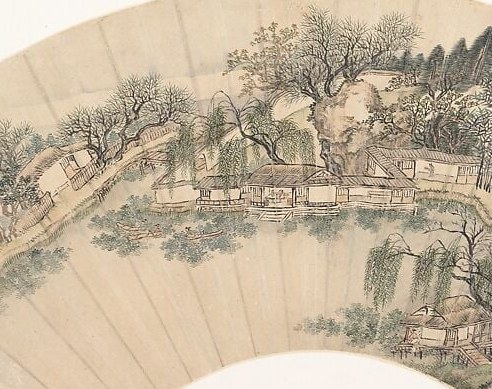
The real visual feat is the ink technique itself. The entire lower arc of the fan, the still river carrying the water-chestnut gatherers, is unpainted paper. In the Western tradition, water demands pigment; here, negative space does all the descriptive work. Above it, the central willows are rendered with a dry, dragged brush that creates the illusion of soft, moisture-heavy air without a wash. The dark foliage mass on the right anchors the composition with layered dots and strokes, balancing the empty water below and the faint hills beyond.
Once the scandal of the fake seals fades, what remains is a quiet demonstration of why Chinese painters trained by copying. The anonymous artist wasn't just faking a name, they were mastering the disciplined brush economy that makes absence feel like presence. The real trick was never in the signature.
Details
Transcript
This looks like a 300-year-old masterpiece by a famous painter. That name, Qiu Ying, was pure marketing. A later forgery. Someone added these red seals and a false date to inflate the price. The collectors bit. The trick worked. But look at the real magic, the water is empty paper. Not a single brushstroke of blue or white. Just negative space. And these willow branches dissolve into mist with just a dry, skipping brush.