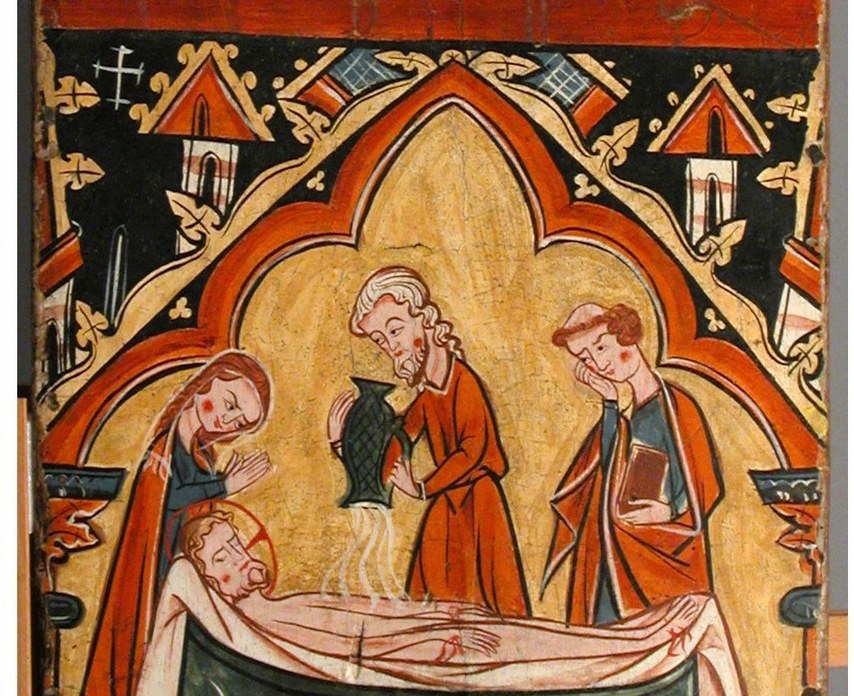
Scenes from the Life of Christ: Arrest of Christ, Christ in Limbo; Descent from the Cross, Preparation of Christ’s Body for His Entombment by http://www.wikidata.org/.well-known/genid/de9f850a4075ac922d550fce5724d00f
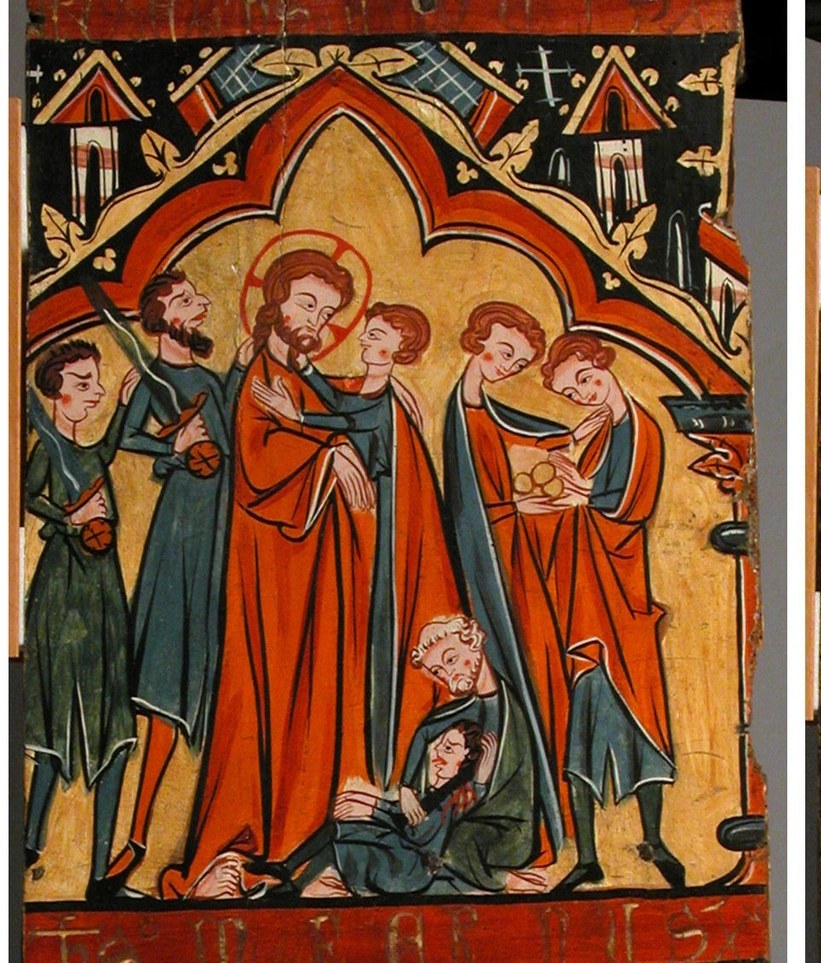
This is "Scenes from the Life of Christ," a four-part tempera panel from around 1250, attributed to an anonymous Umbrian Master. It is an object built for danger. At roughly the size of a large book, it was painted in an era when religious icons were smuggled across hostile borders and hidden from soldiers. Four narratives of the Passion are compressed into a single portable, concealable object.
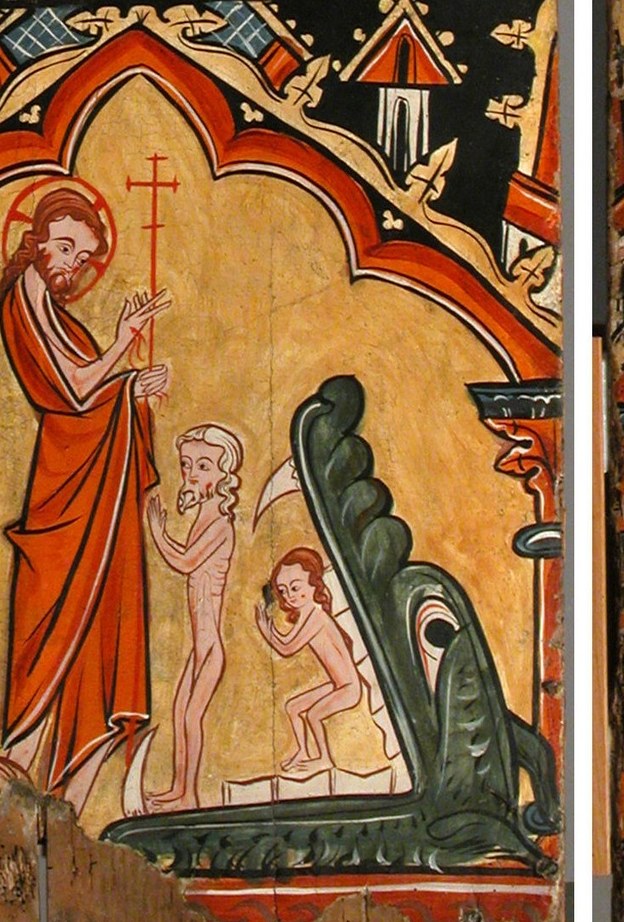
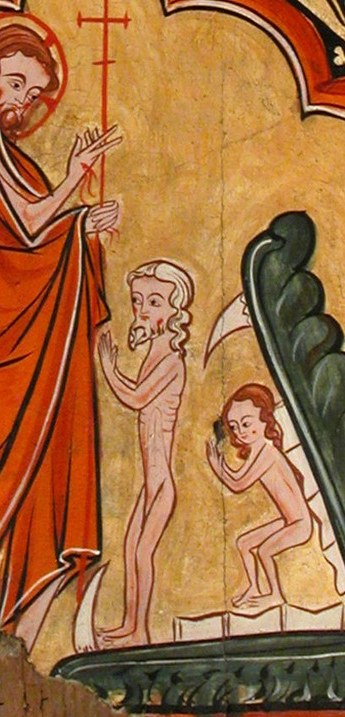
Look first at the green serpent coiled in the Limbo scene. The monster is painted in a vivid, sickly green anomalous against all the other warm reds, browns, and golds. The color is a visual alarm signaling that this is not a neutral creature but Hell personified. Just beside it, note the tiny crouching nude figure: this is Adam, shrunk to show his subordinate status, being pulled from the jaws of damnation. His nudity marks the original state of humanity, now redeemed.
Tempera panels like this one used egg yolk as a binder for pigments. The resulting matte finish and bold black outlines create the flattened, stylized figures that defined Christian art before the oil painting revolution. The painter used a deliberate Gothic framing device: four trefoil arches that transform each compartment into a chapel. The effect is that of a pilgrim moving between shrines, a private viewing that required no church and no congregation. For a Christian in hostile territory, this was liturgy in your hands.
Objects this small often come with long silences: no signature, no recorded first owner, no proven town. Their survival is the evidence. Think about the last time you held something that had to stay hidden to survive. How would you have kept it safe?
Details
Transcript
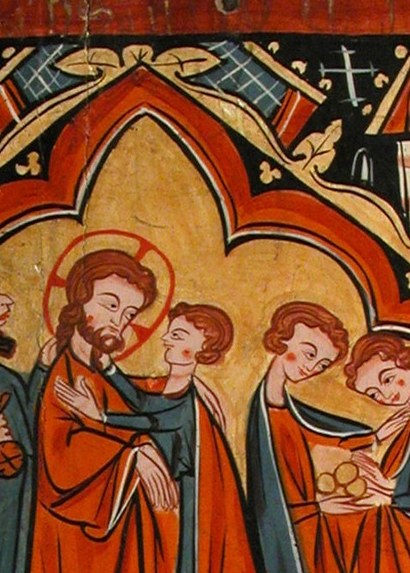
Four scenes of Christ, one small panel. It once traveled in secret. 1250 A.D. Icons this small were made to be moved, and hidden. The soldiers' hands grab from every direction. Except Christ's. He makes no fist. Below: a green Hell-beast. Painters rarely gave evil this color. One kneeling figure is Adam, now freed. His scale tells you he was once lost. This panel was likely carried across borders, hidden from iconoclasts. The last scene: human hands washing a divine body.