English Warship Firing a Salute by Willem van de Velde the Younger
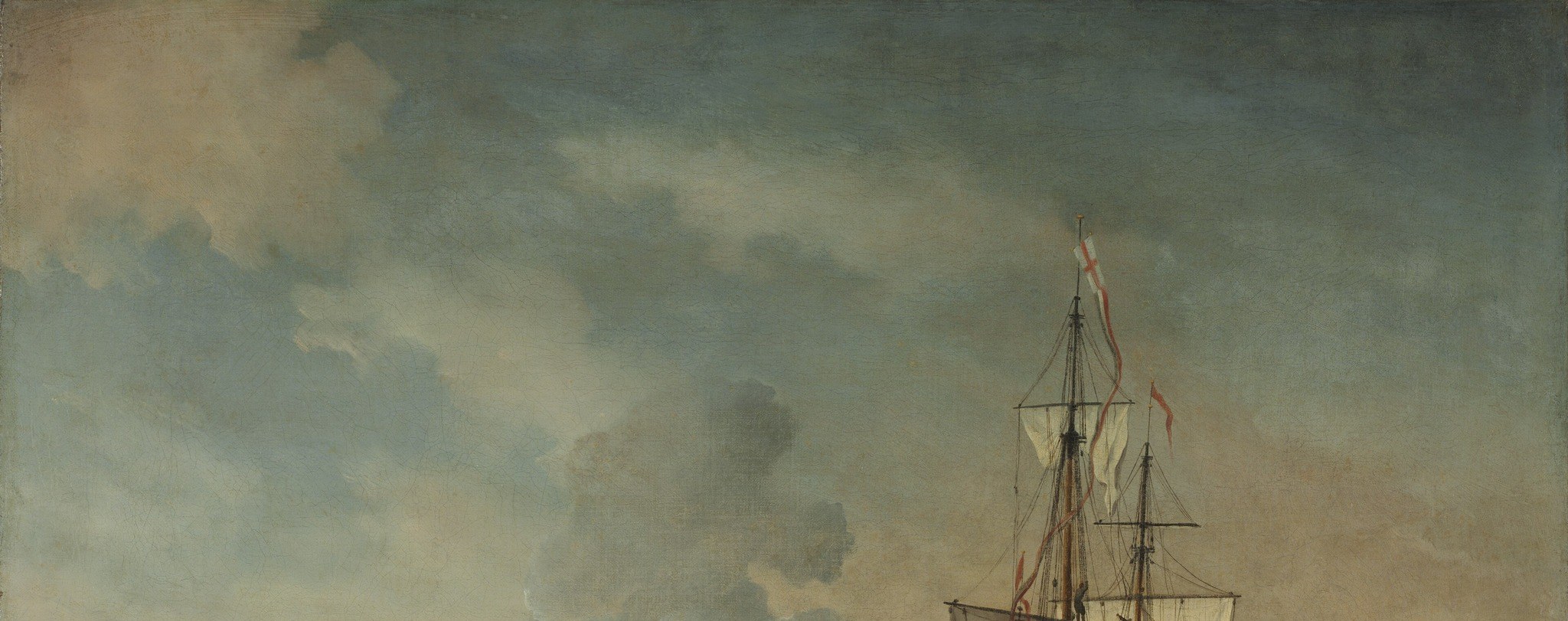
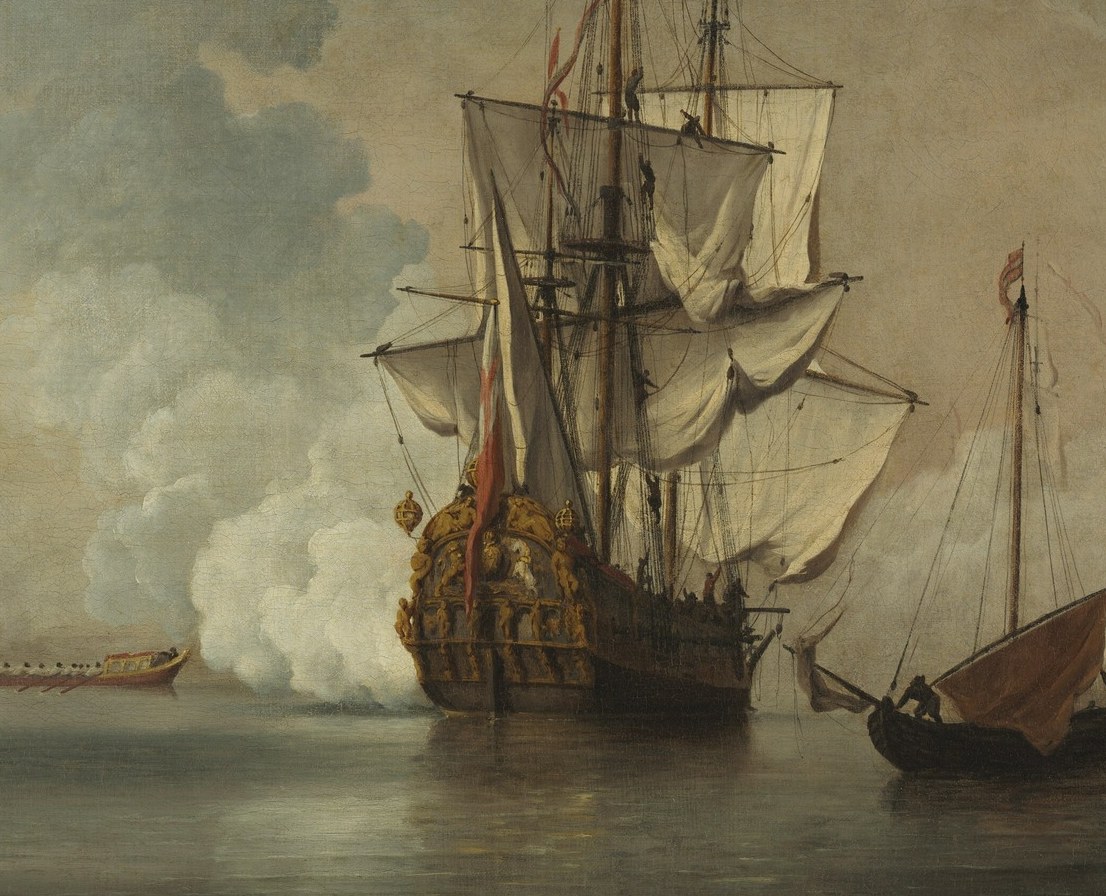
This is "English Warship Firing a Salute" by Willem van de Velde the Younger, painted in 1690. It hangs in the Rijksmuseum. The painting does something almost no other maritime artist could achieve: it makes you feel the weight of the air, not just the weight of the water.
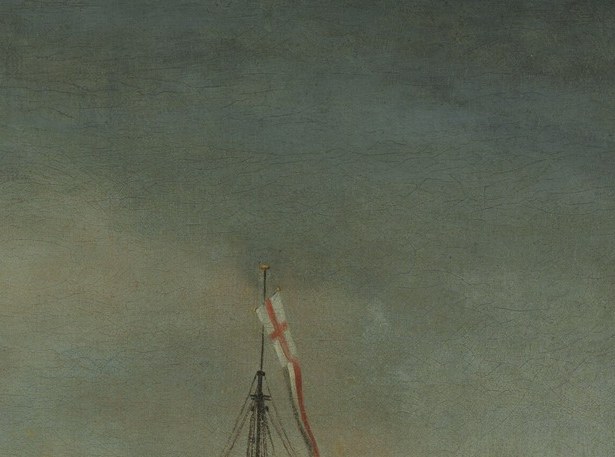
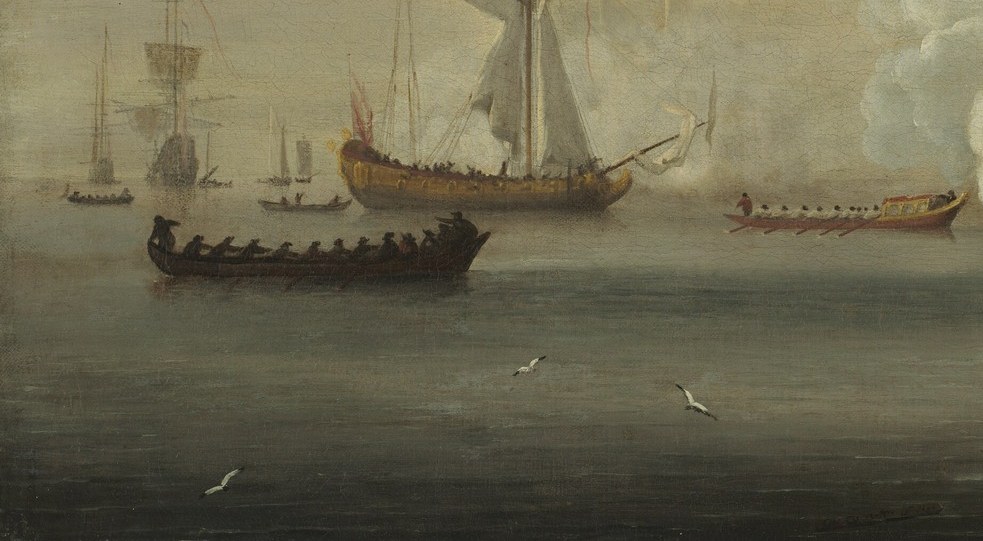
The flags tell the story first. The red-and-white English ensigns at the mastheads mark this as a Royal Navy vessel, and the cannon fire is not combat but a formal salute, a language of diplomatic protocol at sea. The smaller boats nearby, likely ferrying dignitaries, confirm the ceremonial occasion.
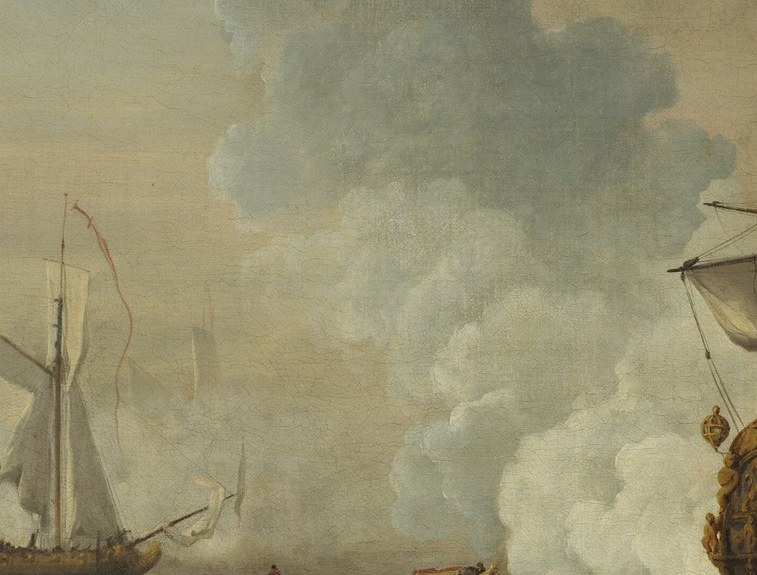
What makes this painting genuinely singular, however, is the smoke. Van de Velde rendered the cannon discharge as a translucent, wind-shaped volume that interpenetrates with the sky and the hull. It is not a solid cloud; it is an optical event. Contemporary accounts and later scholars consider this passage among the most technically achieved depictions of atmospheric smoke in the history of marine painting.
Van de Velde learned to see the sea from his father, Willem van de Velde the Elder, who spent his career making forensic chalk drawings of ships and naval actions. The son translated that precision into oil paint and added what drawings could not: light, atmosphere, and the near-impossible transparency of smoke in motion. Two generations of looking, condensed onto one canvas.
Details
Transcript
Willem van de Velde the Younger painted this in 1690. This is not a battle. It is a diplomatic ceremony. The red and white ensigns tell us this is a Royal Navy ship. But look at what happens when the salute is fired. Translucent smoke, shaped by wind, interpenetrating with sky. No painter could match Van de Velde at this. He poured his father's chalk drawings onto the canvas, in oil. Two generations of observation, suspended in paint.