Virgin and Child by Pinturicchio
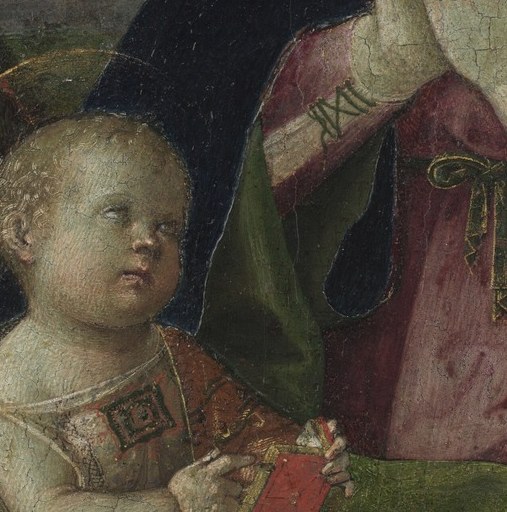
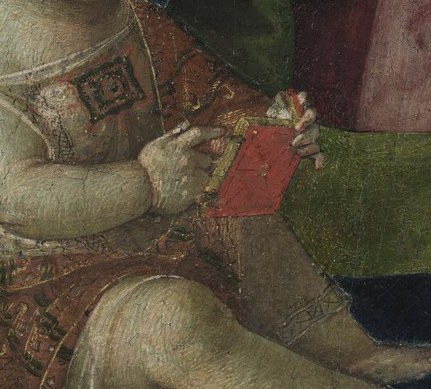
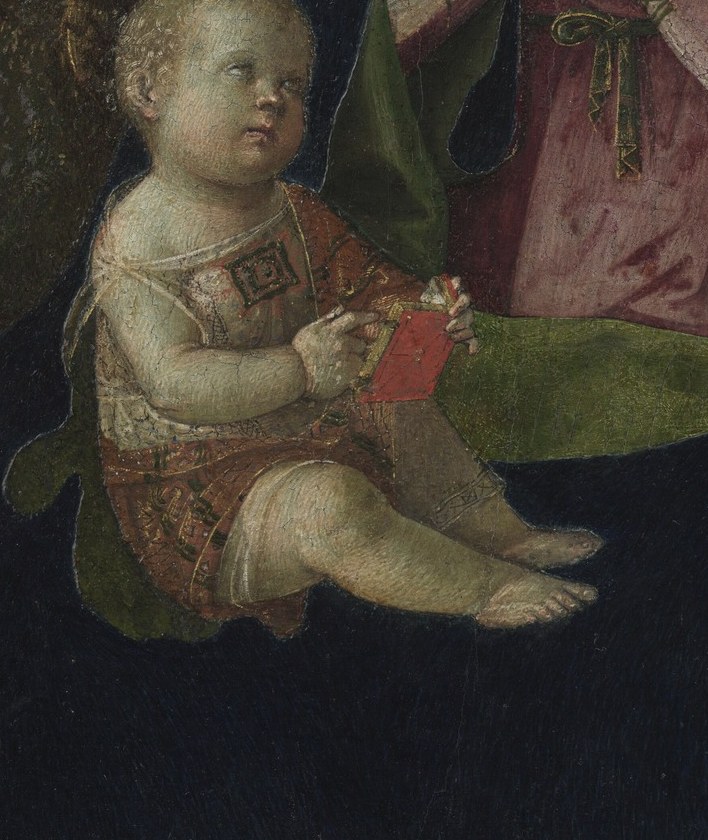
Pinturicchio's *Virgin and Child*, painted around 1498 and now in The Cleveland Museum of Art, carries a devastating message inside a moment of quiet tenderness. The Christ Child sits on his mother's lap, holding a small red flower. It is a carnation, a symbol of the Passion, foretelling his future suffering and death.
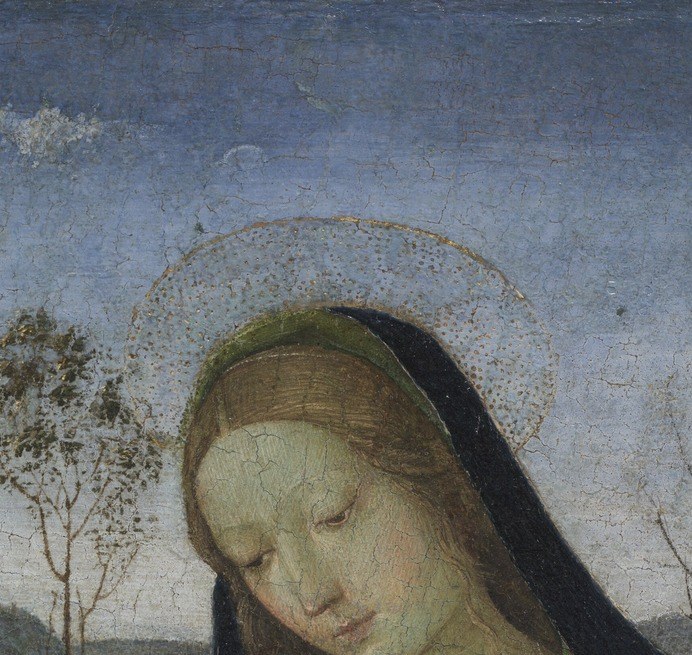
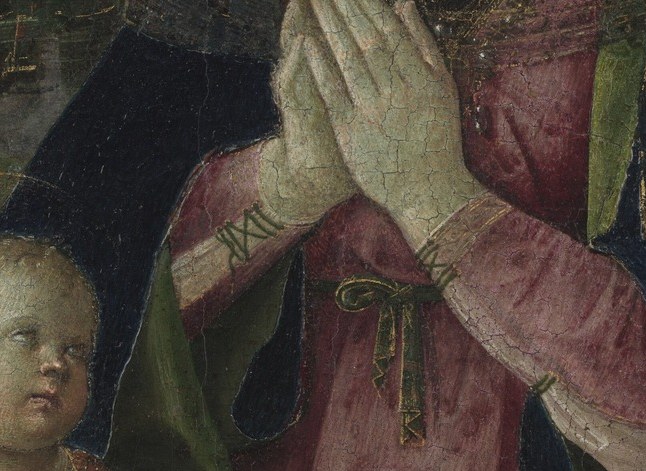
Look at the two faces. Mary's eyes are downcast, her expression withdrawn into private prayer. The Child, by contrast, stares directly outward, drawing you into what is to come. His tunic is the saturated red of sacrifice. Her mantle is the deep blue of heaven, likely ground from lapis lazuli, the most expensive pigment available. The cost of the paint mirrors the cost of the story.
Pinturicchio, whose nickname means "little painter" for his short stature, was a master of devotional intimacy in the Italian Renaissance. He painted this panel for private worship, embedding theological argument in color and symbol. The carnation is not a toy. It is the reason she prays.
A mother holding a child who holds his own fate. Five centuries later, the silence in this painting still speaks.
Details
Transcript
She prays. Her eyes are closed to the world. But he looks straight at you. In his hands, a red carnation. A promise of the crucifixion, held by a child. His tunic is the color of blood. She knew. A mother's prayer contains it all.