William Roper (1493/94–1578) by Hans Holbein the Younger
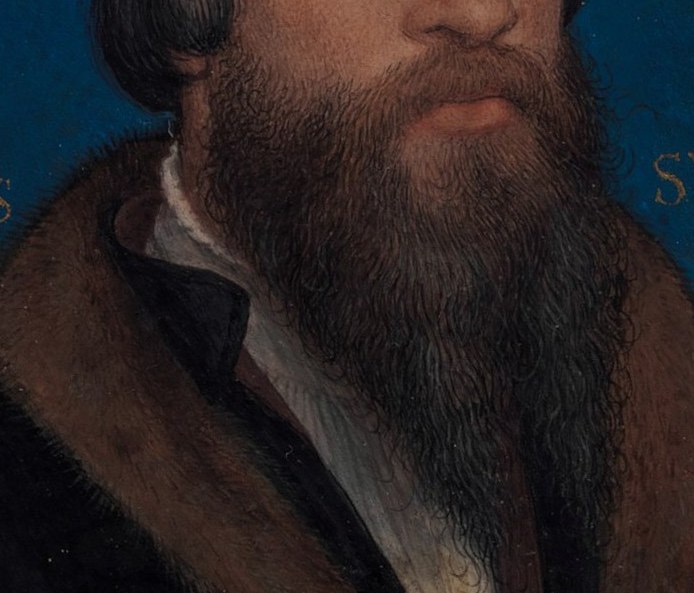
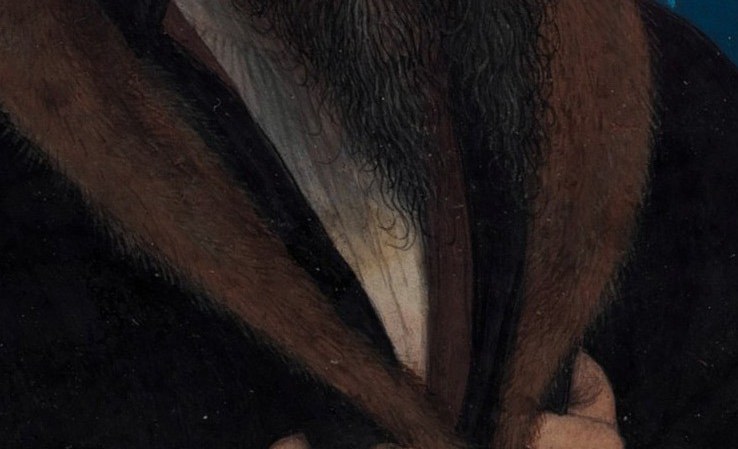
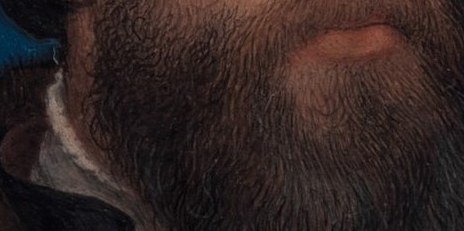
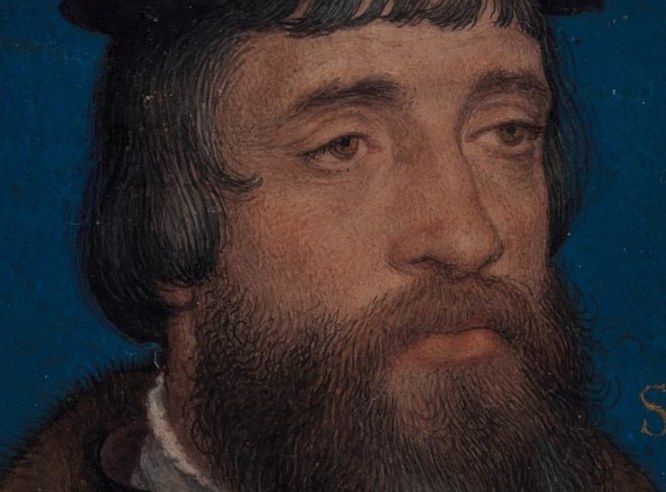
This is a portrait of William Roper, painted by Hans Holbein the Younger around 1535 and housed at The Metropolitan Museum of Art. Holbein used gouache, an opaque water-based paint, to achieve remarkable detail and texture, making his subjects appear incredibly lifelike. Notice the lifelike rendering of Roper's beard, the luxurious texture of his fur-lined coat, and the subtle gleam of his ring. The flat, matte finish characteristic of gouache allowed Holbein to build up layers of paint to create the illusion of soft fabric and intricate detail, a testament to his masterful technique. This work exemplifies the Northern Renaissance's commitment to precise observation and technical skill.
Details
Transcript
Look at his beard. It feels so real. Holbein painted this in 1535. The texture of this fur is unbelievable. He used gouache, an opaque water-based paint. See how the white collar shines. Gouache gives a flat, matte finish. His ring glints with apparent depth. Holbein made it look like silk.