The Funeral by Édouard Manet
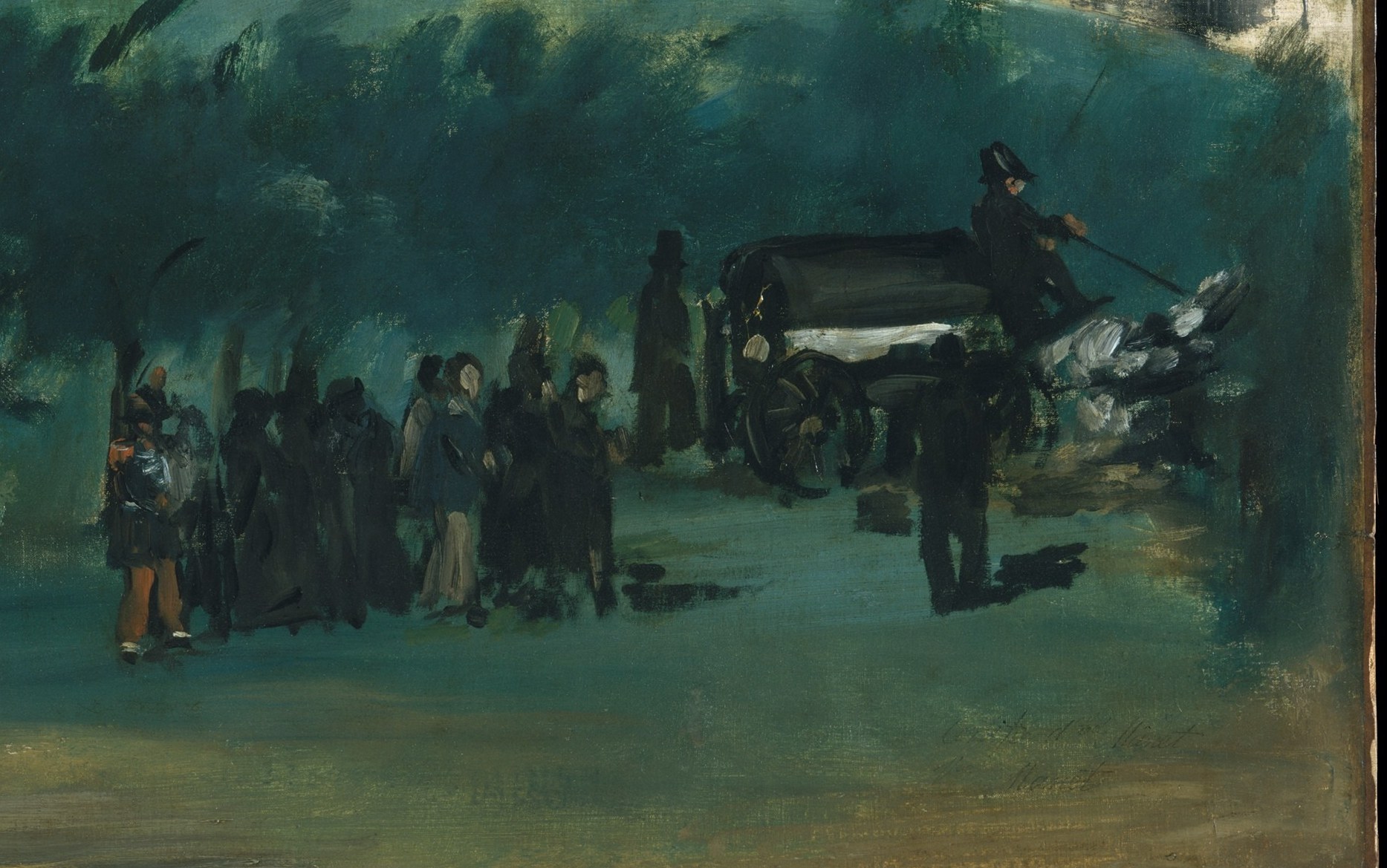
Édouard Manet's The Funeral (1867) is an incomplete, profoundly modern vision of death, now at the Metropolitan Museum of Art. It depicts a real burial procession in Paris's Glacière district, transforming a specific moment into a universal, almost clinical statement on civic grief.
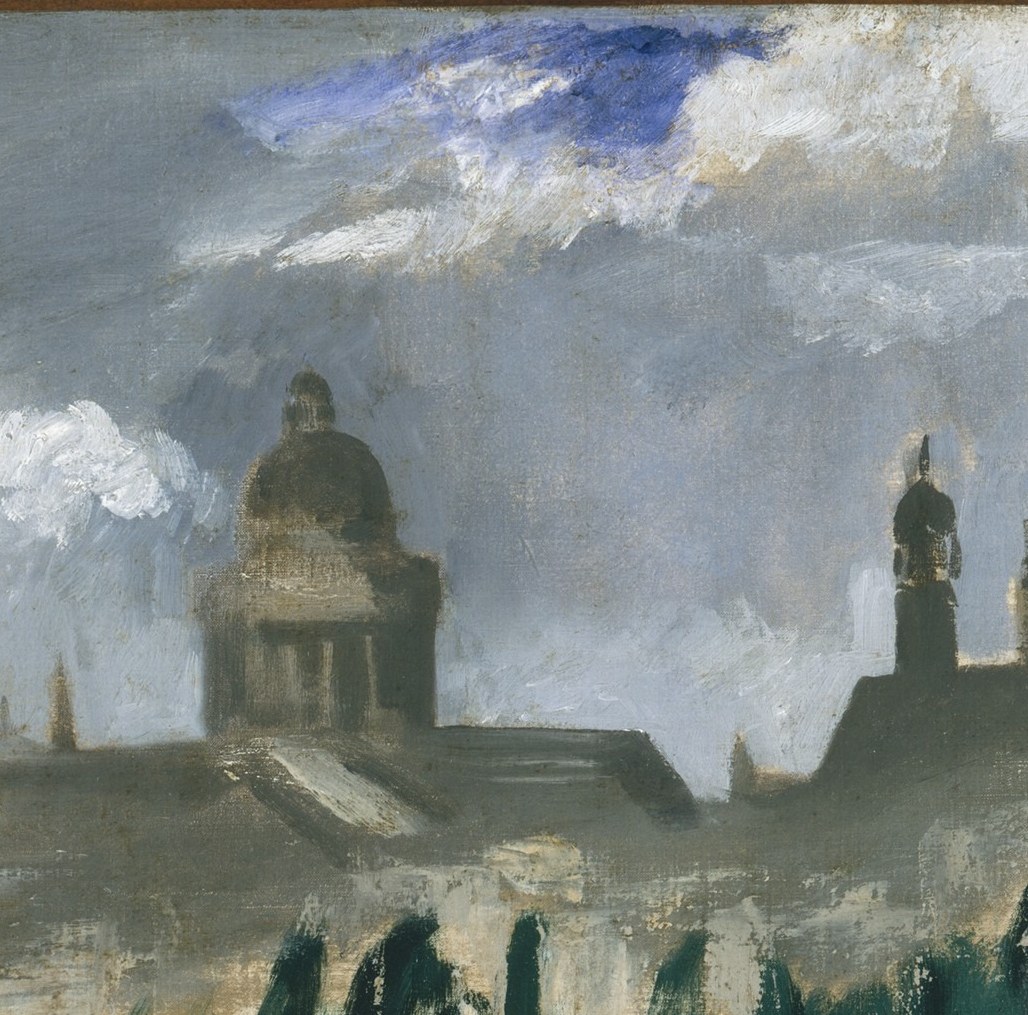
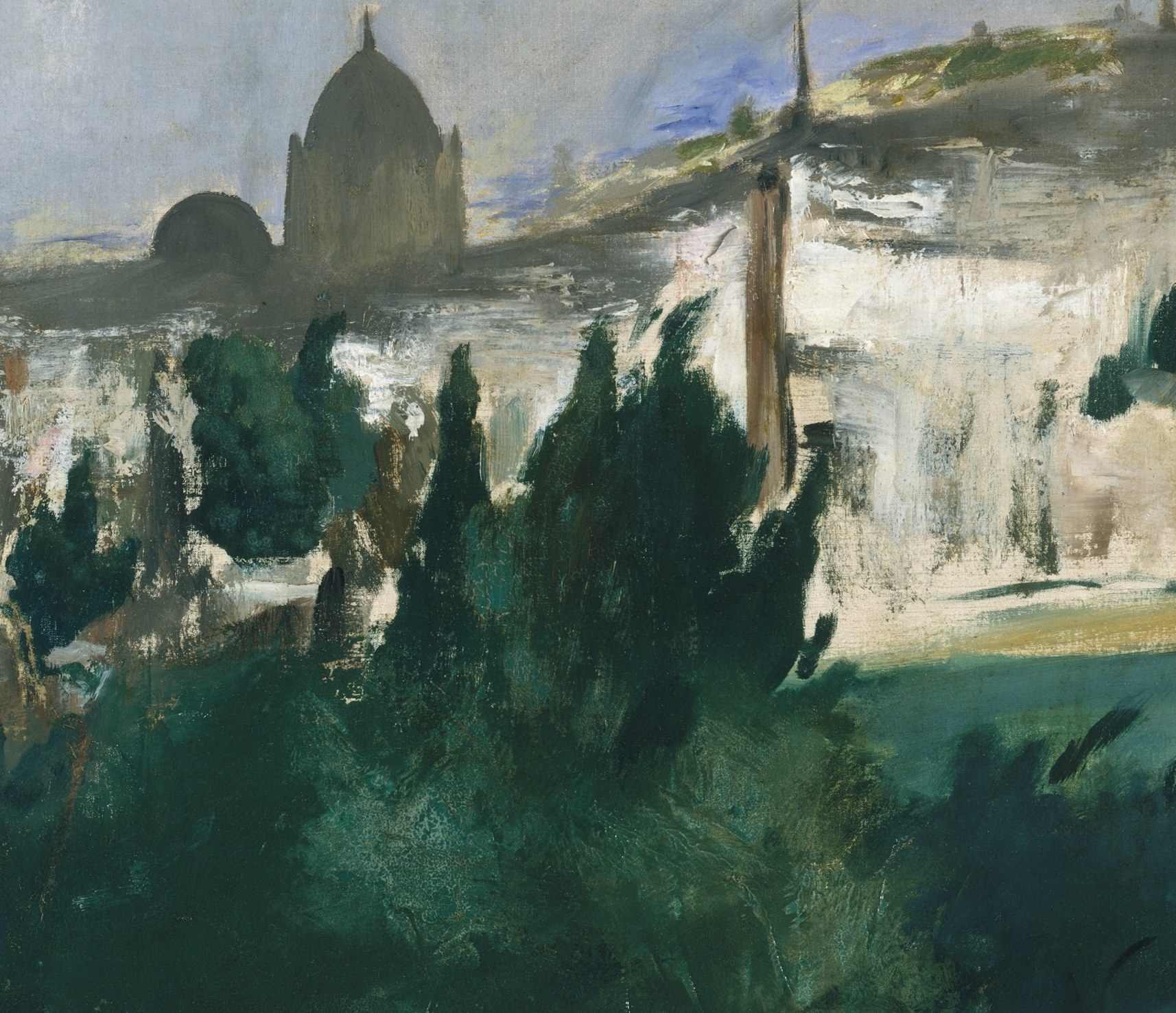
Look first at the mourners. Manet paints them as a single dark mass, refusing to individuate a single face. Above them, the dome of the Panthéon anchors the scene not in religious iconography, but in republican France. A curtain of cypress trees, the classical symbol of mourning, stages the grief theatrically, while the overcast sky offers no romantic consolation.
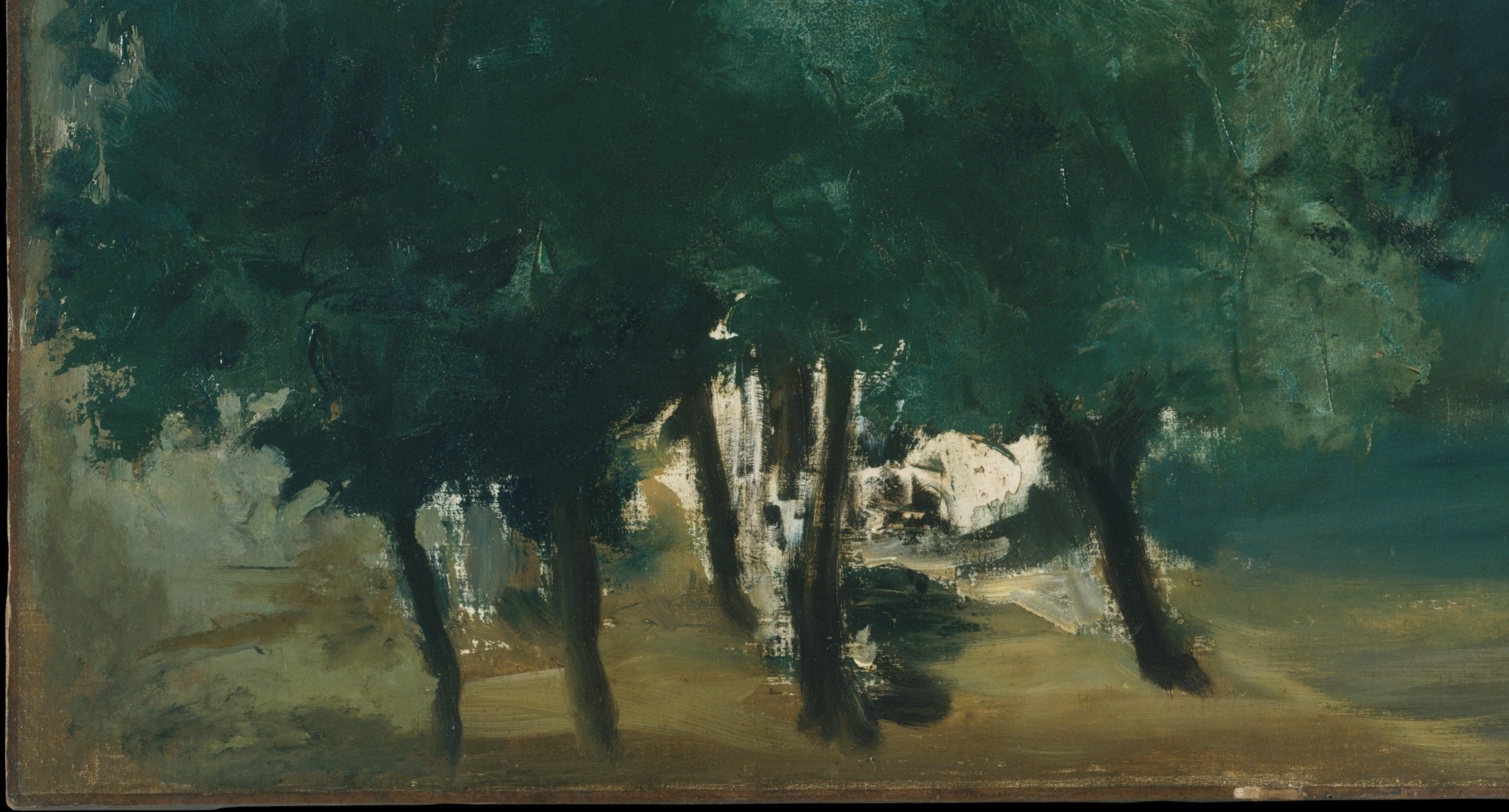
The painting's most radical element is its most literal: it is famously unfinished. The raw, barely-tinted canvas in the lower left exposes Manet's process. Pissarro, who once owned the work, would have recognized this ambiguity as a virtue; the void completes the argument, stopping short where sentimentality might have begun.
What do you think: was leaving the canvas bare a strategic choice, or did Manet simply consider the work truly finished?
Details

Transcript
Paris, 1867. A funeral procession moves through the Glacière district. Look at the mourners. Not a single face is visible. Manet refuses to make grief personal. This is the modern crowd. Above them, the Panthéon. A temple for the idea of France, not God. And here, the classical symbol of mourning: a wall of cypress trees. They stage the grief, like a theatre curtain for the city. But the real code is here: the canvas itself is unfinished. Bare. The final statement is a void. Death, in paint, stops short.