Portrait of a Woman by Francesco Montemezzano
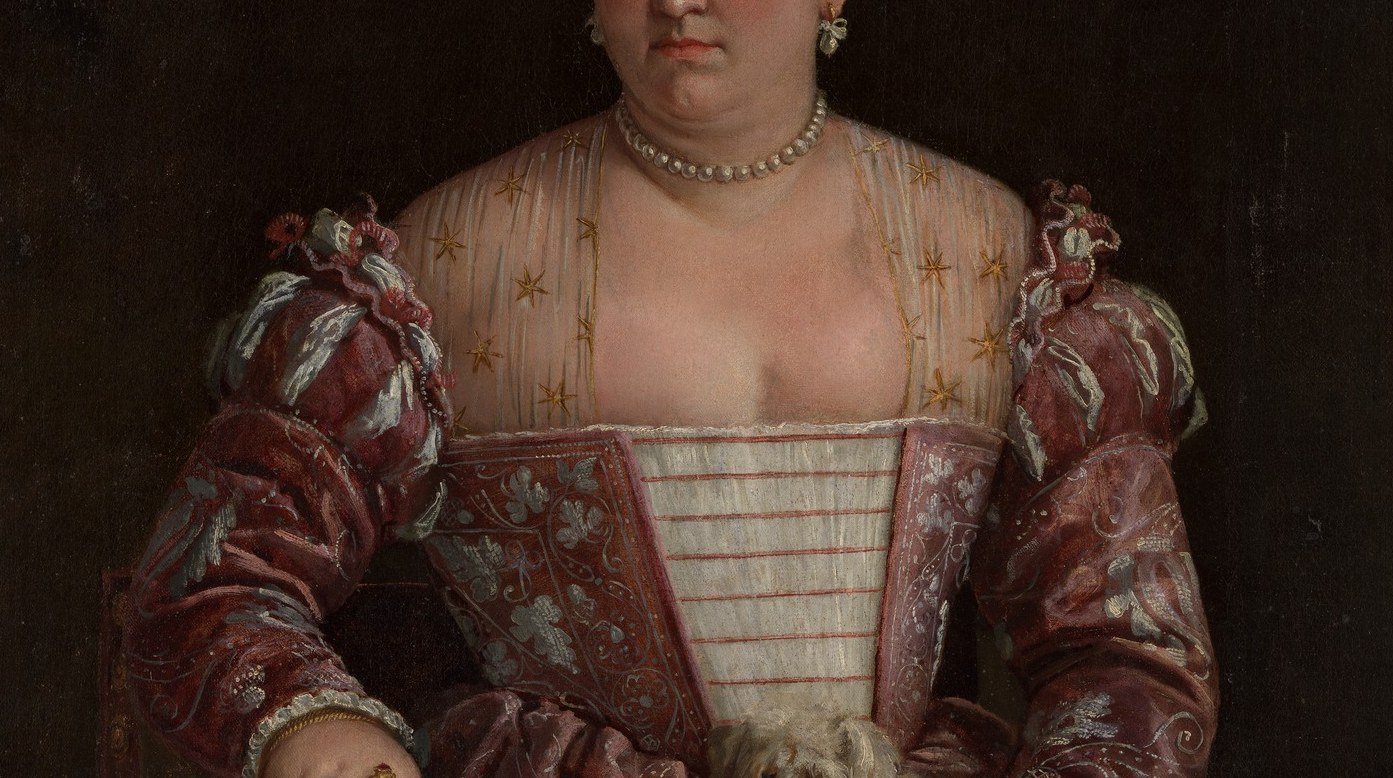
Francesco Montemezzano's 'Portrait of a Woman,' painted in 1591, is a precise record of the cost of entry into late-Renaissance Venetian society. The painting lives at The Metropolitan Museum of Art, where its deep crimsons and bright pearls still read exactly as the artist intended: a structured argument for the sitter's status.
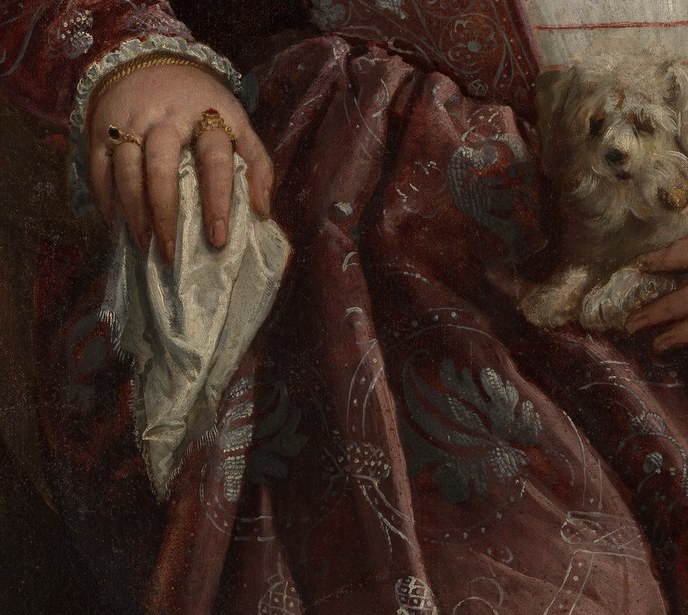
Look first at the red gown. The color was achieved with expensive dyes that were heavily taxed, making crimson a deliberate status signal. Follow the gold embroidery on the sleeve cuffs and the layered pearl necklace that bridges the face and bodice. Then find the glove held loosely in her right hand, a common Mannerist device suggesting the pause before dressing fully, a moment caught between arrival and departure. Her left arm cradles a small white dog, the era's universal symbol of marital fidelity.
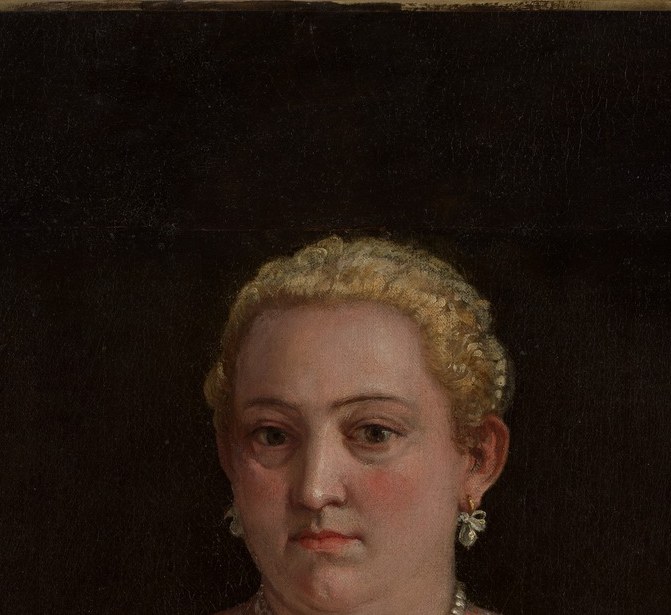
Montemezzano was a Verona-born painter working in the Mannerist style that followed the High Renaissance. He used strong chiaroscuro, the dramatic push and pull of light and shadow, to carve the figure from the dark background. The face is the hot center, but the white ruff collar and stomacher act as secondary light sources, pulling the eye down through the composition. He died sometime after 1602, leaving this as one of his few firmly attributed works.
Portraits like this one were not casual likenesses. They were contracts with the future, proof that the sitter had arrived. The face Montemezzano recorded, serious and slightly frowning, still holds the room more than four centuries later.
Details


Transcript
Venice, 1591. A city built on trade and display. Every detail here was a public announcement of rank. The deep crimson dye alone cost more than a laborer earned in a year. Her pearls spell purity and wealth, layered to catch the light. She holds one glove still off, the pause before a formal entrance. And in her arm, a white lap dog, the era's symbol of fidelity. Montemezzano painted this face with the weight of a life we can only guess at.