Dancers Practicing at the Barre by Edgar Degas
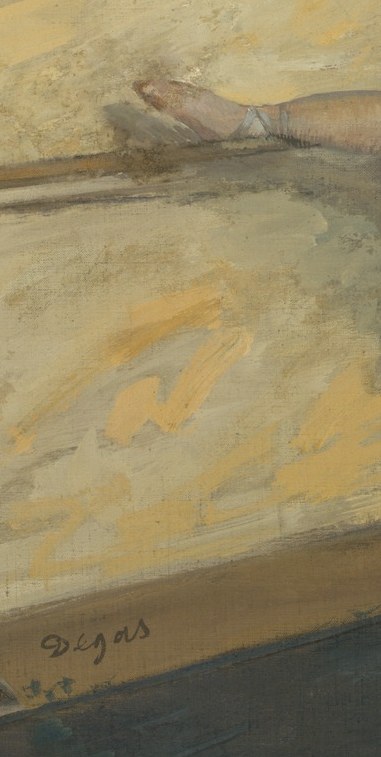
Edgar Degas's "Dancers Practicing at the Barre" (1877), held at The Metropolitan Museum of Art, reveals the rigorous, unseen work behind the seemingly effortless grace of ballet.
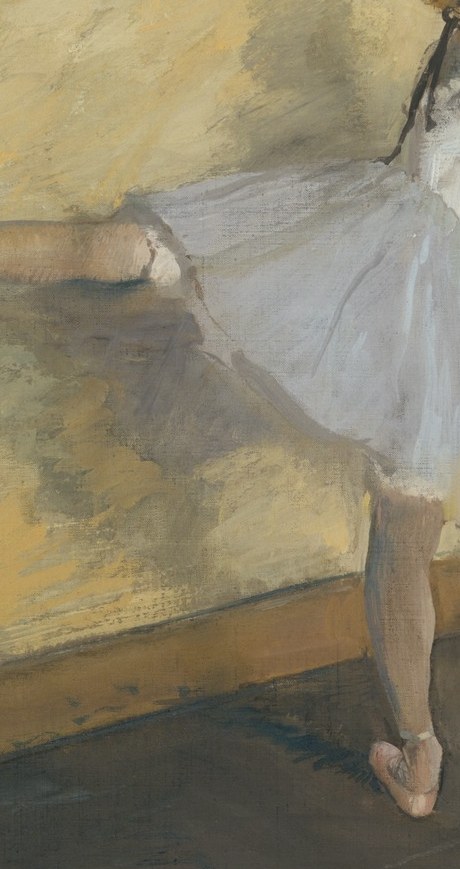
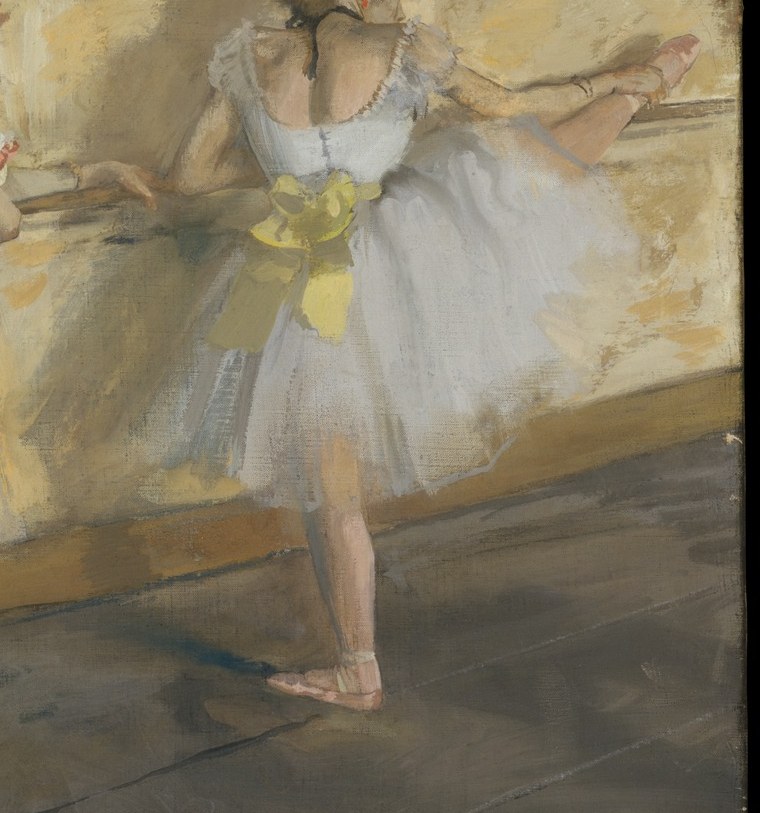
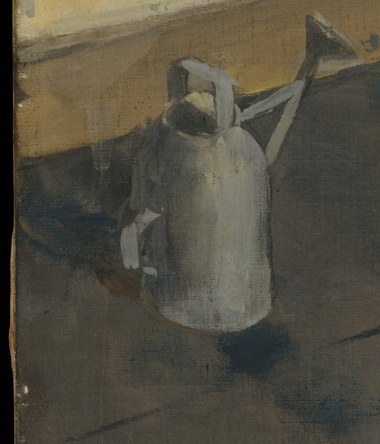
Look closely at the dancers' postures; the extended leg and twisted torso of the left dancer, and the intense focus of the right, show the immense discipline and physical demand of their art. The simple wooden barre, and even a watering can in the corner, ground this ethereal scene in the reality of a working studio, far from the glamour of the stage.
Degas, known for his unique perspective on modern Parisian life, often captured dancers in private moments of practice rather than performance. He applied oil paint with thick impasto, especially on the dancers' tutus, giving a palpable texture and immediacy to the scene. His fascination was with the dedication and the human form in motion, revealing the true essence of their daily lives.
This painting invites us to appreciate not just the beauty of ballet, but the profound human effort that creates it. What details surprise you most about this studio scene?
Details

Transcript
Ballet looks effortless on stage. But this painter, Edgar Degas, showed the hidden work. His dancers spend hours at the barre, building strength. The strain is visible in every muscle. This dancer leans, arms extended, perfecting her form. Even this watering can suggests the dusty reality of the studio. The effort, not the illusion, was his focus.