Danish Landscape by Harald Slott-Møller
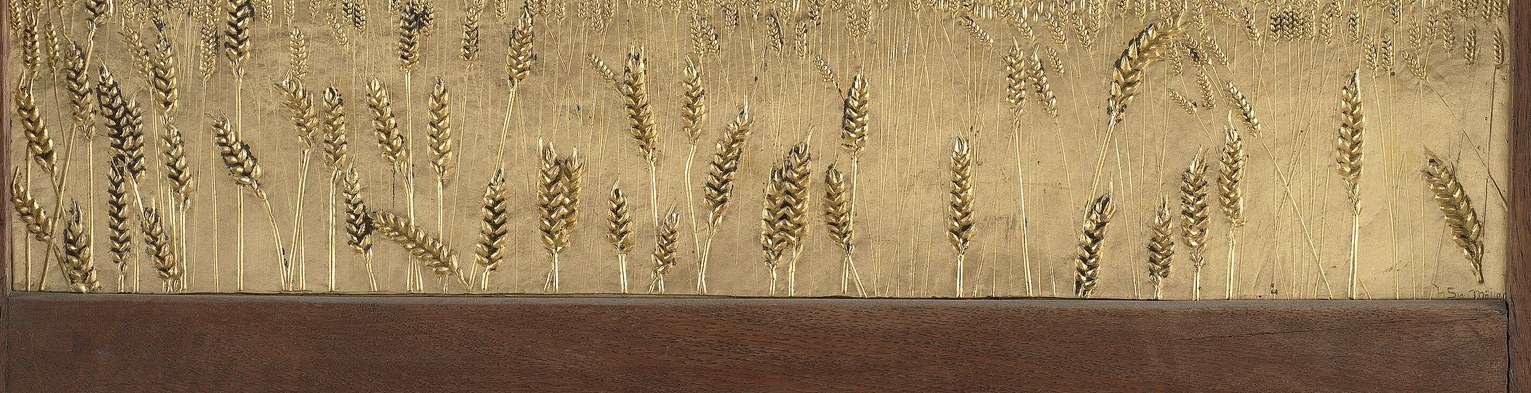
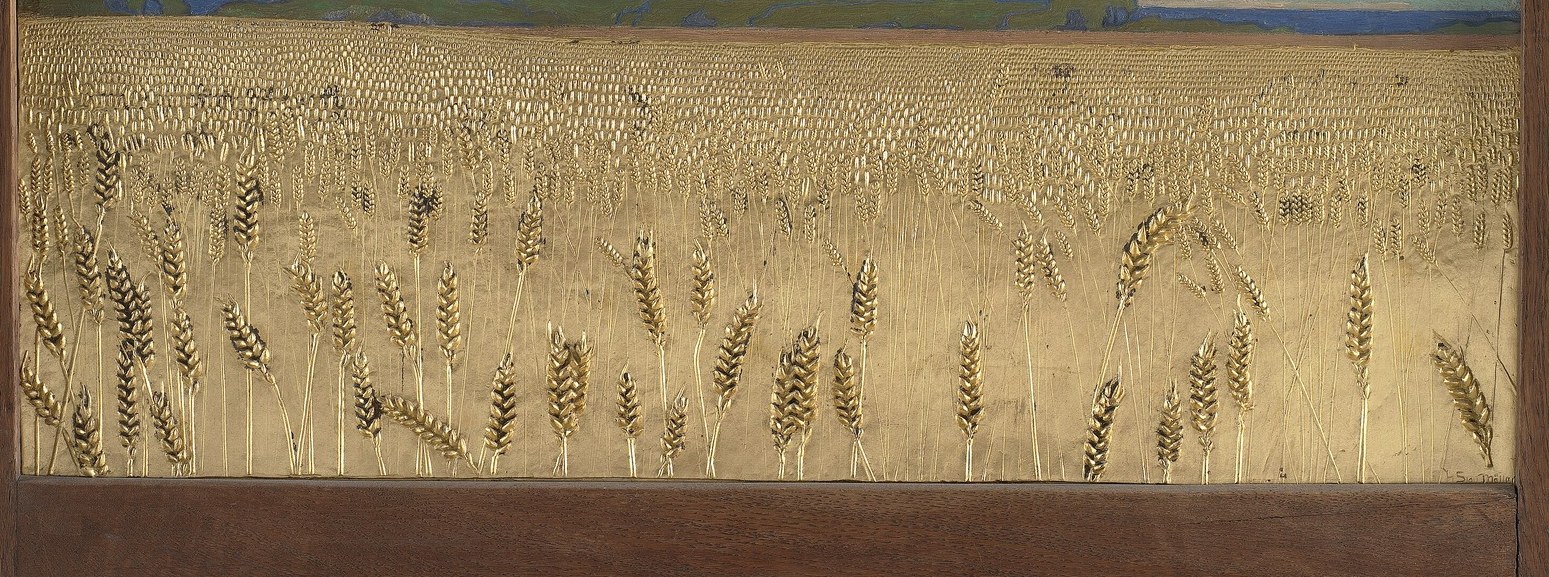
Harald Slott-Møller's "Danish Landscape" is an extraordinary work created in 1896, not with traditional paint, but with gypsum, a mineral. This Symbolist piece, held at the Statens Museum for Kunst, showcases a unique approach to texture and form, making the cultivated field appear almost sculptural.
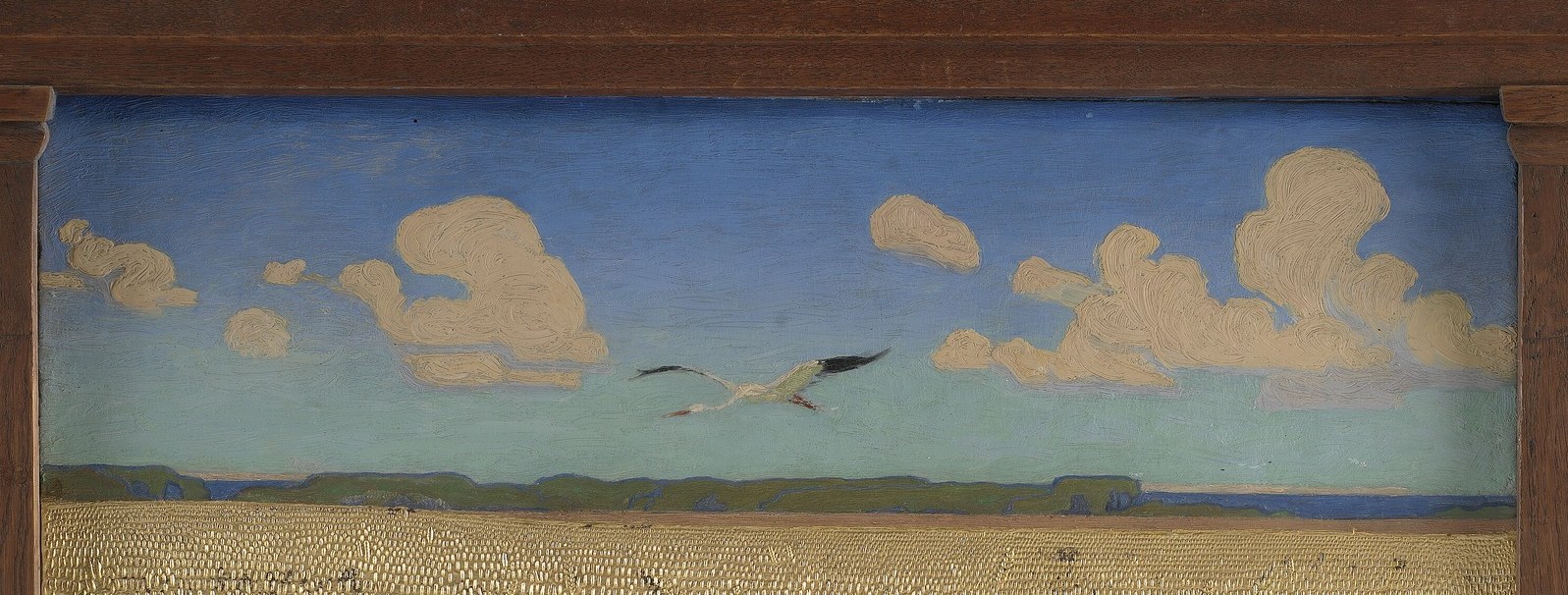
Take a closer look at the individual wheat stalks; the artist pressed and carved them into the gypsum, giving them a tangible, three-dimensional quality. The rows of wheat stretch towards the horizon, contrasting with the soft, almost ethereal clouds above and the clear blue sky.
Slott-Møller, a co-founder of Den Frie Udstilling, experimented with materials beyond conventional oil painting. His use of gypsum in this piece reflects a departure from the norm, creating a subtle interplay of light and shadow that enhances the symbolism of fertility and transience, all anchored by the solitary white stork in flight. This innovative technique makes the landscape feel both pictorial and sculptural, inviting viewers to experience it in a new way.
What details do you notice first in this unusual landscape?
Details
Transcript
This isn't a painting, not exactly. It's made from gypsum, a mineral, built up in layers. The artist pressed and carved the stalks, creating a real texture. Look at the rows of wheat, almost three-dimensional. A lone white stork glides, connecting earth and sky. It evokes themes of fertility and transience, captured in stone.