Self-Portrait with a Straw Hat by Vincent van Gogh
Vincent van Gogh painted this self-portrait in Paris in the summer of 1887. He was 33, poor, and had almost no commercial success. He could not afford to pay models, so he turned again and again to the mirror. Over two years in Paris he produced two dozen self-portraits, each one an exercise in technique and a document of a life under pressure.
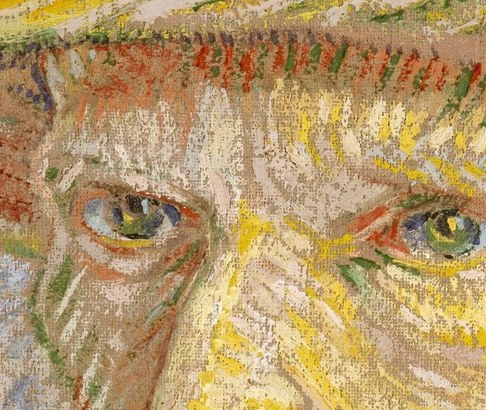
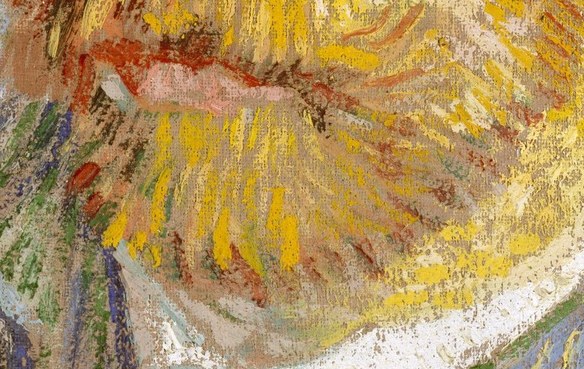
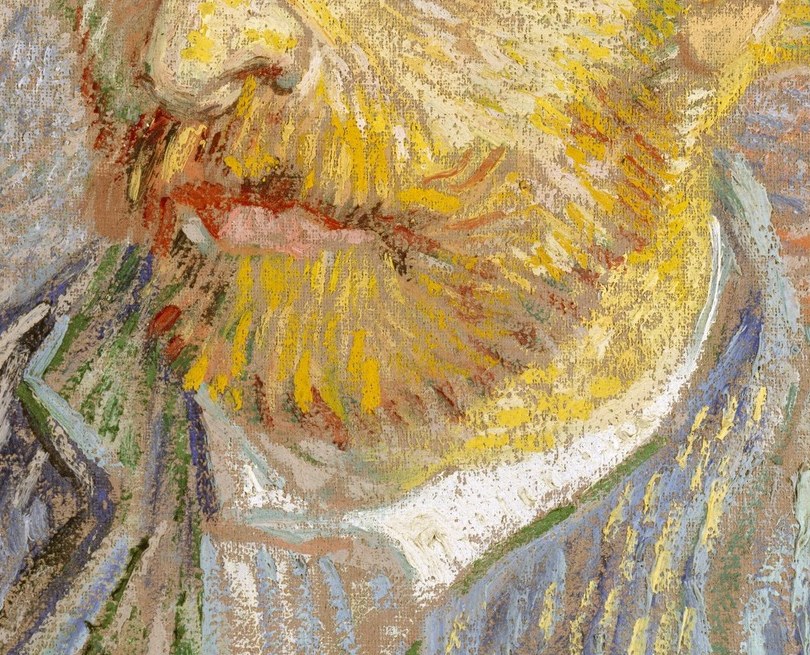
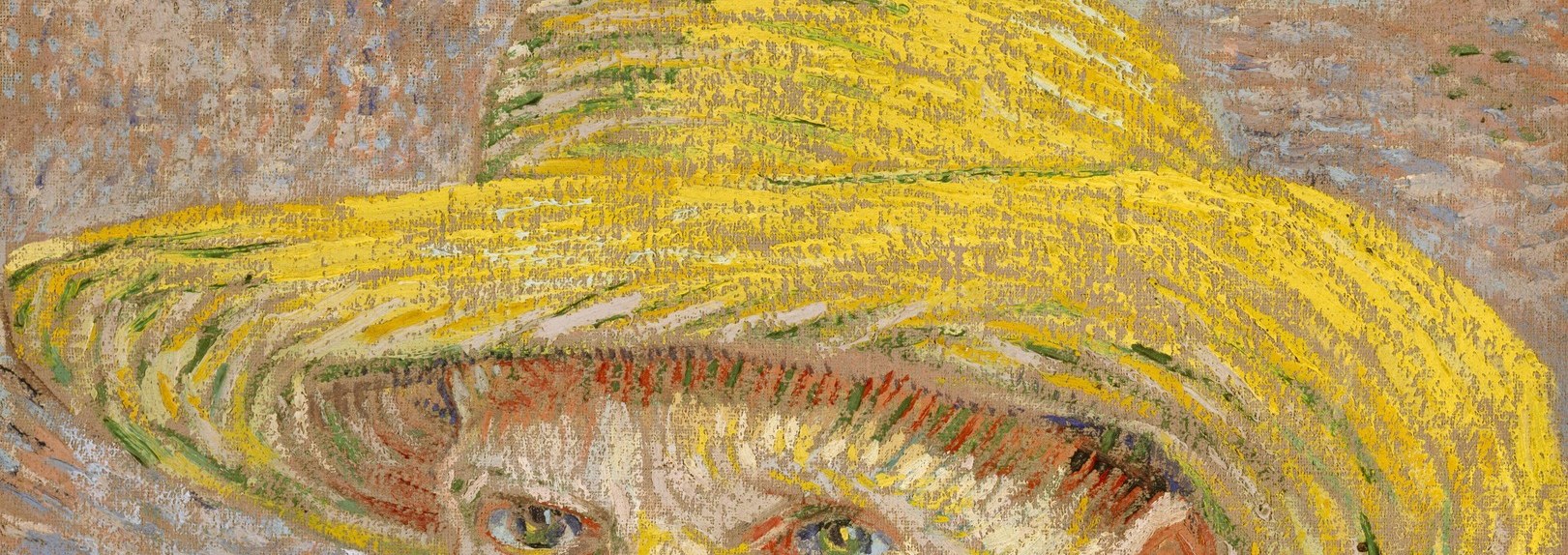
Hold on the eyes. That green-gray stare is unnervingly direct. There is no plea for sympathy, no theatrical suffering. The left eye sits slightly brighter than the right, which falls into shadow, an asymmetry that reads as wariness and intensity rather than calm self-regard. Then look at the mouth: pressed shut, painted in short horizontal strokes of dull red and brown. It refuses any hint of a performance for the viewer.
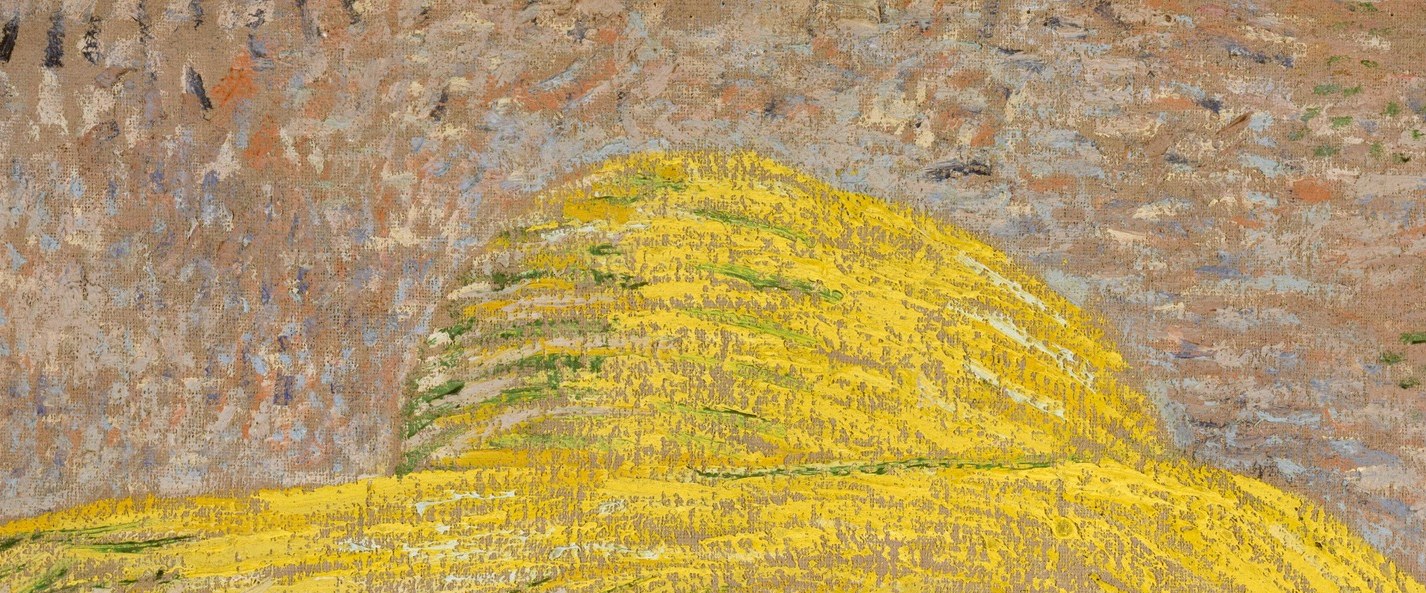
The straw hat itself is a marvel of paint handling. Van Gogh built up the yellow crown in thick parallel ridges of impasto, individual strokes that mimic woven straw so precisely the surface seems three-dimensional. He was absorbing Pointillism from Seurat and Signac at the time, but turning their dots into directional marks that carry material weight. You can see the mosaic-like dabs in the forehead skin too, pink and tan and gray notes that fuse only from a distance.
This painting lives at the Van Gogh Museum in Amsterdam. He gave it to his brother Theo without a grand statement, just a record of the work. Today it stands as one of the most emotionally bracing self-portraits in the Western canon, painted by a man who had every reason to flinch and chose not to.
Details
Transcript
Paris, 1887. He is 33. Nobody buys his paintings. He can't afford models. So he paints the only face available. Look at the eyes. A cool green-gray stare. Direct, unsentimental, unblinking. He painted 24 self-portraits in two years. This is one of the rawest. No smile. A firmly set mouth. Someone taking his own measure. He sent it to his brother Theo with a note: no triumph, just a record of the work. A man refusing to look away from himself.