The Resurrection by Benvenuto di Giovanni
Benvenuto di Giovanni painted The Resurrection around 1491, and it is the single waking soldier on the right who carries the human weight of the scene.
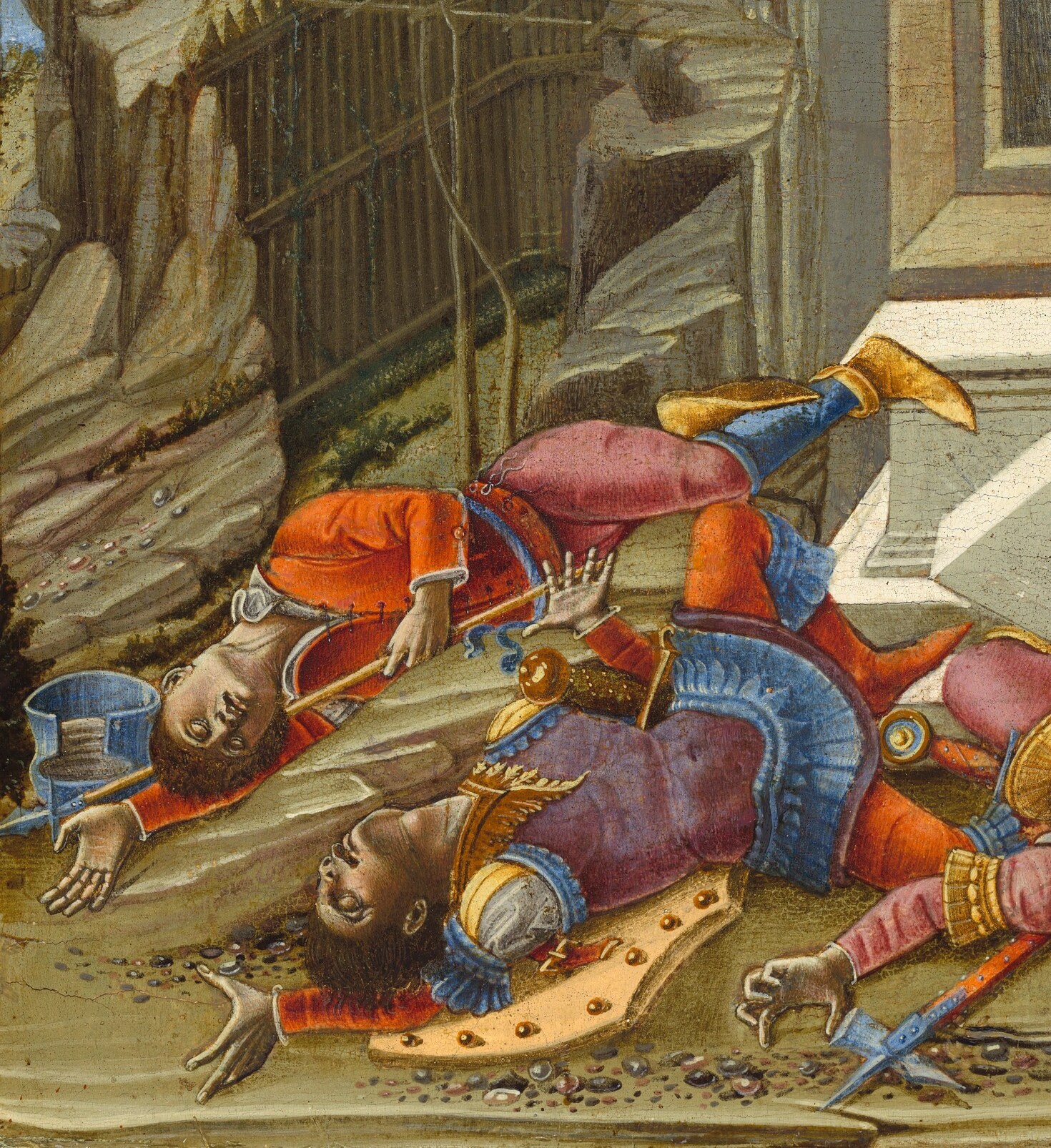
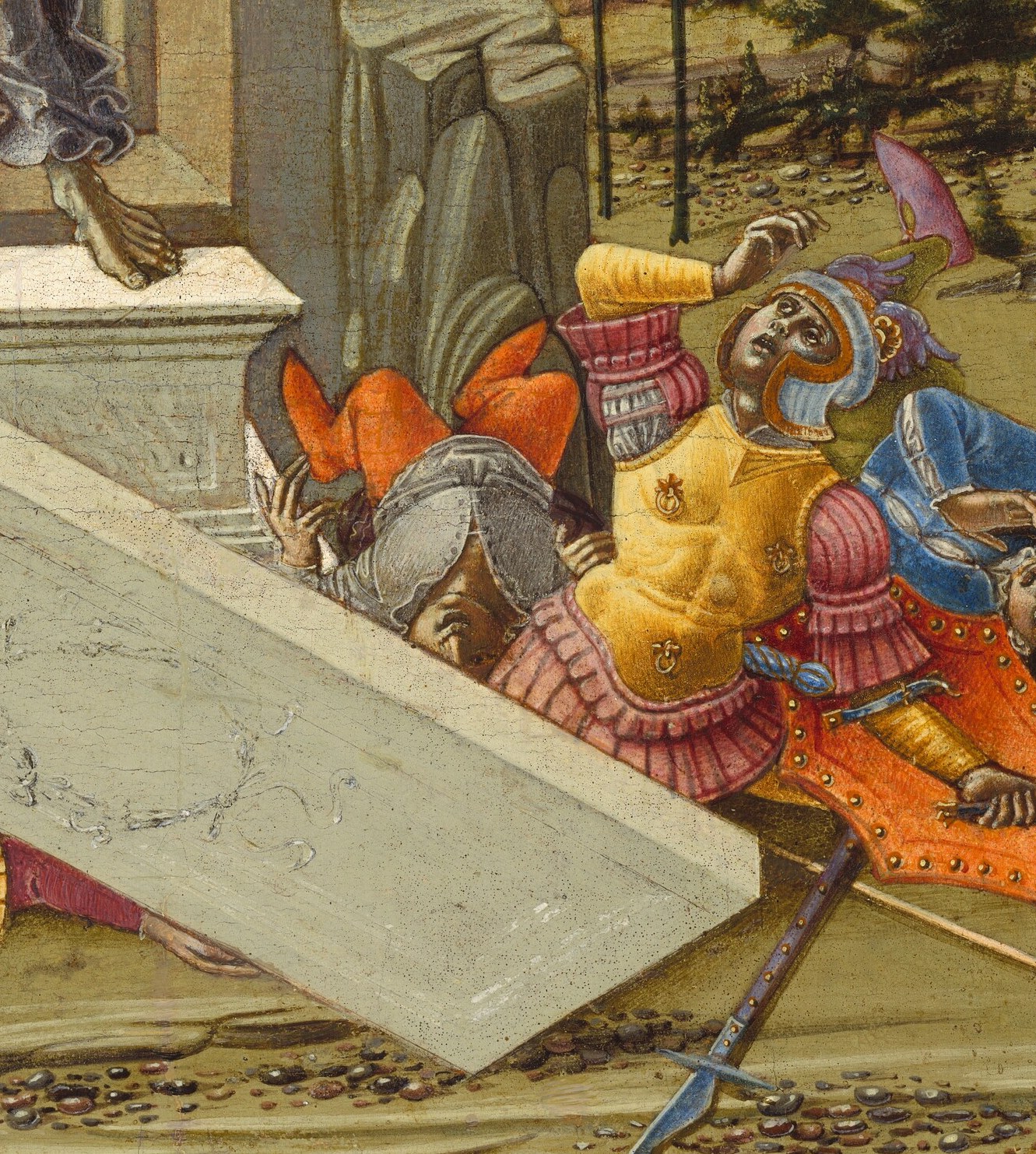
Look at the guards on the left, armored, helmeted, collapsed in every direction. They represent worldly power, and they are completely unconscious. Now find the one on the lower right: his chest is bare, his head is lifted. He is the only human witness who appears aware that something has happened. The artist gave him a vulnerability the others do not have.
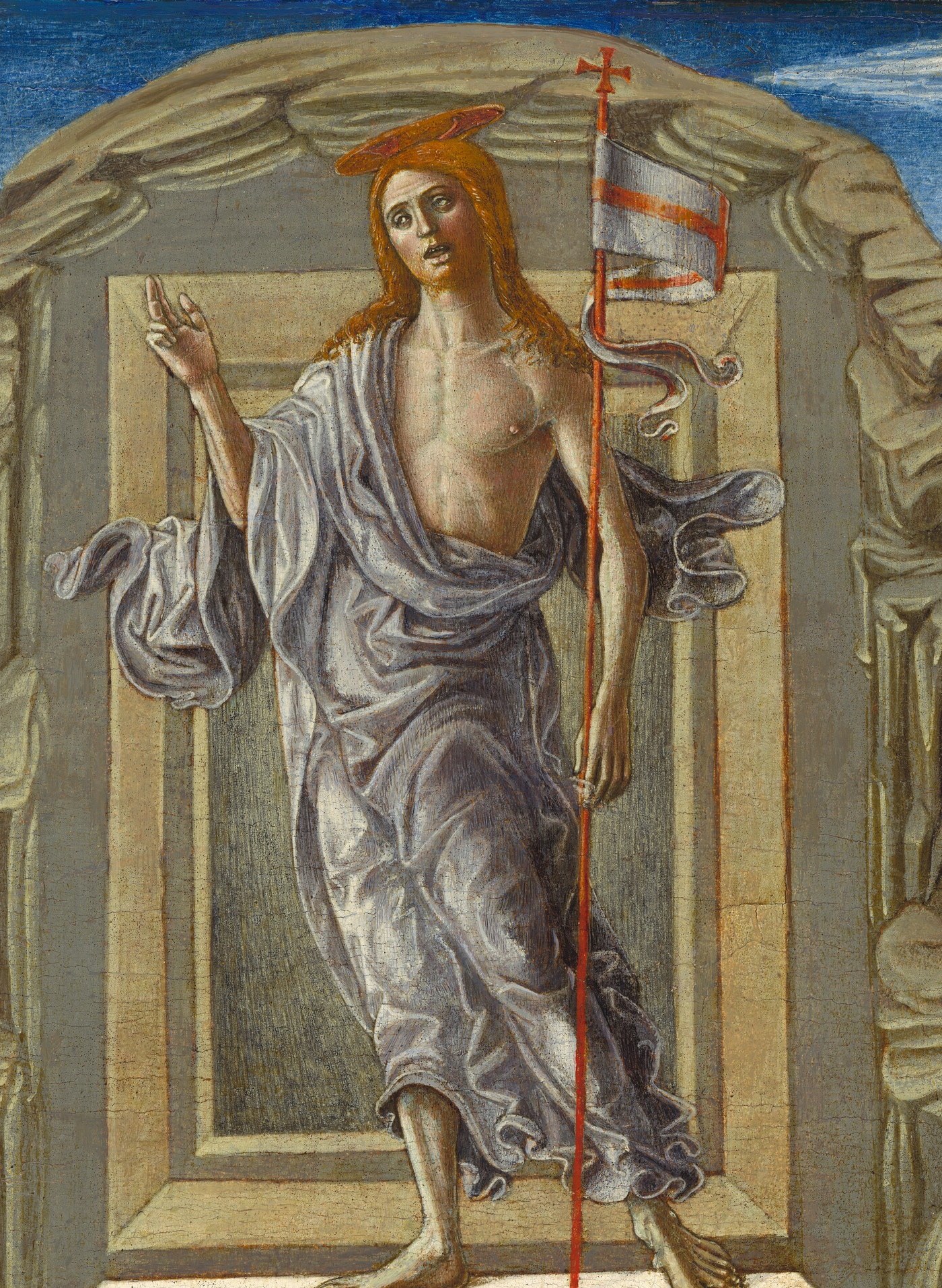
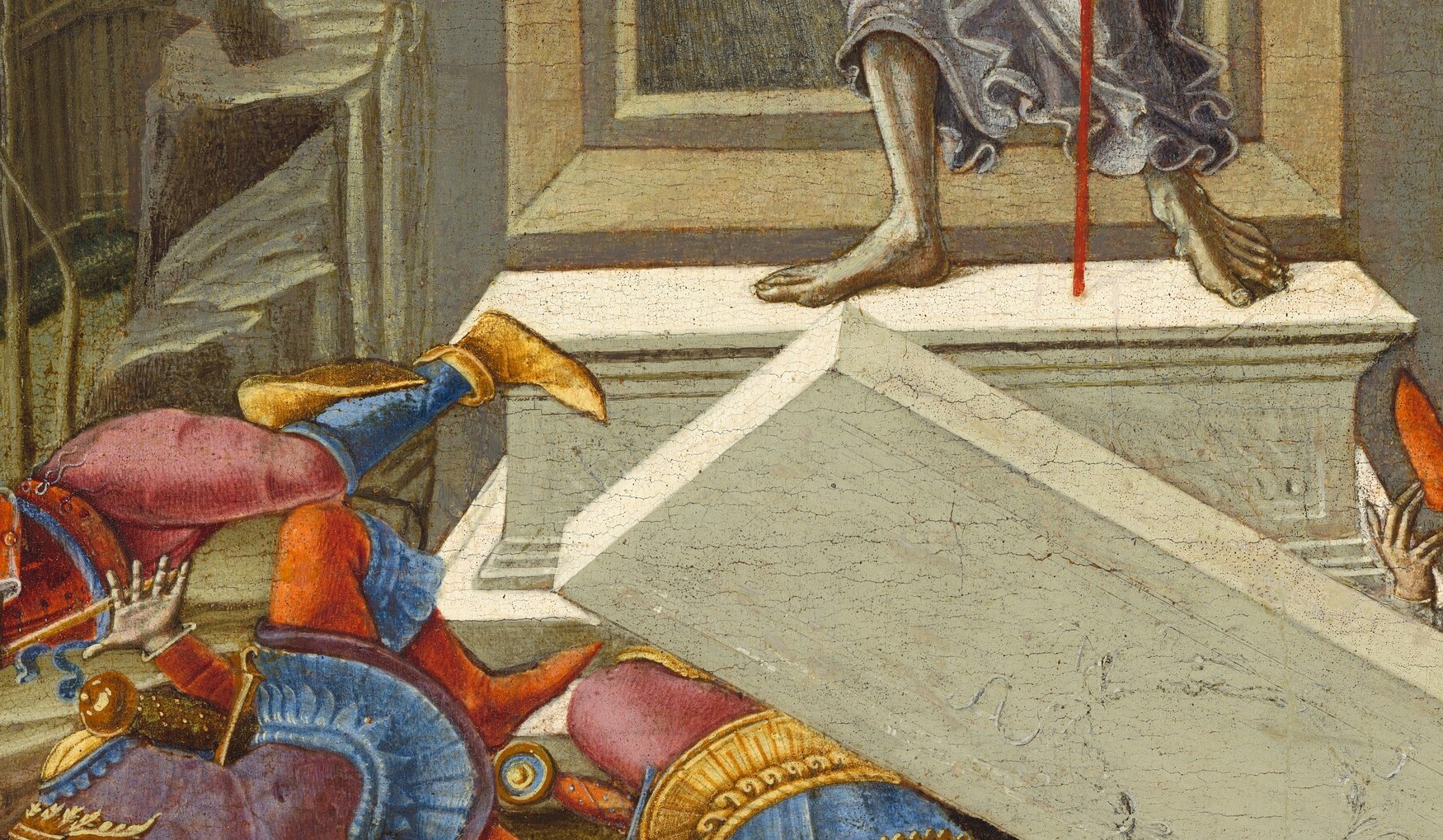
The painting is tempera on panel, made in Siena, where Benvenuto di Giovanni worked for more than sixty years as a painter, manuscript illuminator, and fresco artist. The Resurrection belongs to the last phase of his life, after a stylistic shift in the 1480s toward greater naturalism. The empty sarcophagus, the displaced lid cutting diagonally across the foreground, and the distant cypresses and castle are all painted with the care of a man who had spent decades learning how light falls on stone and cloth.
We know the story. The artist knew we know it. So he gave us someone inside the frame who is trying to understand what he just saw, and let us watch him do it.
Details
Transcript
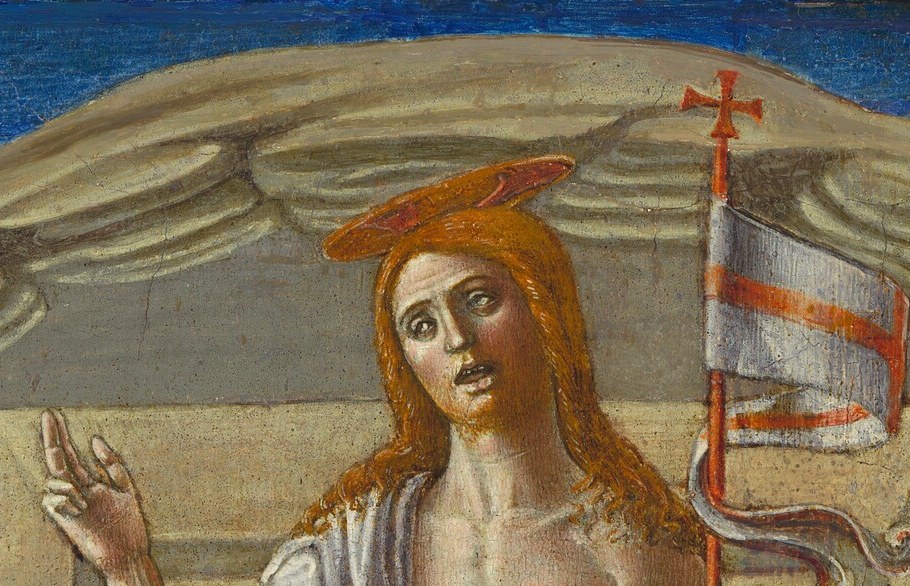
A body broken, then alive again. His face does not seek the victory. He looks out, and up, past everything. The soldiers who were supposed to secure the grave are down. But one of them is not asleep. He lifts his head. He has seen it. This painting was made for a small town in Tuscany, around 1491. Everyone who saw it then knew the story.