Banquet Piece with Ham by Willem Claesz Heda
Willem Claesz Heda, a master of the Dutch Golden Age, specialized in still life paintings that captured everyday objects with extraordinary precision. His "Banquet Piece with Ham," painted in 1656, is a prime example of his technical genius.
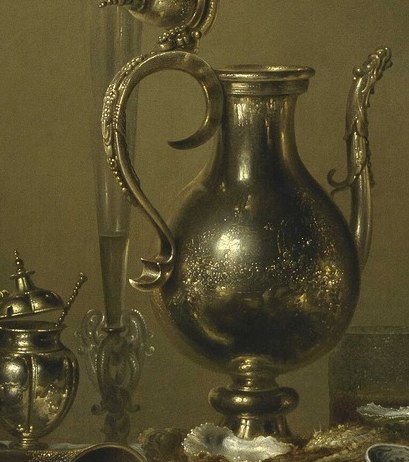
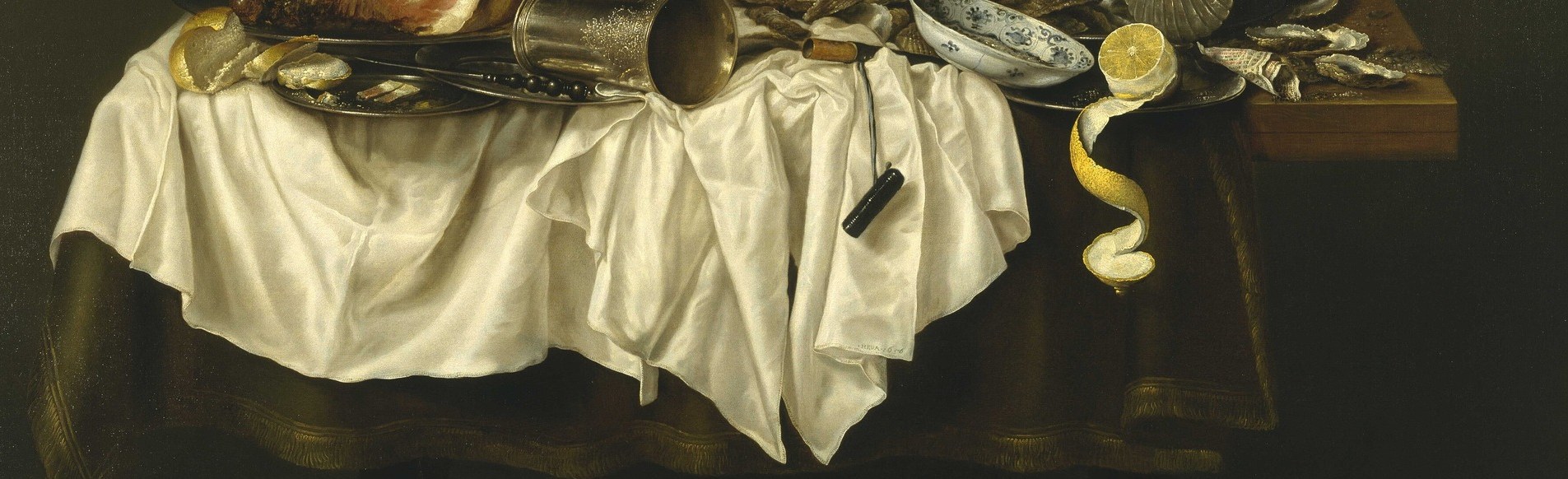
Notice the astonishing detail in how Heda renders different textures. From the polished silver pitcher and overturned goblet, to the delicate transparency of the wine glass and fluted carafe, every surface is brought to life through meticulous brushwork and a restrained palette.
Heda's focus on these seemingly ordinary items, like the sliced ham, peeled lemon, and rumpled tablecloth, reflects a broader fascination in 17th-century Holland with materiality and the fleeting nature of abundance. The dark background enhances the contrast, allowing the illuminated objects to truly shine.
This painting, now in the Museum of Fine Arts Houston, invites us to appreciate the beauty in the mundane and the incredible skill of an artist who could make paint look so real.
Details
Transcript
This painter specialized in still lifes, depicting everyday objects. Look closely at the glimmering metal surfaces. Each highlight and shadow is meticulously rendered in oil paint. Then see how light glows through the delicate glass. The fluted carafe catches every subtle reflection. He captures the crisp folds of the white tablecloth. This masterful texture is what makes the painting famous.