Saint Julian by Taddeo Gaddi
This is Taddeo Gaddi's Saint Julian, a tempera panel from around 1340, now in the Metropolitan Museum of Art. It is a devotional image for a saint whose feast day was once widely kept across Europe, but his story is one of the strangest in the medieval calendar.
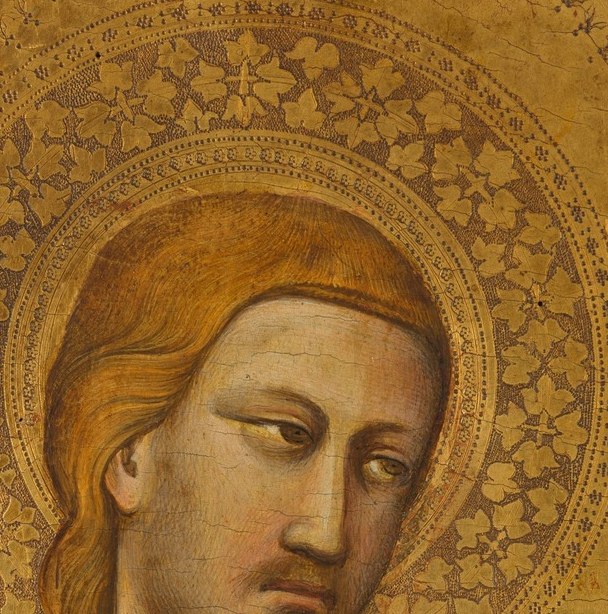
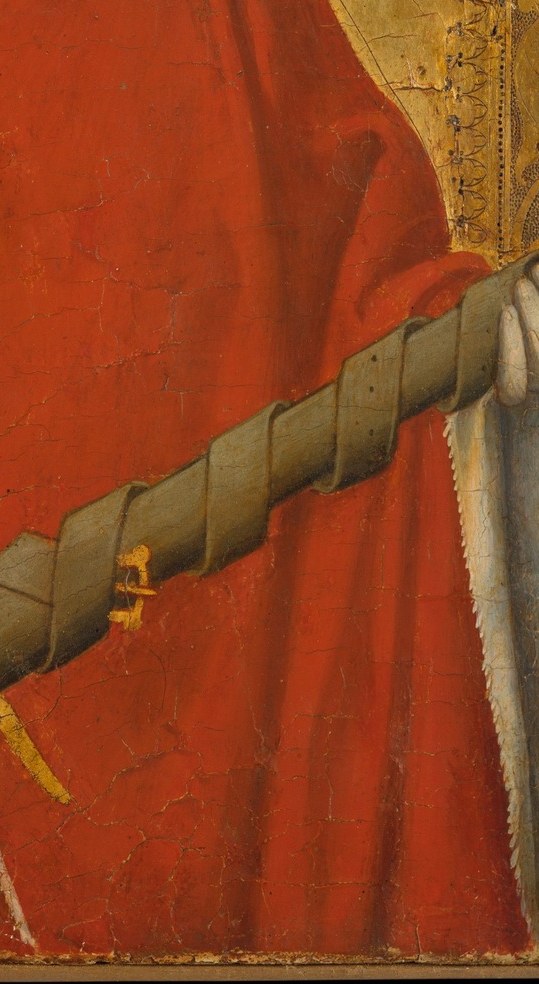
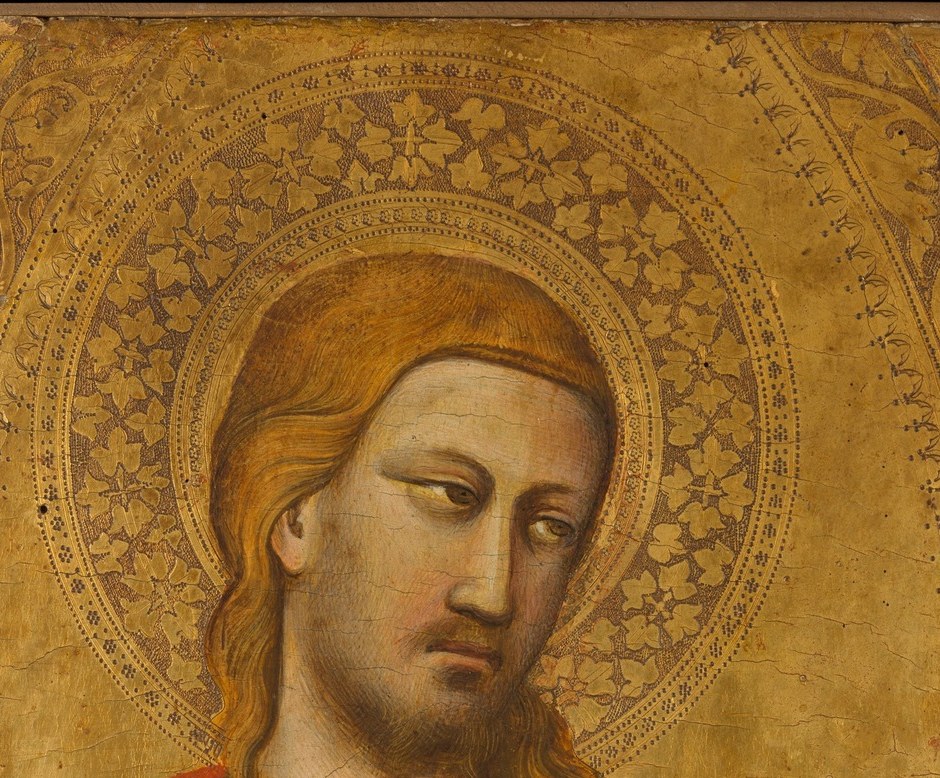
Look at his face. He is shown young, beardless, and looking straight at you, a direct gaze meant to pull the viewer into a moment of prayer. The sword he holds is not a weapon of war; it is the tool of his crime. According to the Golden Legend, Julian was a nobleman who came home to find a man and a woman asleep in his bed and, in a blind rage, killed them both. They were his parents, who had traveled to visit him unannounced.
The painting itself is a bridge between two worlds. Gaddi was Giotto's most talented pupil, and you can see the master’s influence in the sculptural volume of the red mantle and the weight of the figure. But the tooled gold background, especially visible in the upper corners, comes from an older tradition, and from Gaddi’s own family. His father was a goldsmith, and the punched, incised patterns in the gold leaf are the work of someone who understood the material as a craftsman.
Julian spent the rest of his life doing penance, and his story turned him into the patron saint of innkeepers, travelers, and anyone seeking forgiveness from an irreversible mistake. A strange fate for a man whose one moment of violence became his entire legacy.
Details


Transcript
He stands calm, young, and gold-crowned. But the sword he holds is not for fighting. Legend says he killed his own parents by mistake. He spent his life atoning for that one night. The painter was Giotto's best student. His father was a goldsmith. You can see it in the gold.