The Nativity by Bernardino Fungai
The Nativity, by Bernardino Fungai, circa 1508, now in a public collection. This serene Renaissance panel spent part of its life as a farmhouse table. Stolen from its original church, it disappeared for years, only resurfacing after the family who sheltered it had used the painted side as a working surface. The abrasions along the bottom edge are the visible record of that strange journey.
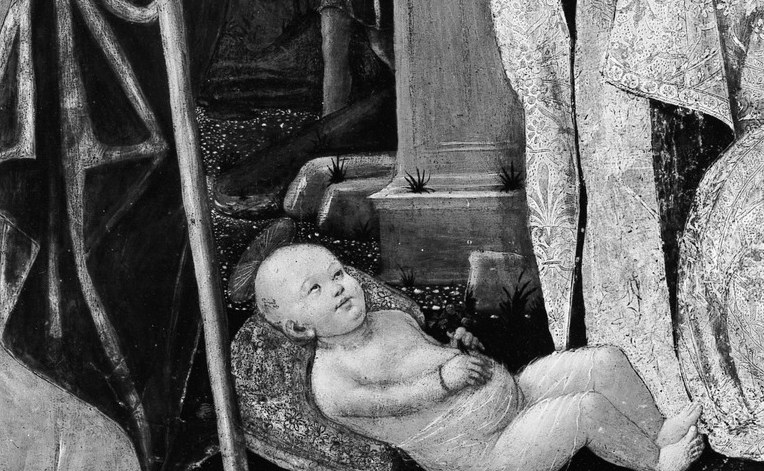
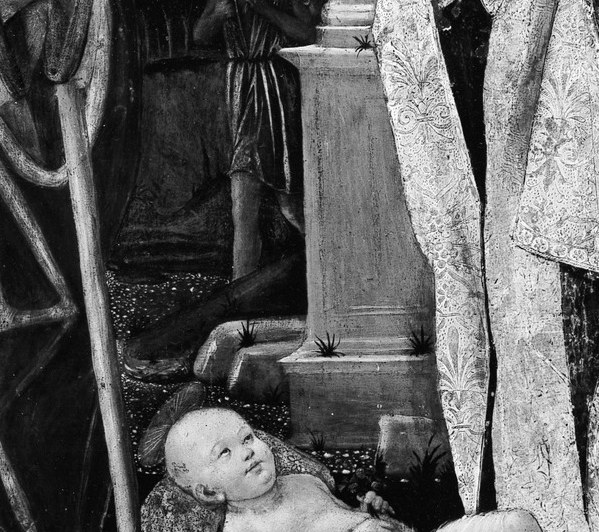
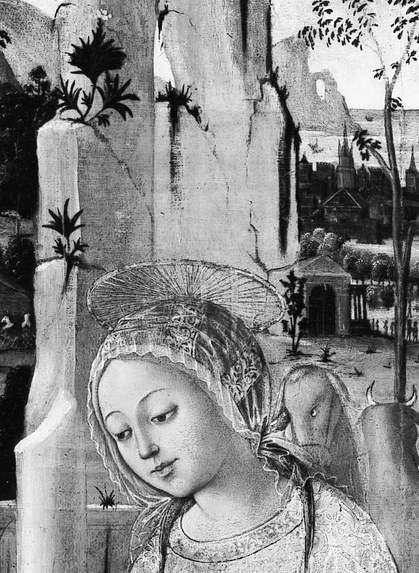
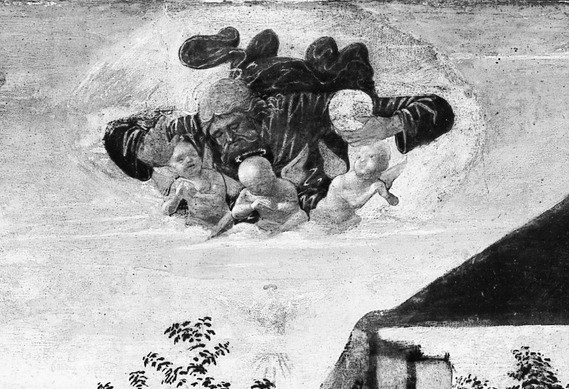
Look at the center, where the Christ Child rests directly on the bare ground. Fungai places him low, on straw and soil, so every other gaze in the painting descends toward that one point of humility. Mary inclines her head with a quiet tenderness. Above her, a flying angel blesses the scene from the painted arch, a reminder that this panel was meant to be looked up at from below.
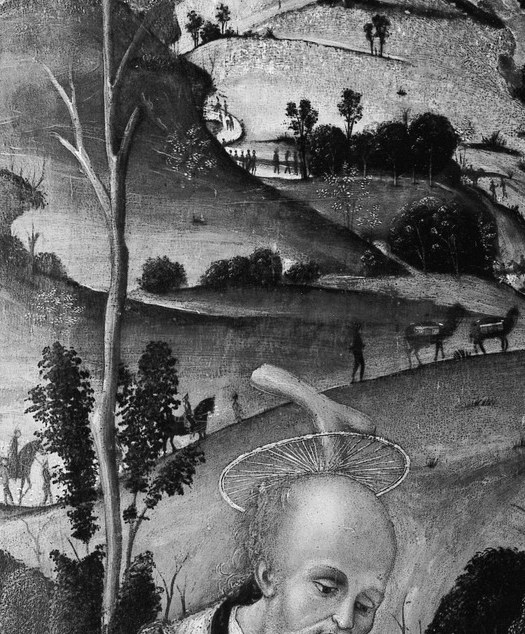
Bernardino Fungai worked in Siena at a moment when late Gothic devotion was giving way to early Renaissance observation. His figures keep a deliberately archaic stillness, but the landscape behind them opens into rolling hills and a distant town, grounding the sacred story in the recognizable countryside. The crumbling classical column on the right makes the symbolism plain: the old world recedes, the new Christian era begins in the humblest possible shelter.
The painting's theft could have erased it. Instead, its reappearance as a damaged, scrubbed object only deepens what the image already insists on: a story about value hiding in the overlooked and the fragile.
Details
Transcript
This altarpiece was stolen from its church. For years, it was hidden in plain sight. Its owners turned it face-down to become a kitchen table. Look at the bottom edge. The scrubbed paint tells that story. Now find the quiet center. The child rests on bare earth. Mary's face holds the whole painting's tenderness. The artist's name was nearly lost to that theft. It belongs now to a public museum. Never hidden again.